
















Binlogic / Blog
Field notes from the warehouse floor.
AI in Warehouse Management: What's Actually Useful in 2026
In a warehouse, AI is most useful where a decision is a prediction made from plenty of clean history, such as demand across a…
Read article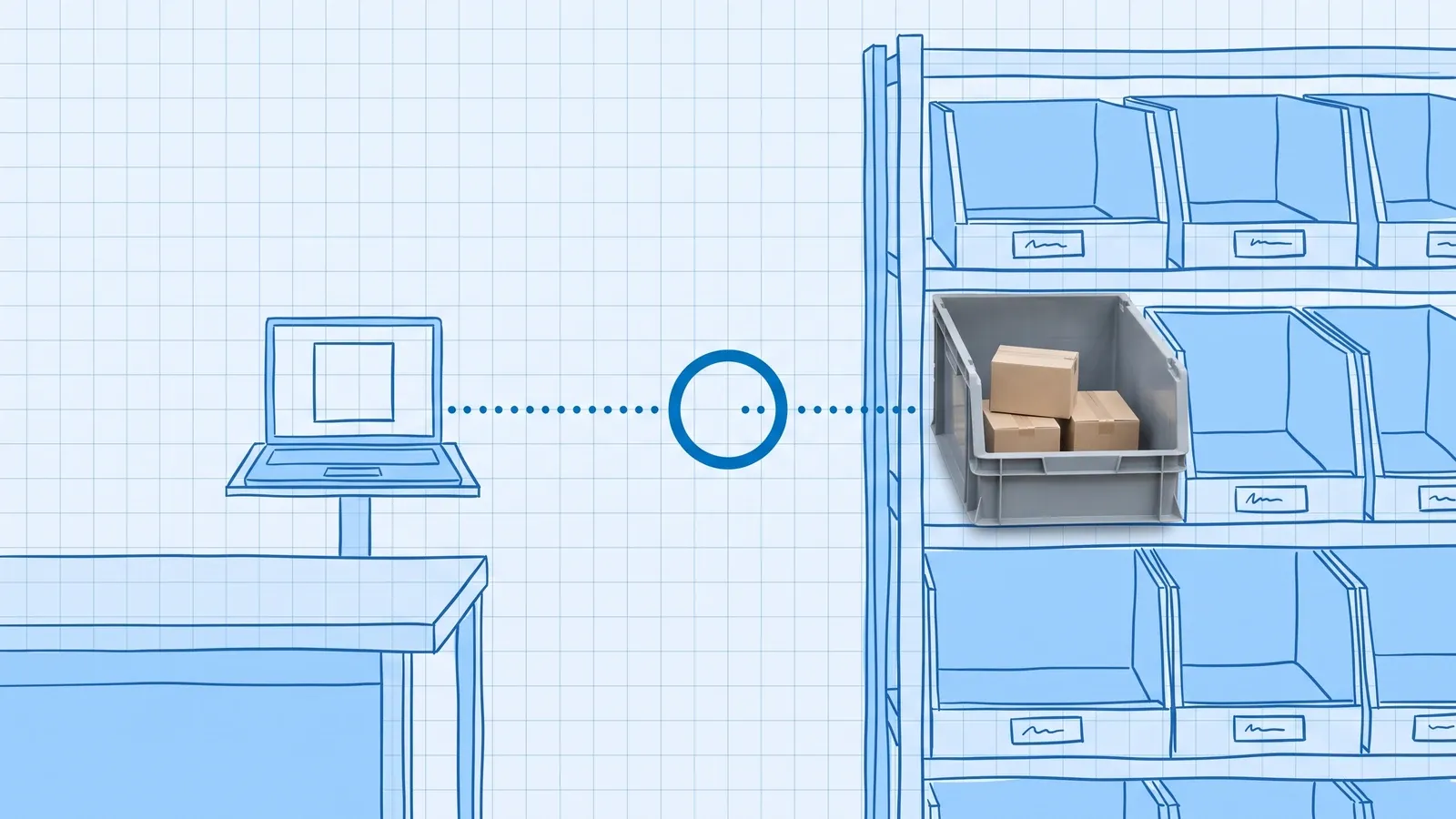
What Happens When Your Shopify Inventory Goes Out of Sync?
When Shopify inventory goes out of sync with the warehouse, the store either sells units that are not on the shelf or shows items…
Read article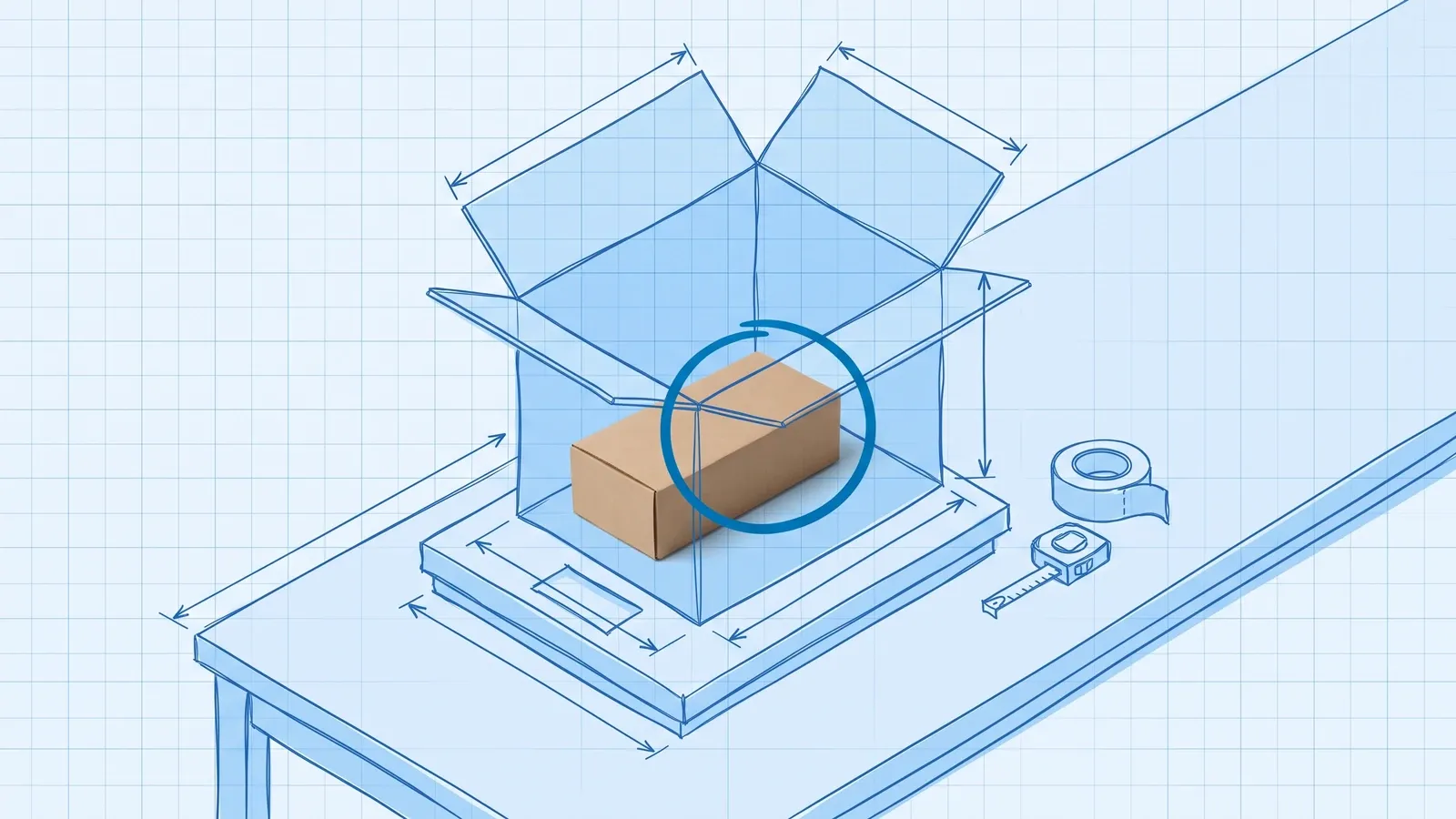
DIM Weight Explained: How Carriers Charge for Box Size
Dimensional weight is a box's volume in cubic inches divided by a divisor the carrier sets, and carriers bill the greater of that…
Read article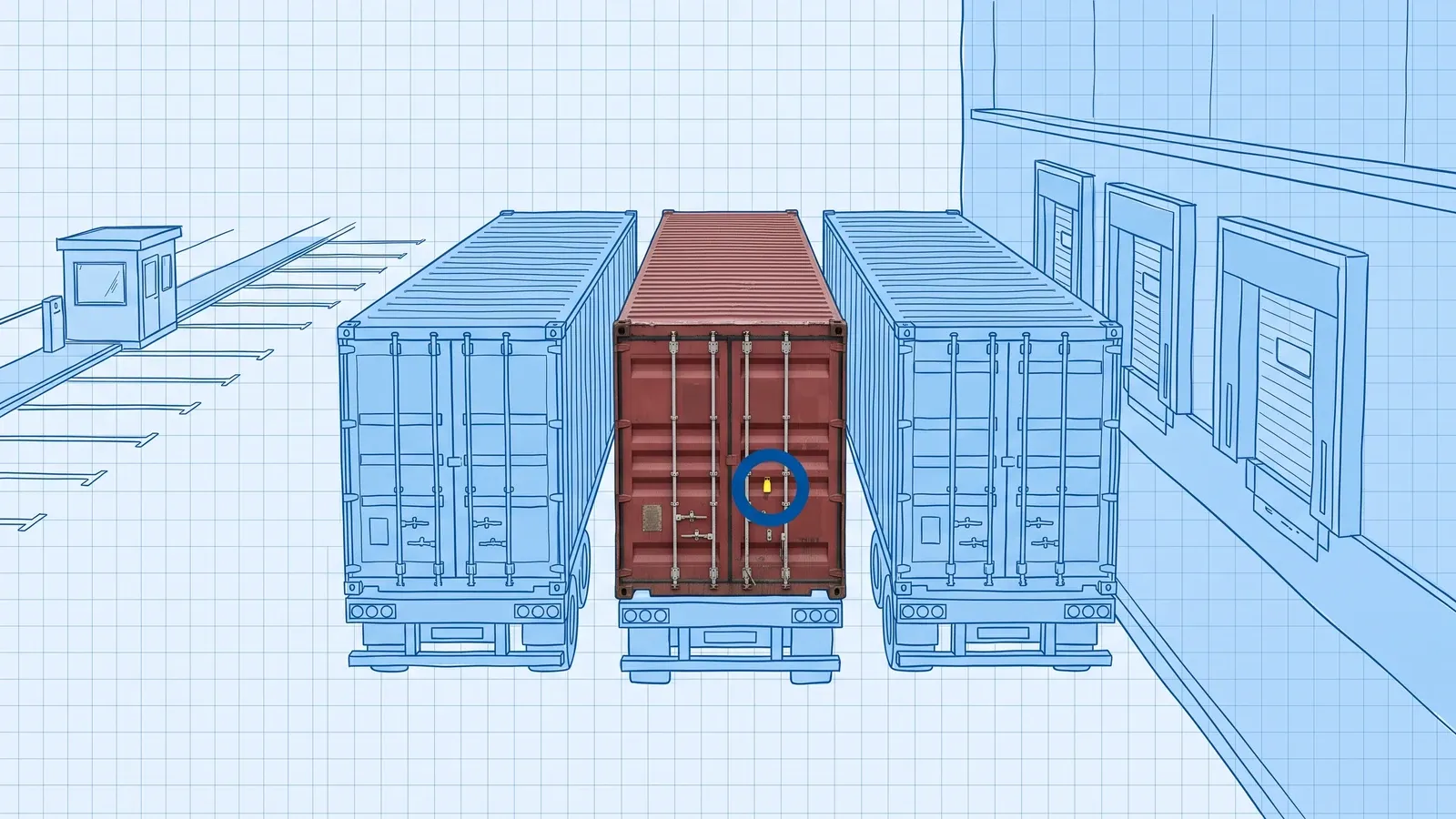
Container Number Check Digit: How ISO 6346 Validation Works
The last digit of an ISO 6346 container number is a check digit calculated from the other ten characters: each character gets a…
Read article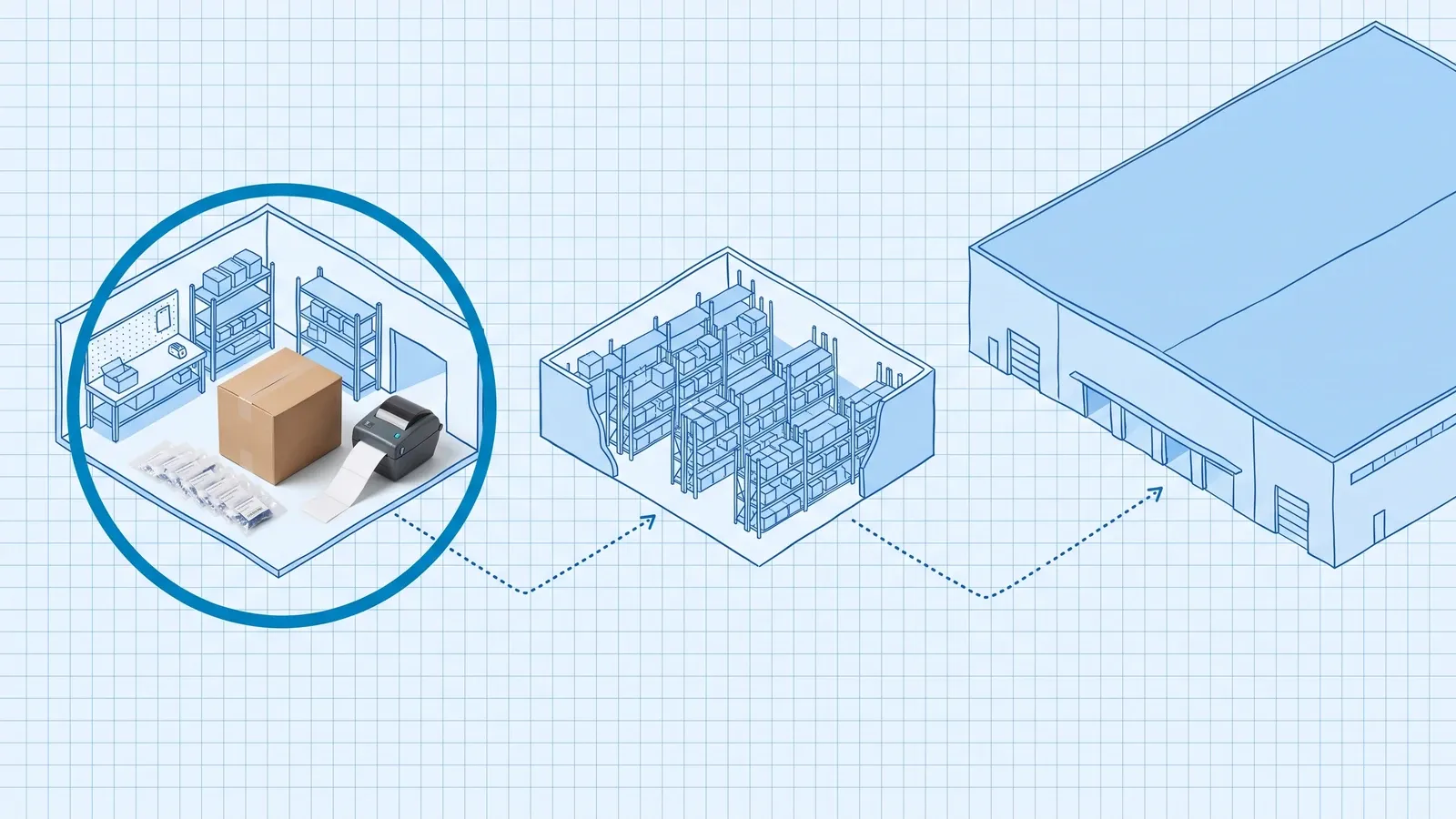
FBA vs 3PL vs Shipping It Yourself: What Stays on Your Floor
None of the three models removes warehouse work entirely. Fulfillment by Amazon picks, packs and ships orders from its network,…
Read article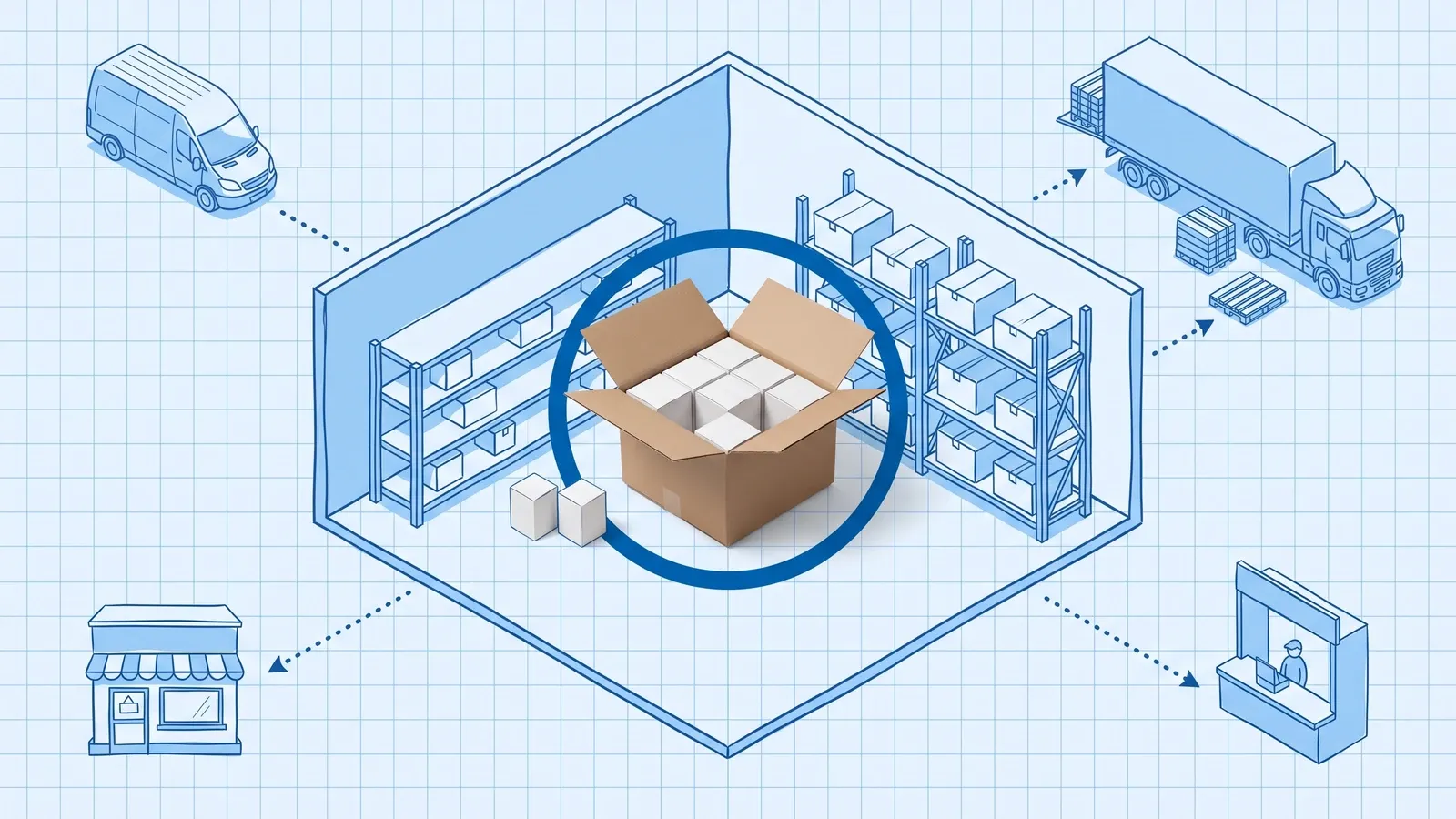
What Is Omnichannel Fulfillment and How Does It Work?
Omnichannel fulfillment means filling orders from your website, marketplaces, wholesale accounts and stores out of one shared…
Read article
Single-Warehouse vs Multi-Warehouse WMS: What Changes
Moving from one warehouse to two changes the shape of your inventory record: every quantity gains a site, stock moving between…
Read article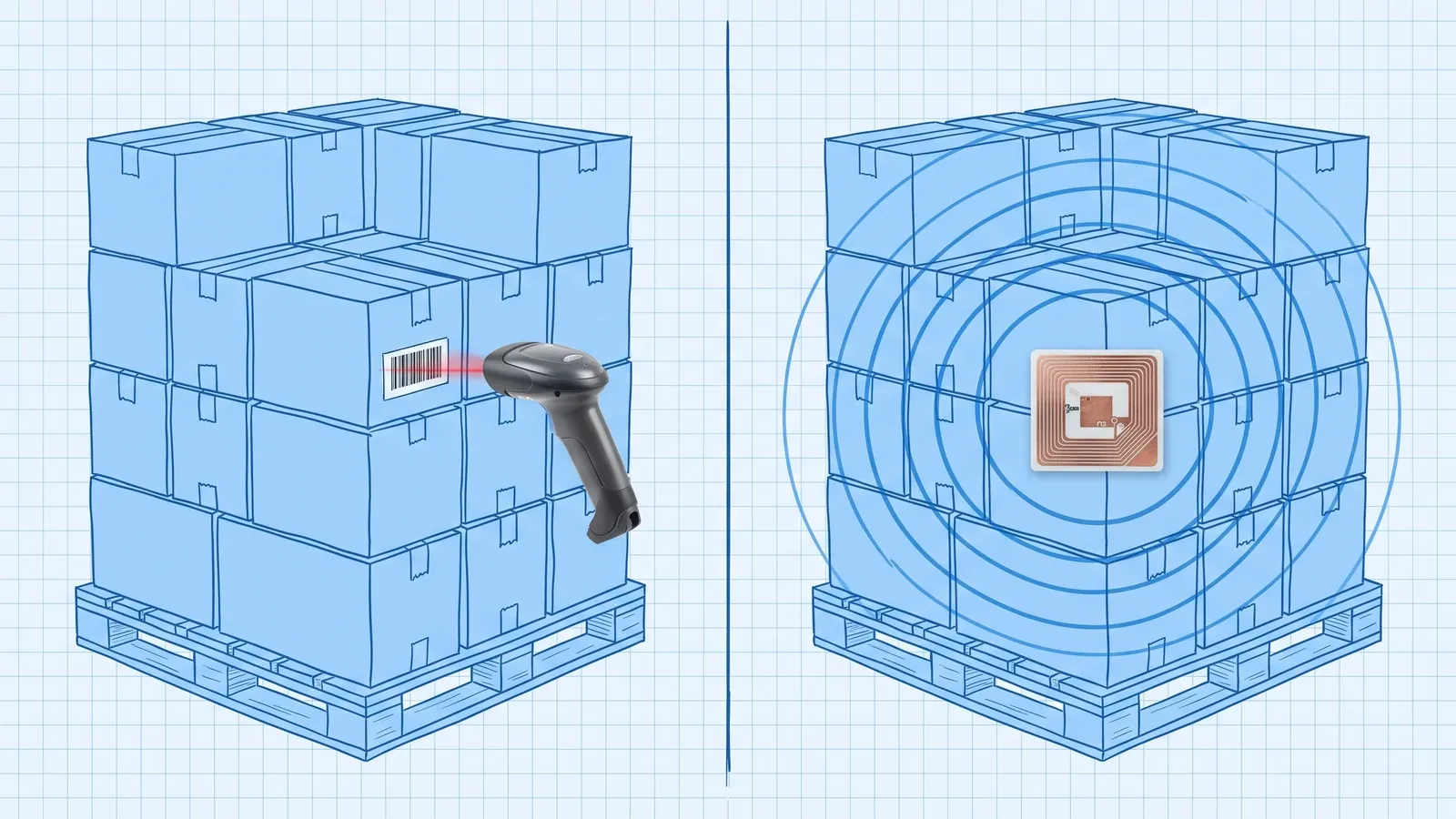
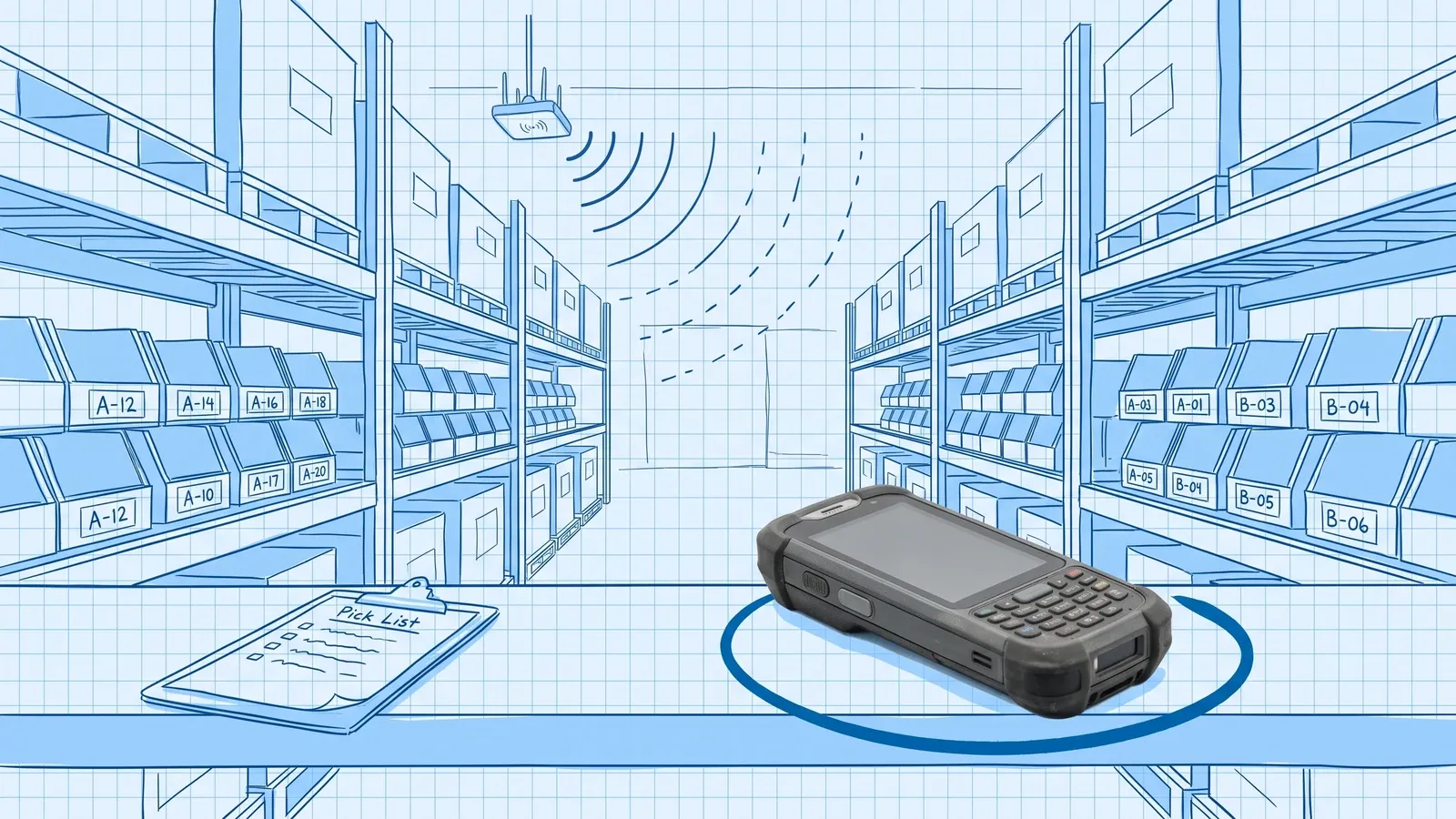
RFID vs Barcode Scanning: Which Is Better for Inventory?
RFID reads many tags at once without line of sight; a barcode scanned on a handheld is one deliberate read at a time. The 99.9…
Read article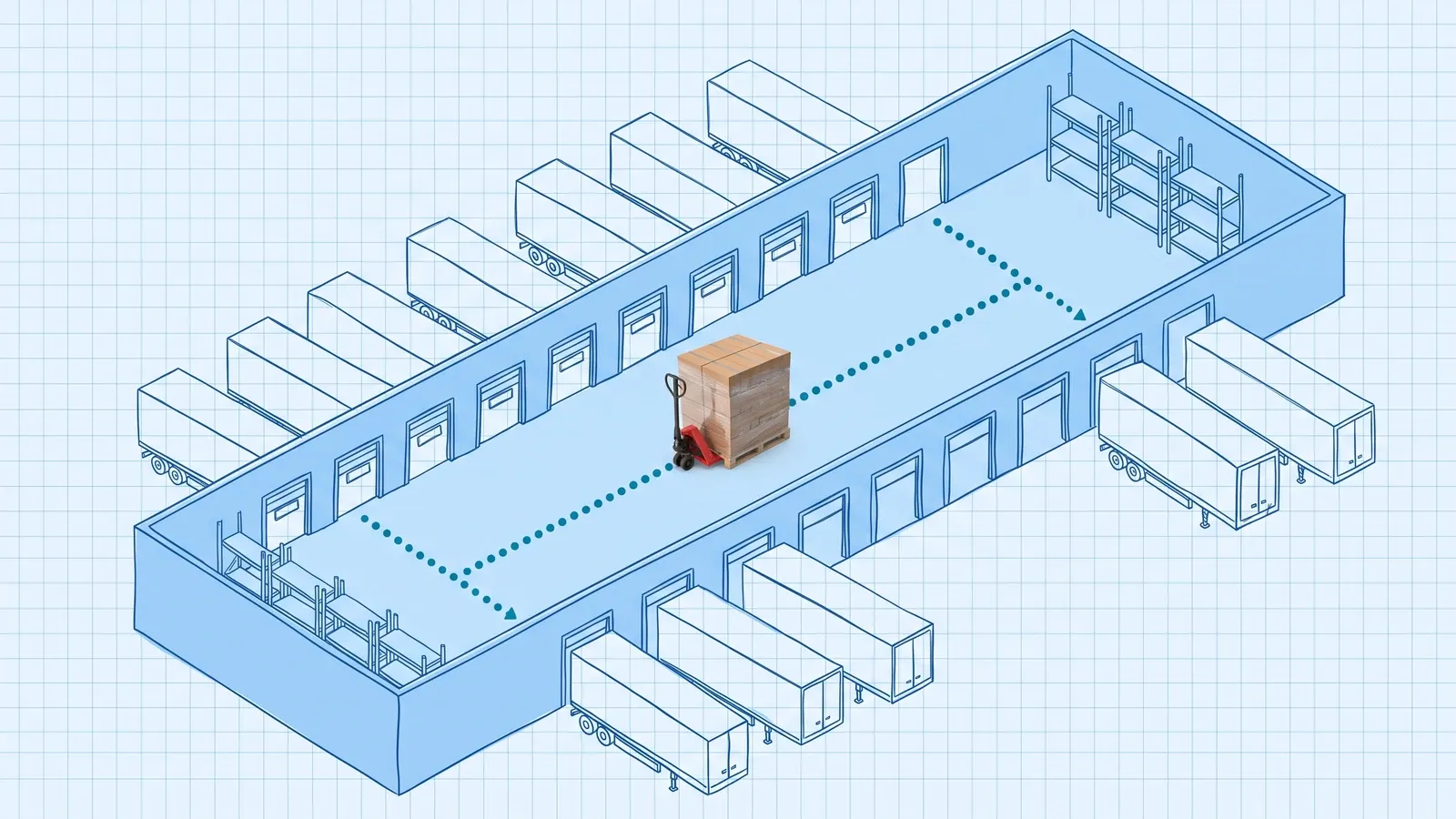
Cross-Docking Explained: When Freight Should Skip the Rack
Cross-docking moves freight from an inbound trailer to an outbound trailer without putting it into storage first. It pays when…
Read article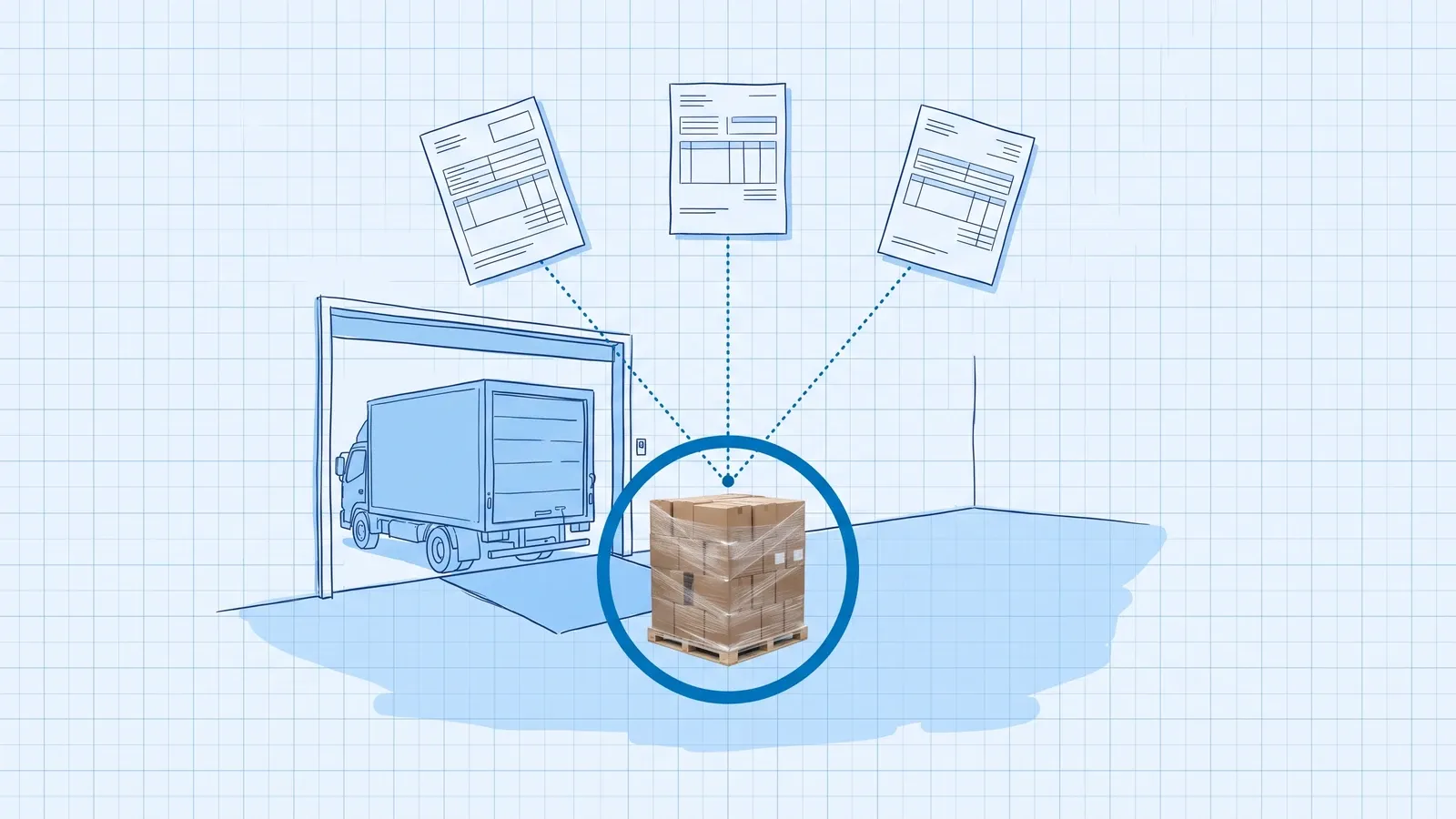
Warehouse Receiving Best Practices, Step by Step
There are three different "expected" numbers waiting at an inbound door: the carrier's piece count on the delivery receipt, the…
Read article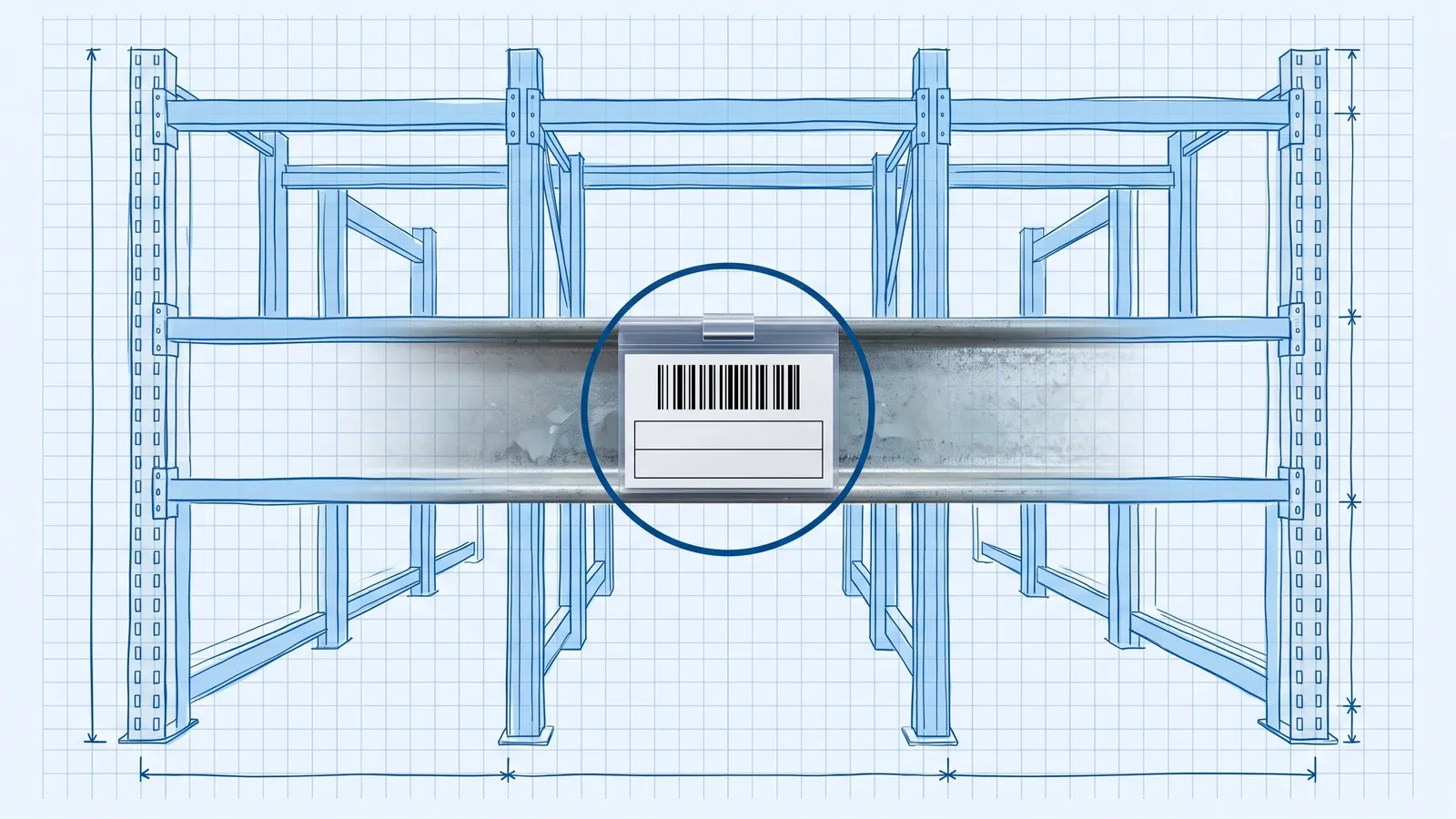
How to Set Up Bin Locations in Your Warehouse
A bin location is an address for a place, not a label for a product, and most rules about designing one follow from that. Number…
Read article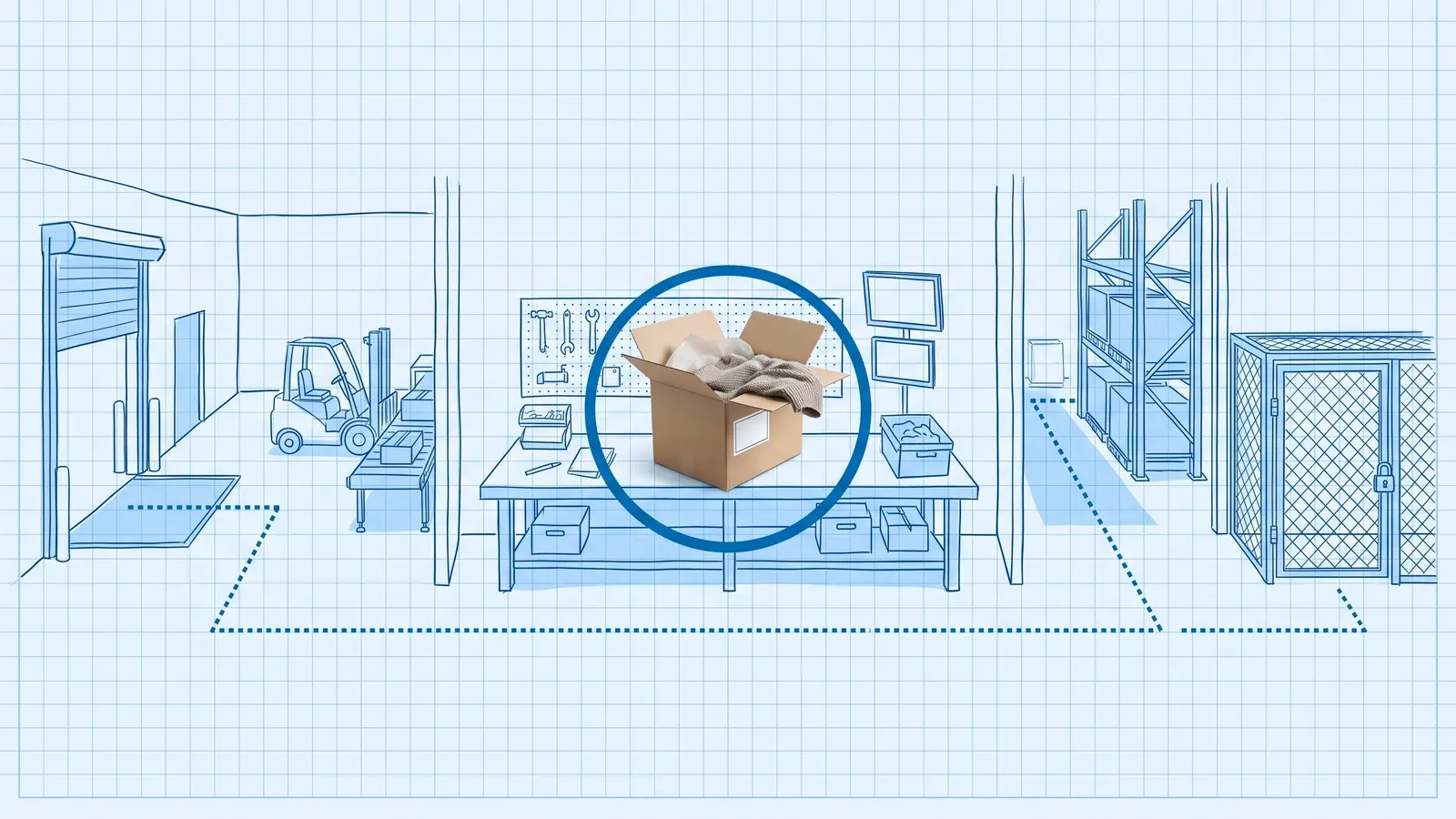
How to Handle Returns Without Losing Inventory Accuracy
Returns damage inventory accuracy for two reasons: the returned unit has nowhere to be while it waits, and the refund and the…
Read article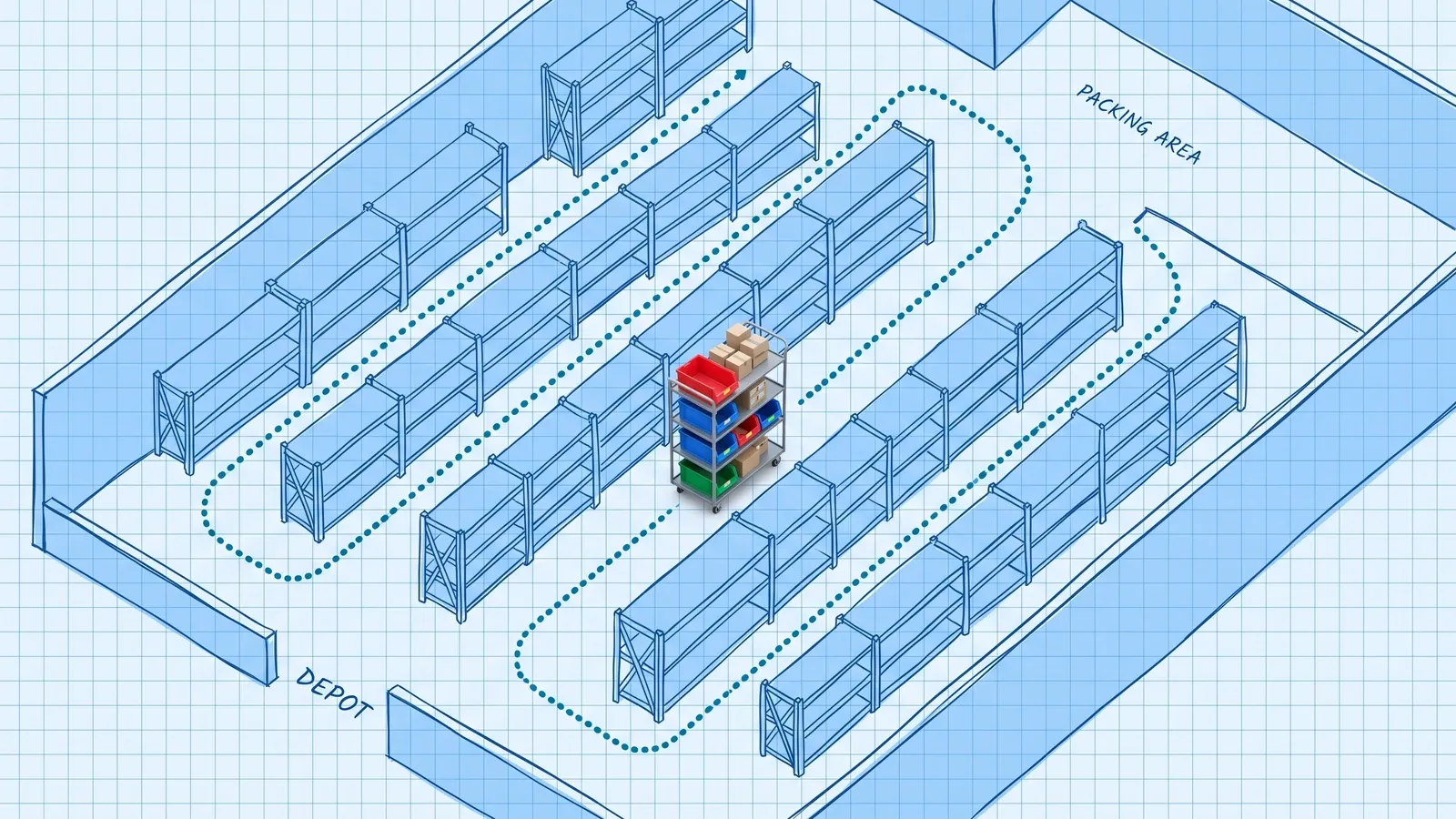
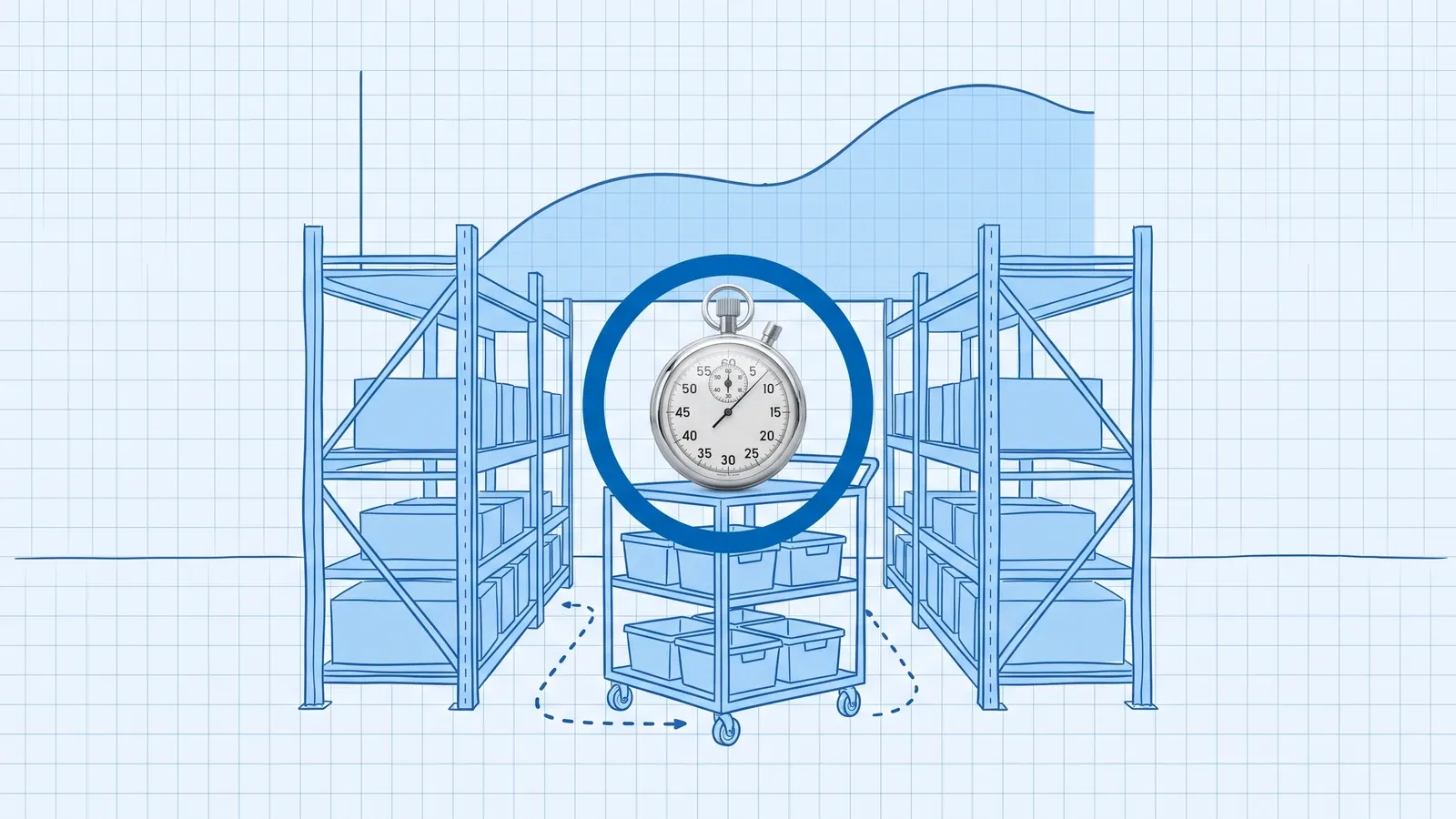
What Is a Pick Path and How Do You Optimize It?
A pick path is the route an order picker takes to collect every line on one pick list and return to the depot, and optimizing it…
Read article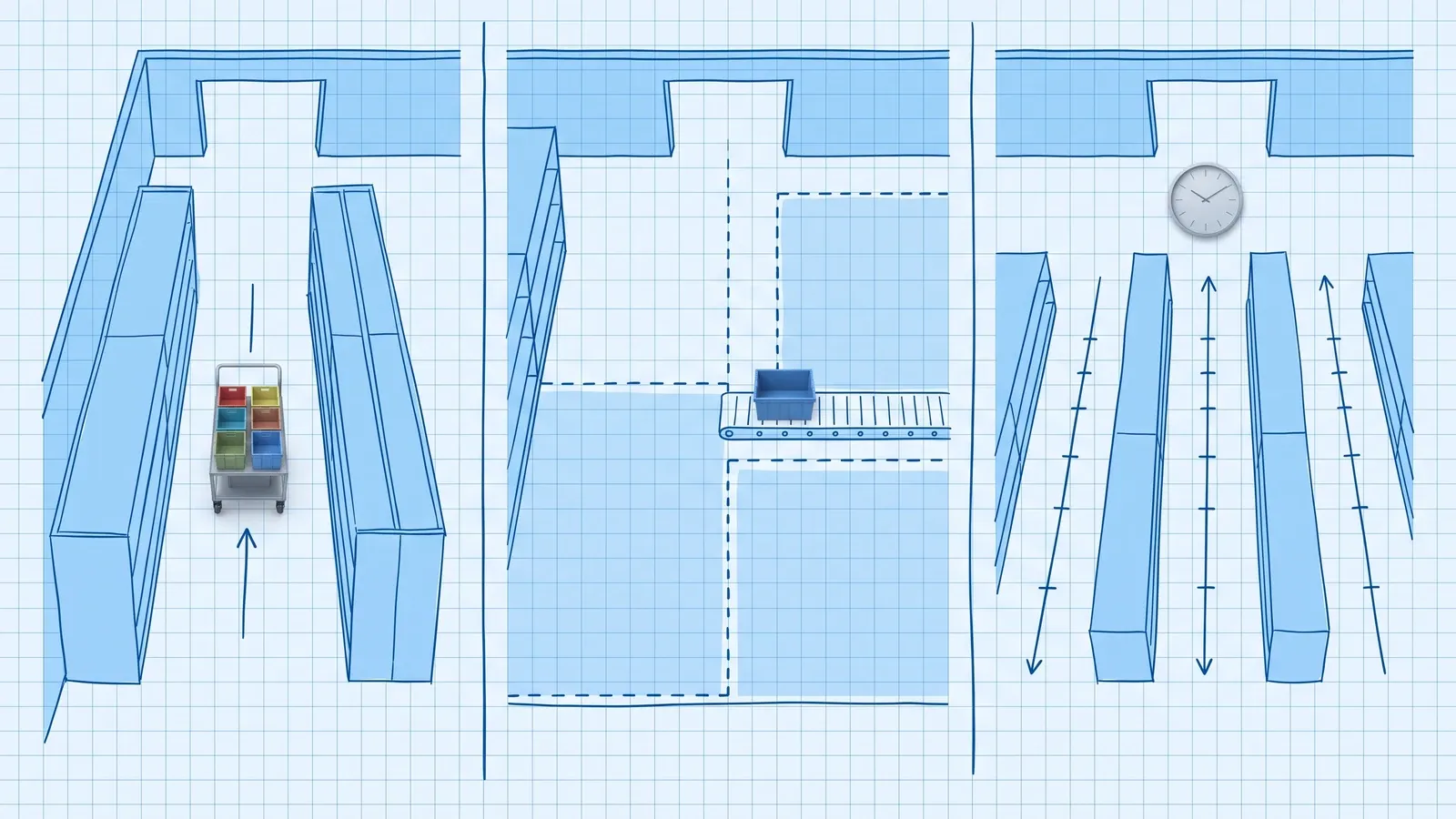
Batch vs Zone vs Wave Picking: Which Fits Your Volume?
Volume is not what decides it. Batch, zone and wave picking are three separate order-picking policy decisions that interact…
Read article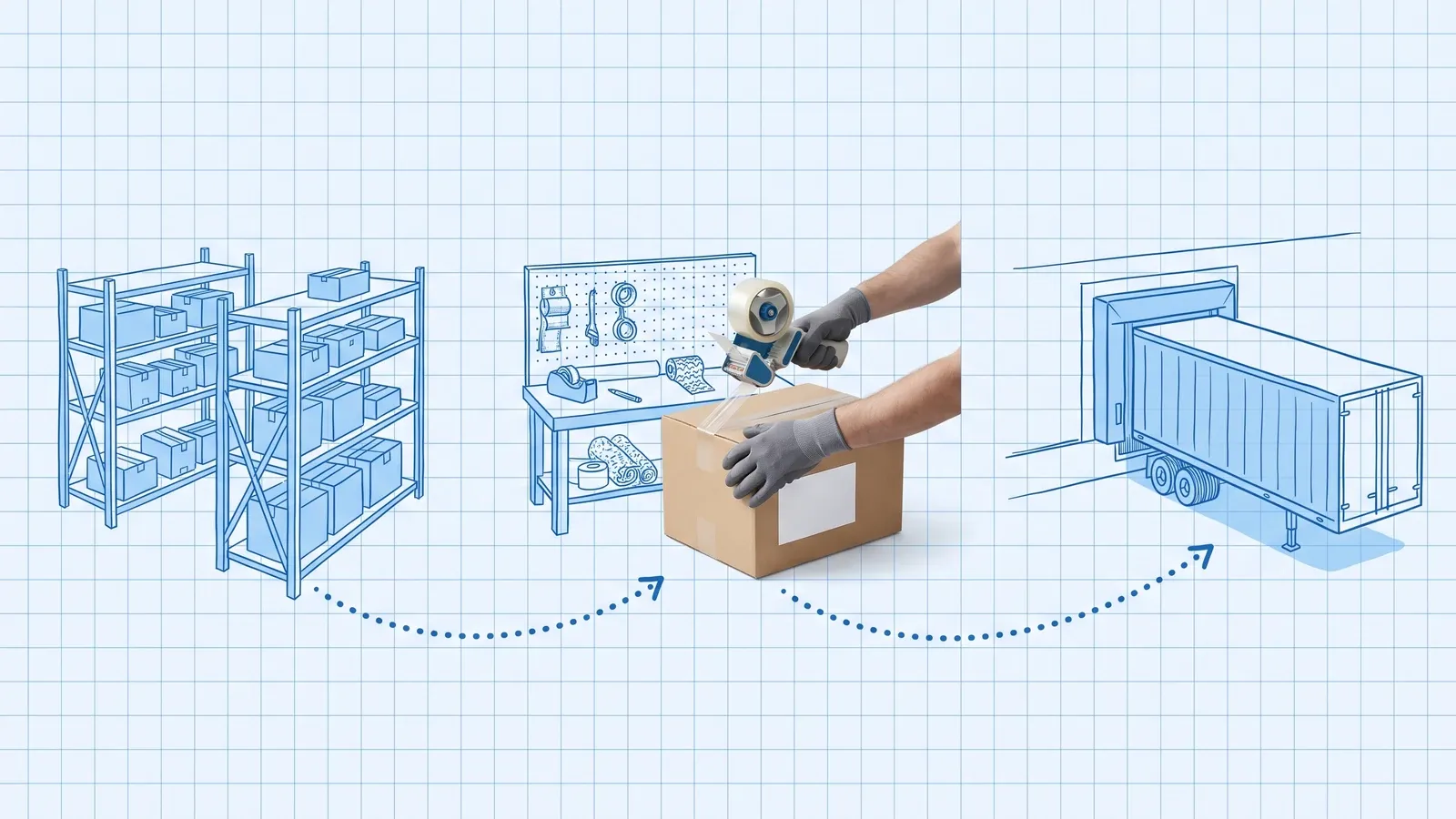
Pick, Pack, Ship: How to Optimize Each Step
Picking is where most of the labor sits: one widely cited review estimates order picking at as much as 55 percent of warehouse…
Read article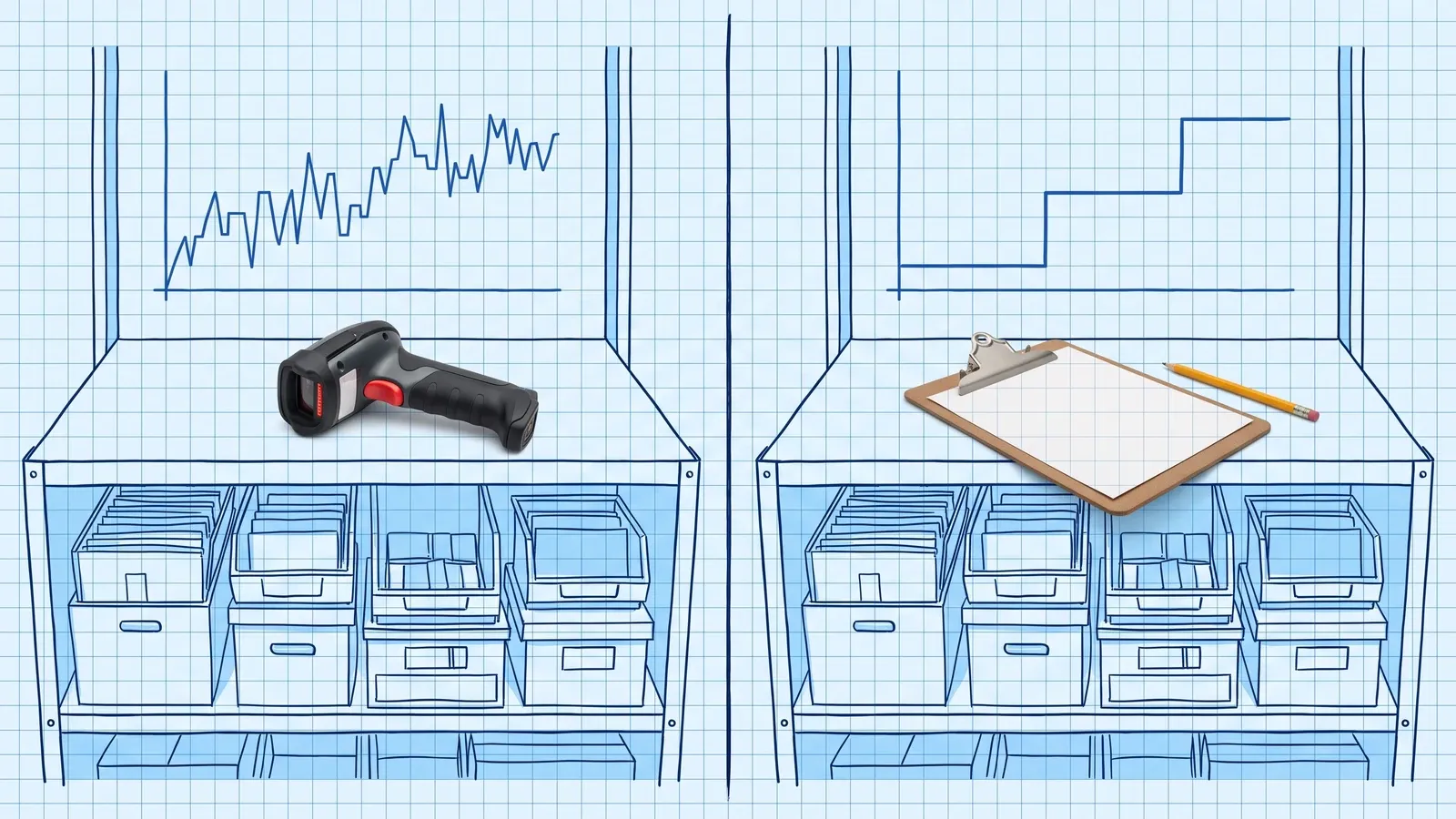
Perpetual vs Periodic Inventory: Which Fits Your Warehouse?
Perpetual inventory updates the record at every transaction, so the system always holds a number for what is on the shelf.…
Read article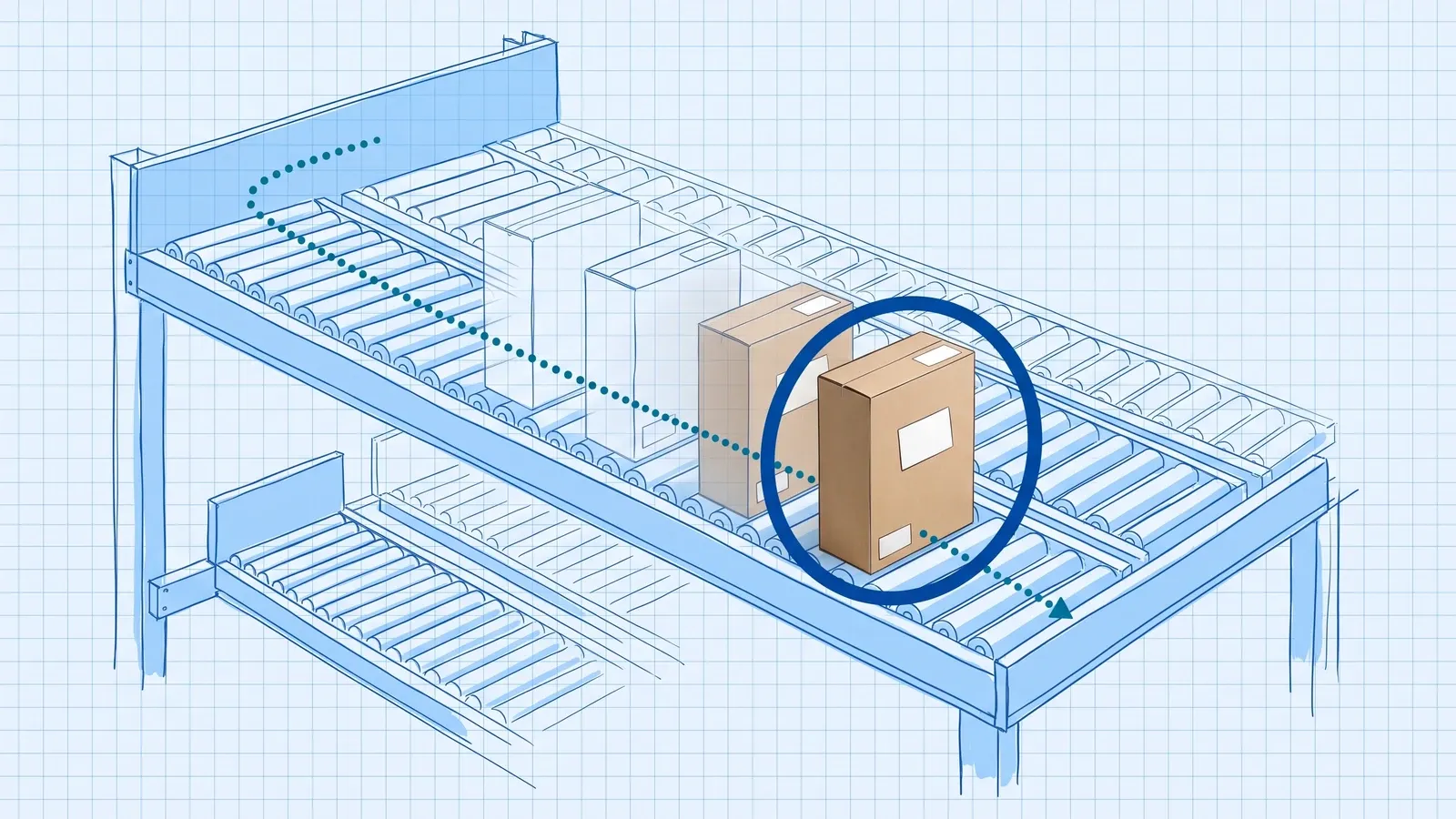
FIFO vs FEFO: Which Stock Rotation Is Right for Your Product?
FIFO ships the oldest-received stock first; FEFO ships the soonest-to-expire stock first. If your products carry an expiry or…
Read article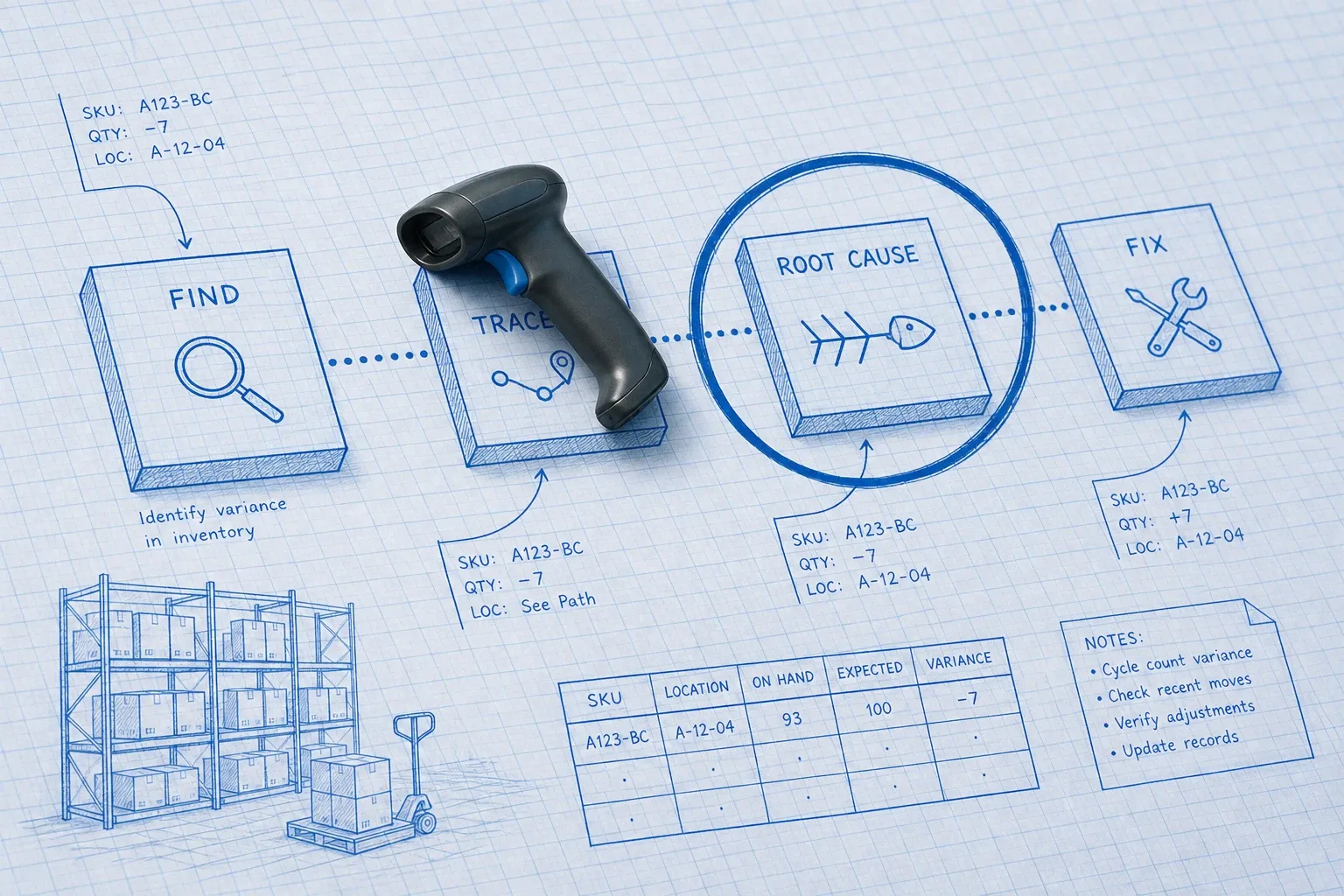
Inventory Discrepancy: How to Find It, Fix It, and Stop It
An inventory discrepancy is any gap between what your system says you have and what is physically on the shelf. Find it with a…
Read article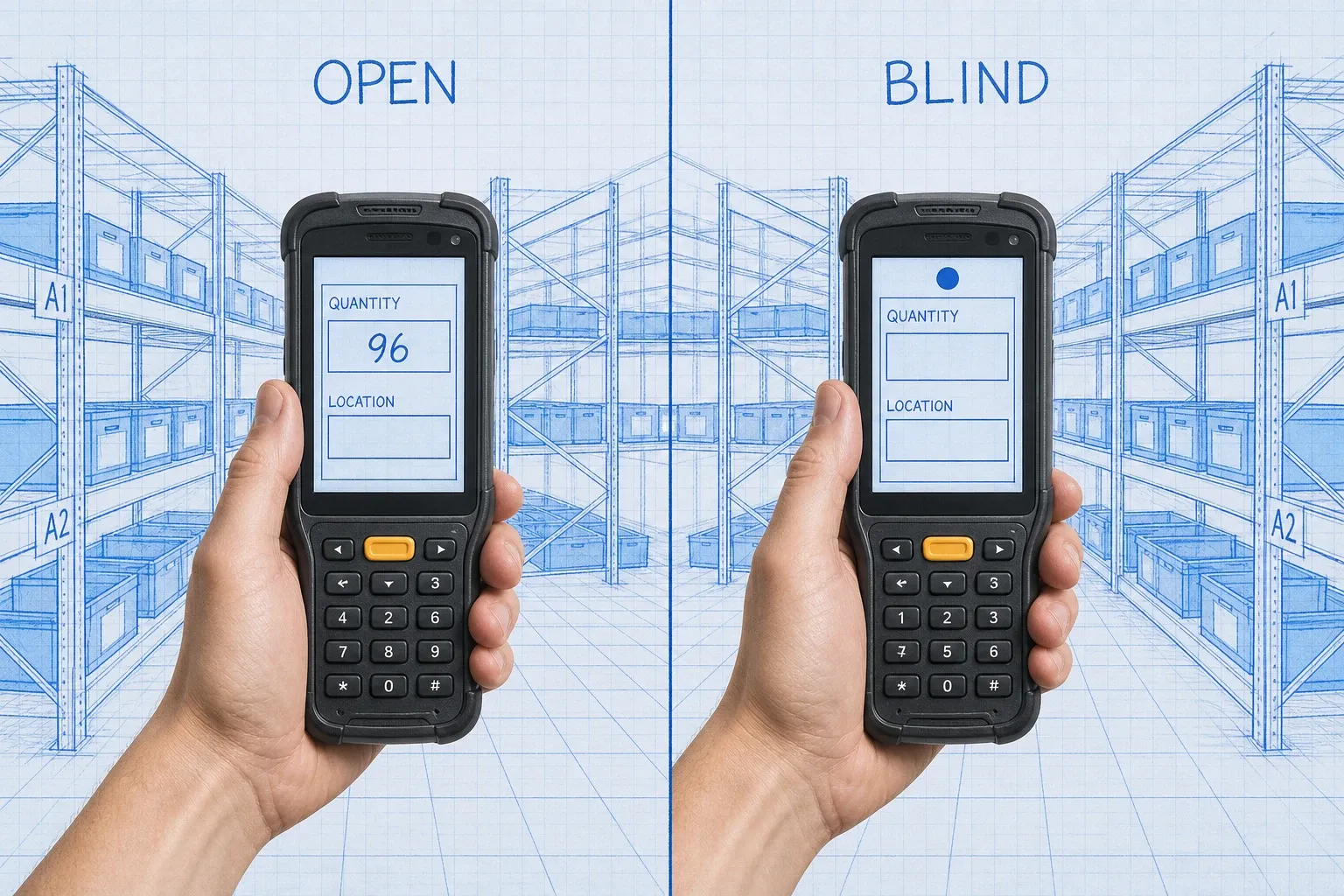
What Is a Blind Count and Why It Reduces Variance
A blind count is an inventory count where the counter does not see the expected system quantity before recording what is…
Read article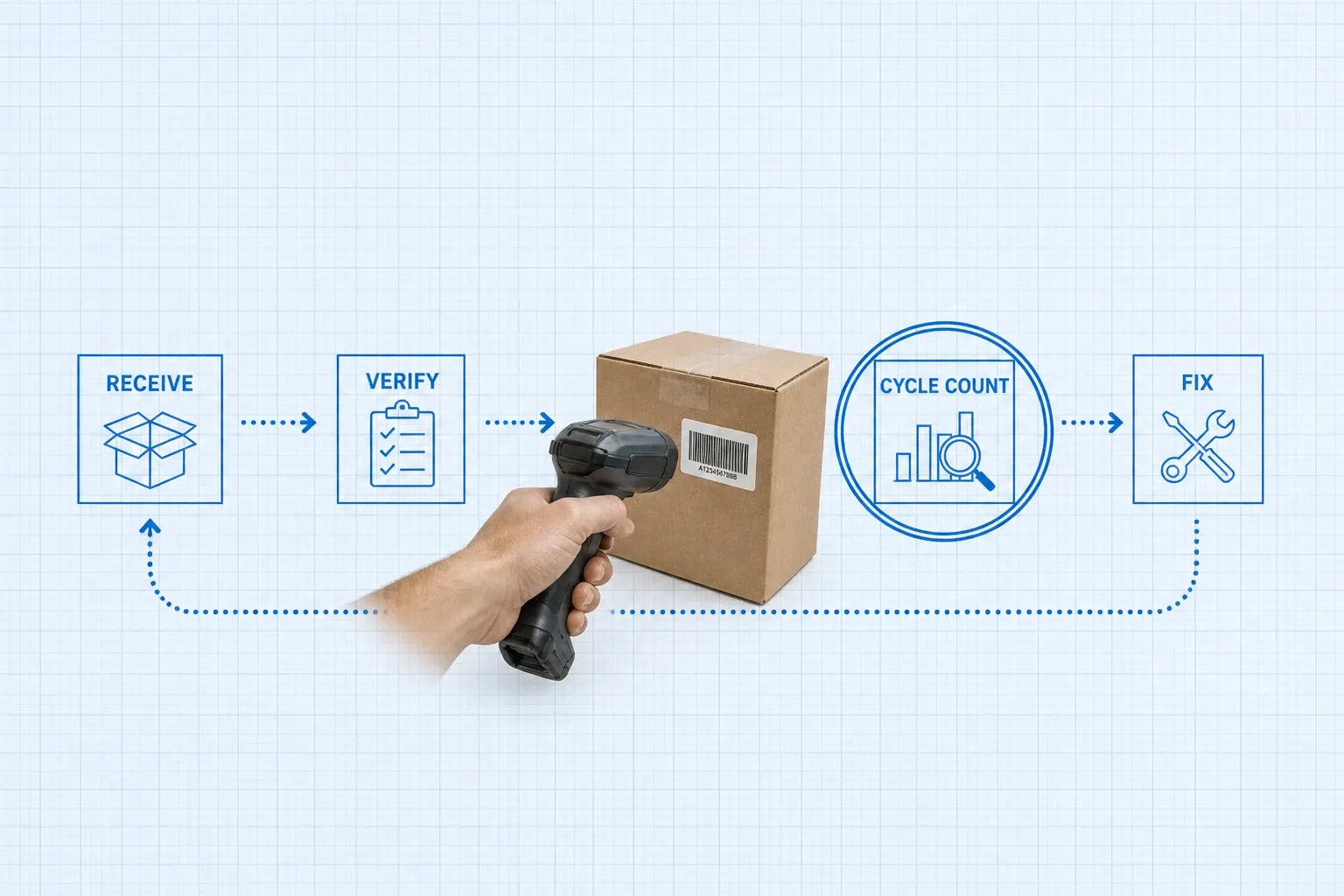
How to Achieve 99% Inventory Accuracy Without Shutting Down
You can reach 99% inventory accuracy without shutting the warehouse by replacing the annual physical with continuous cycle…
Read article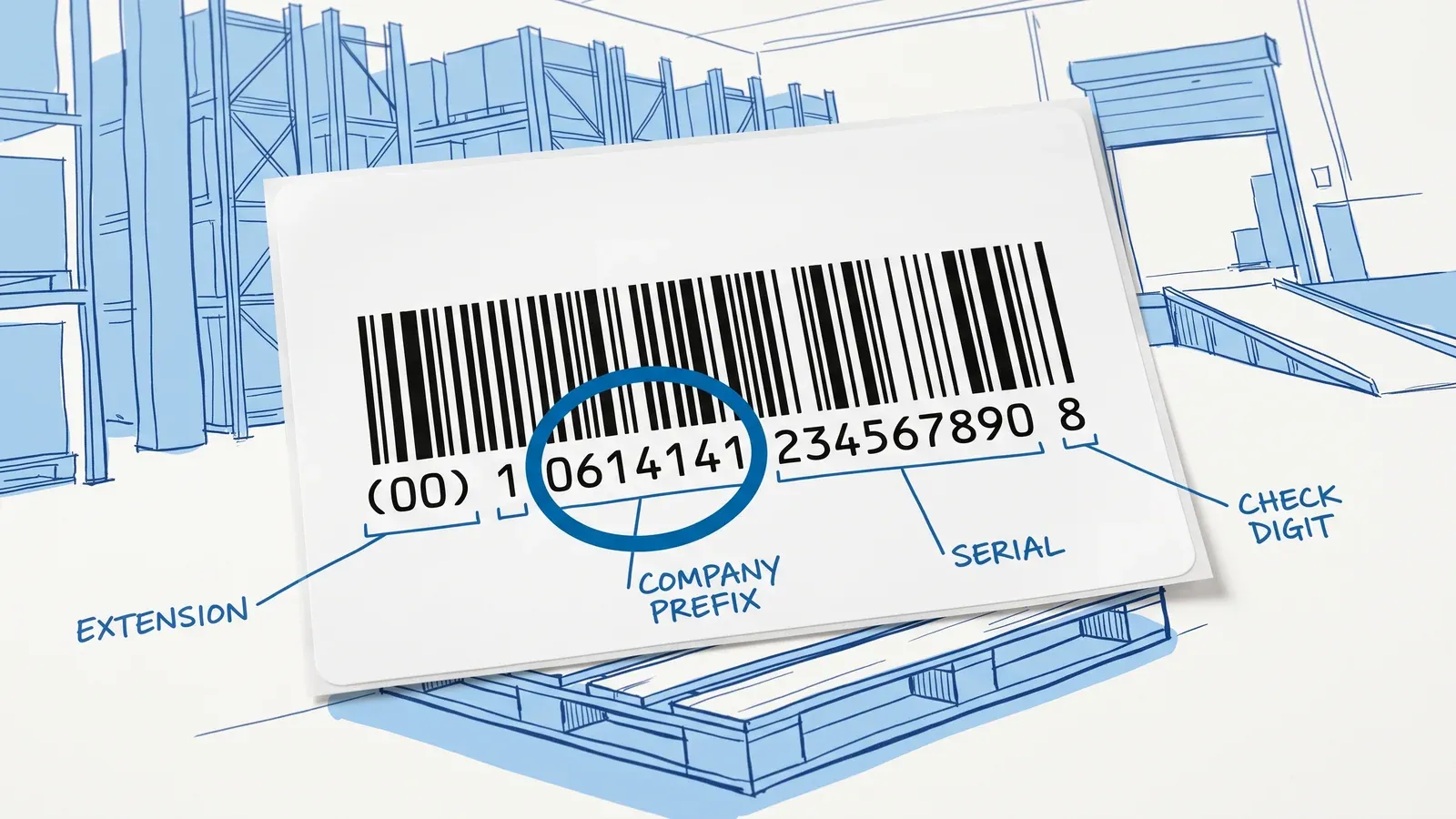
GS1 Company Prefix: Cost, Capacity, and What Sunrise 2027 Changes
A GS1 Company Prefix is a 4-to-12-digit number your company licenses from GS1, and it is the root of every GTIN, SSCC, and GLN…
Read article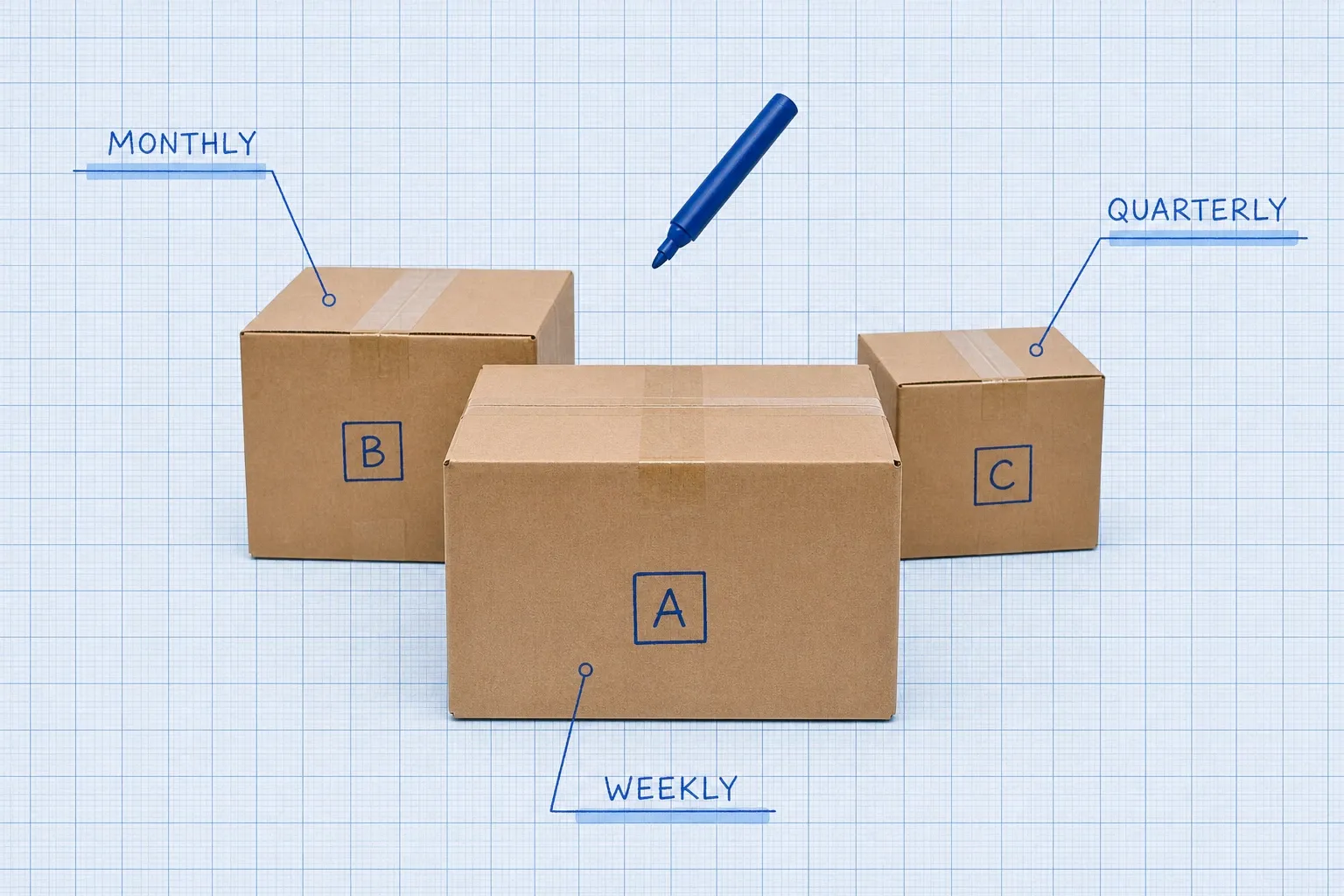
ABC Inventory Classification: How to Prioritize What You Count
ABC inventory classification groups SKUs into A, B, and C tiers by annual usage value so you count the items that can hurt you…
Read article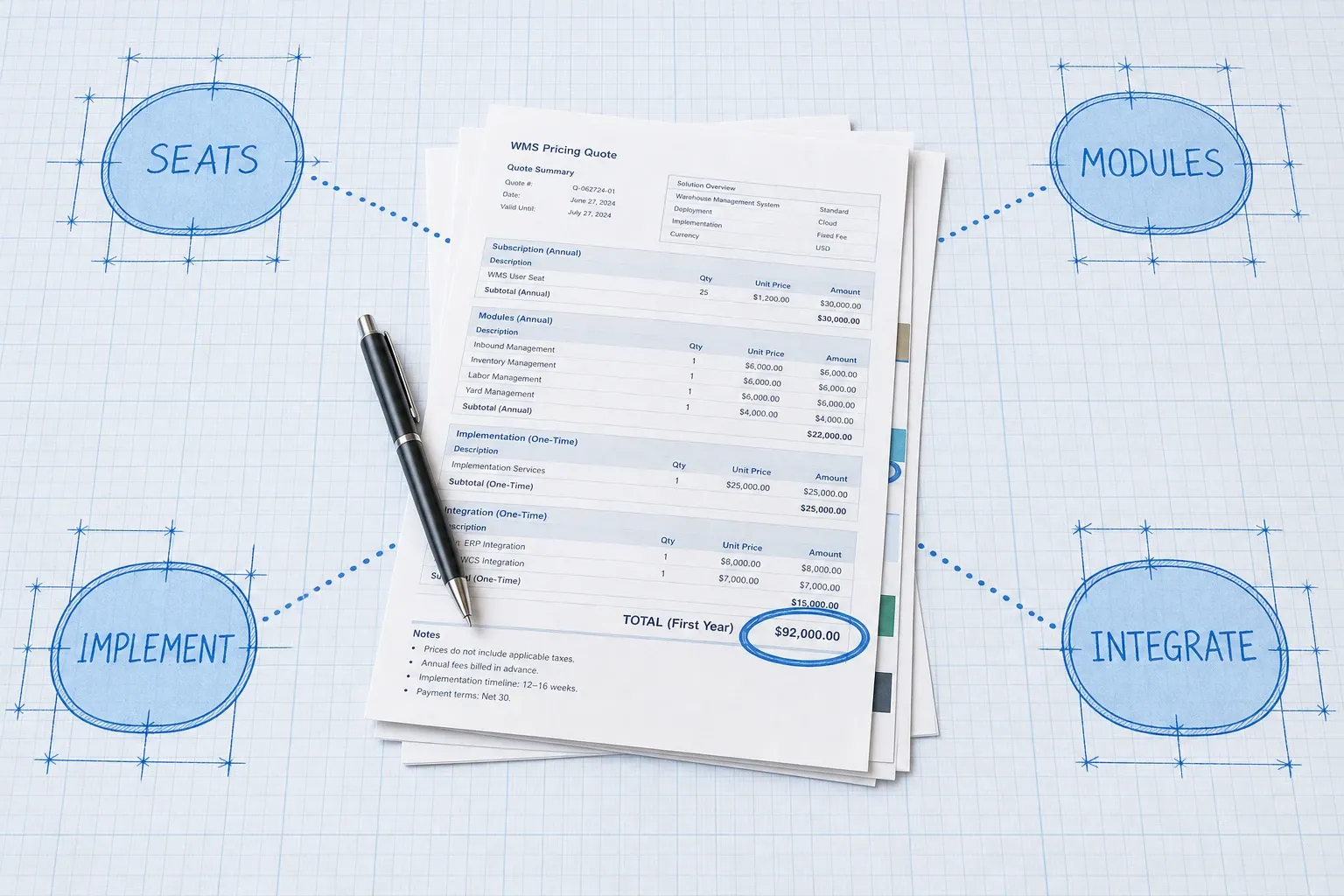
How WMS Pricing Works (and What Vendors Don't Advertise)
WMS pricing is rarely the monthly sticker price alone. Most mid-market quotes stack a base platform fee, seats or volume bands,…
Read article
WMS for Small Business: When Is It Worth It?
A warehouse management system (WMS) for small business is worth it when inventory mistakes, multi-channel orders, or SKU growth…
Read article
How to Calculate WMS ROI (and Make the Case Internally)
WMS ROI is (annual benefits minus annual costs) divided by total investment, times 100. Most organizations see payback within 12…
Read article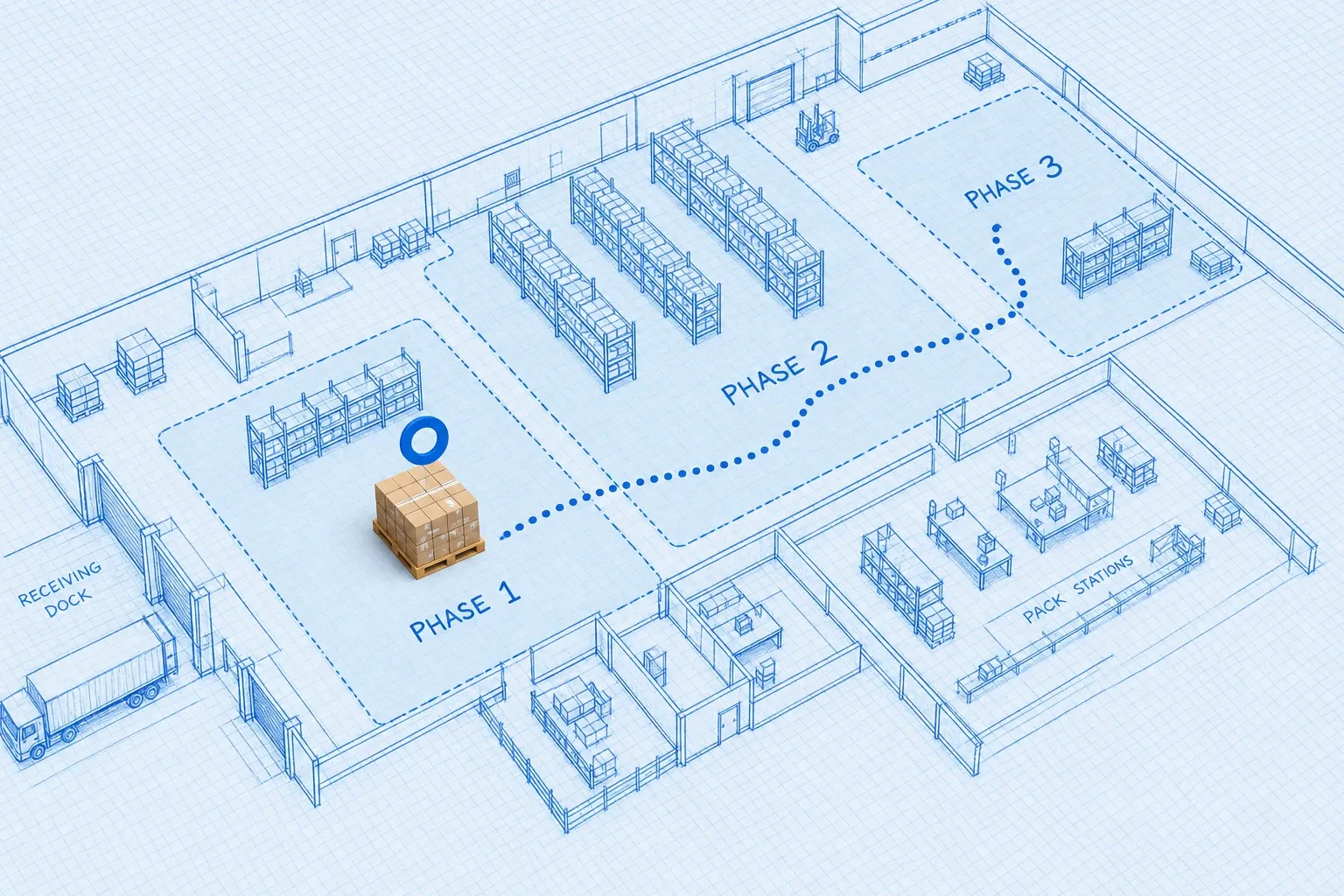
WMS Implementation: A 12-Week Playbook
A mid-market WMS implementation typically takes about 12 weeks when you treat it as a structured project, not a software install.…
Read article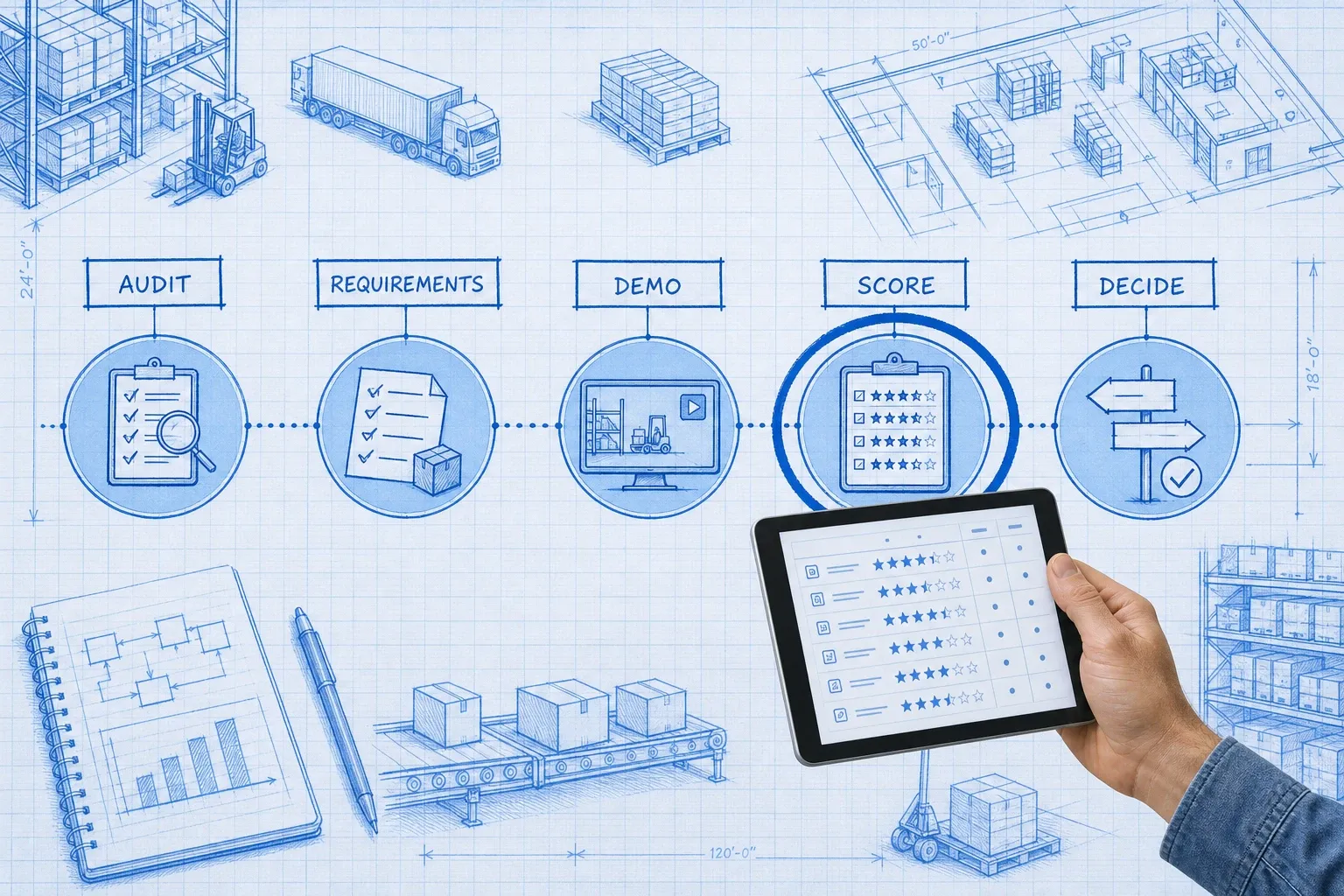
How to Choose a WMS: A Mid-Market Buying Guide
Choosing a WMS starts with your operational complexity, not a vendor feature list. Map must-have workflows, score shortlisted…
Read article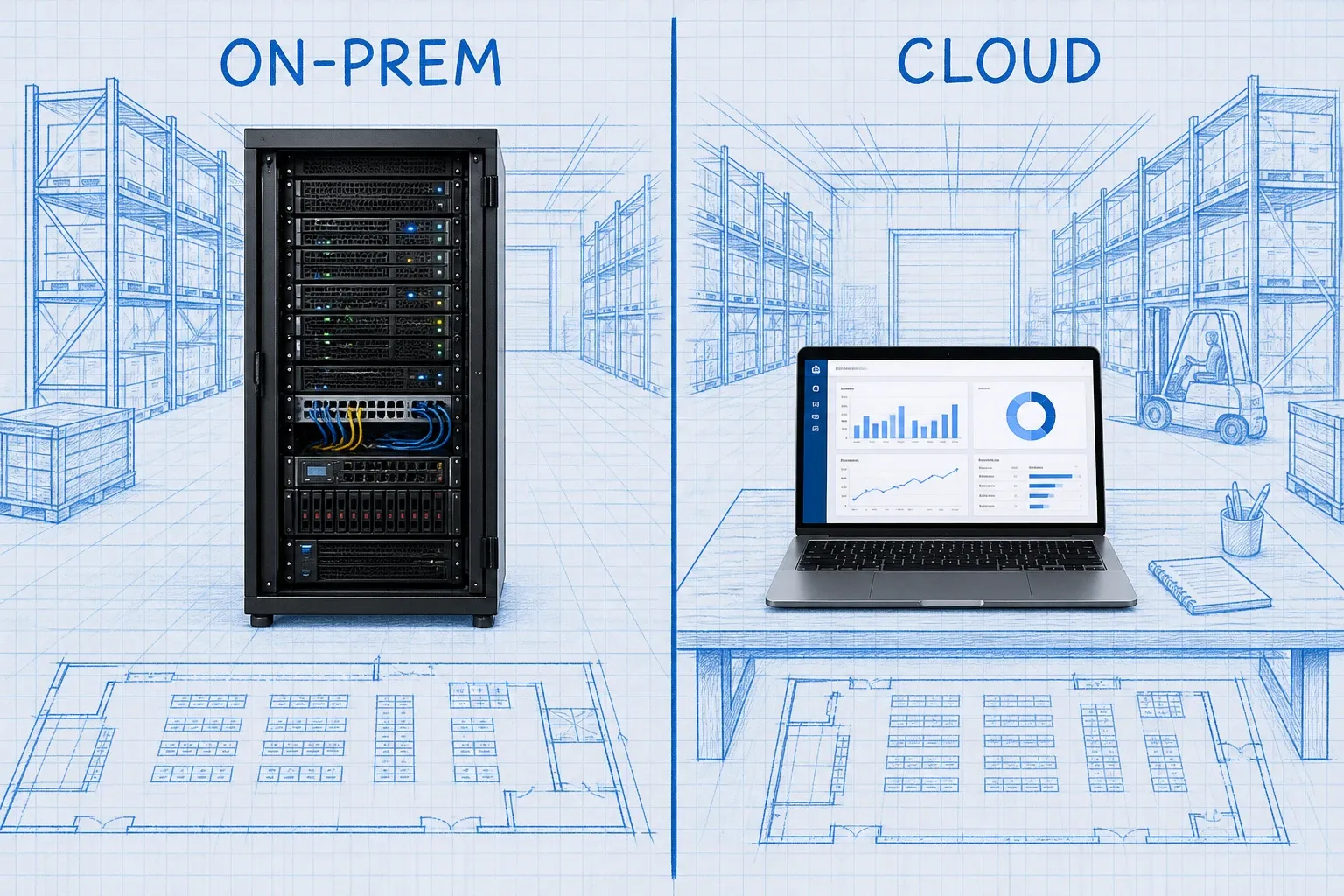
Cloud WMS vs On-Premise: Pros and Cons
A cloud WMS runs on the vendor's servers and you access it over the internet; an on-premise WMS installs on hardware you own and…
Read article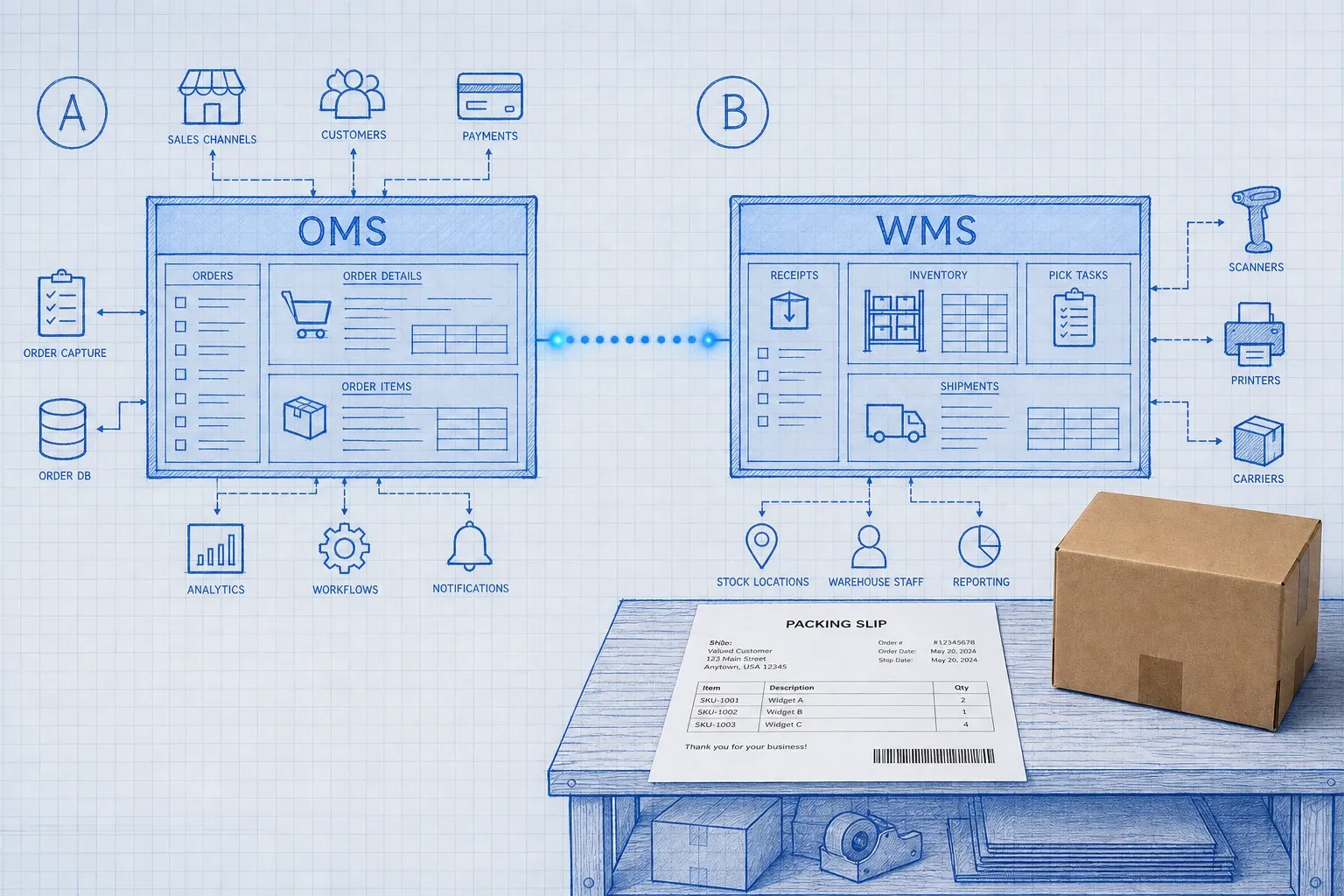
WMS vs OMS: How They Work Together
A WMS runs physical warehouse work inside your four walls. An OMS captures orders across channels and decides which location…
Read article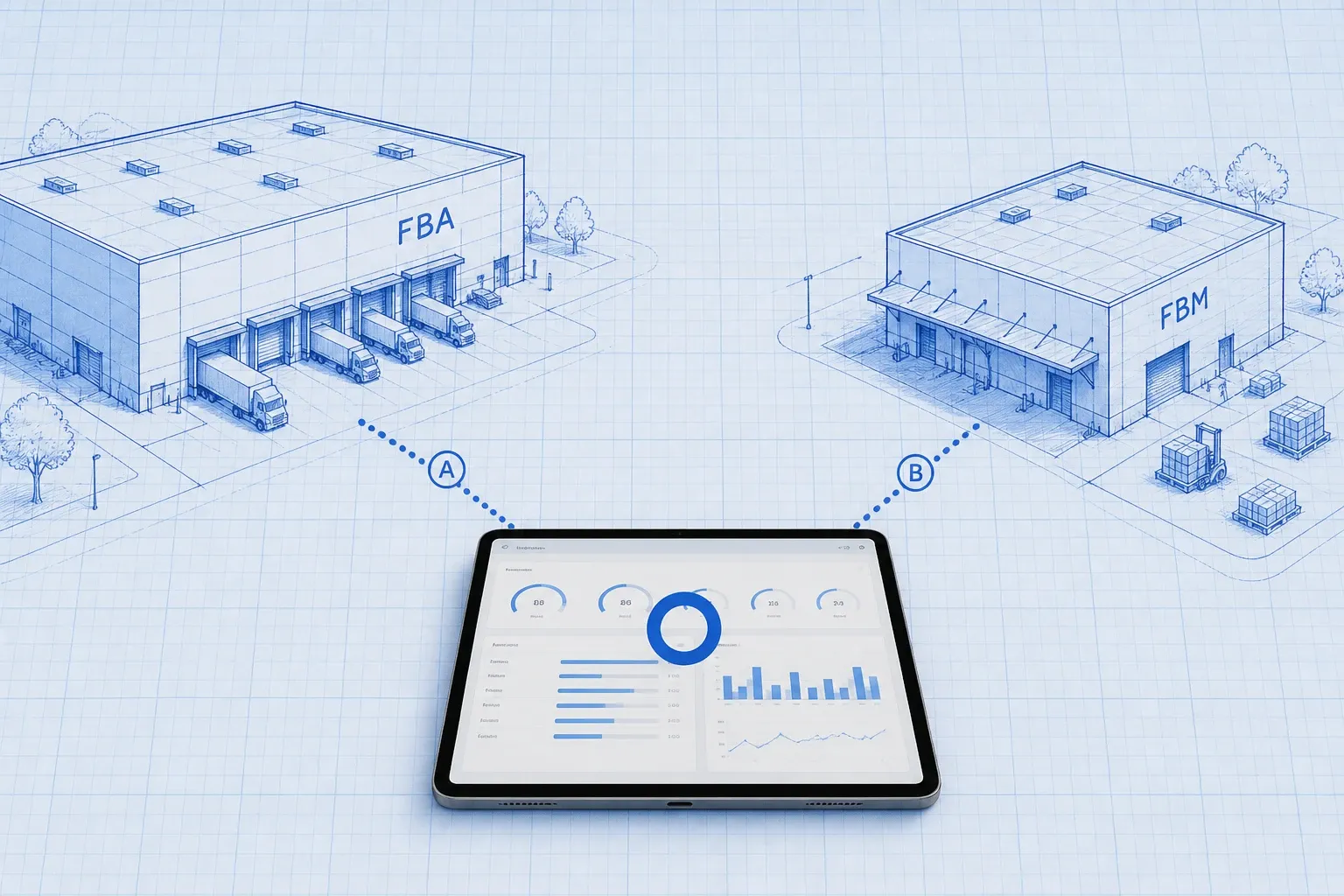
Amazon + WMS: Managing FBA and FBM from One Dashboard
An Amazon WMS integration connects Seller Central to your warehouse system so FBA stock in Amazon fulfillment centers and FBM…
Read article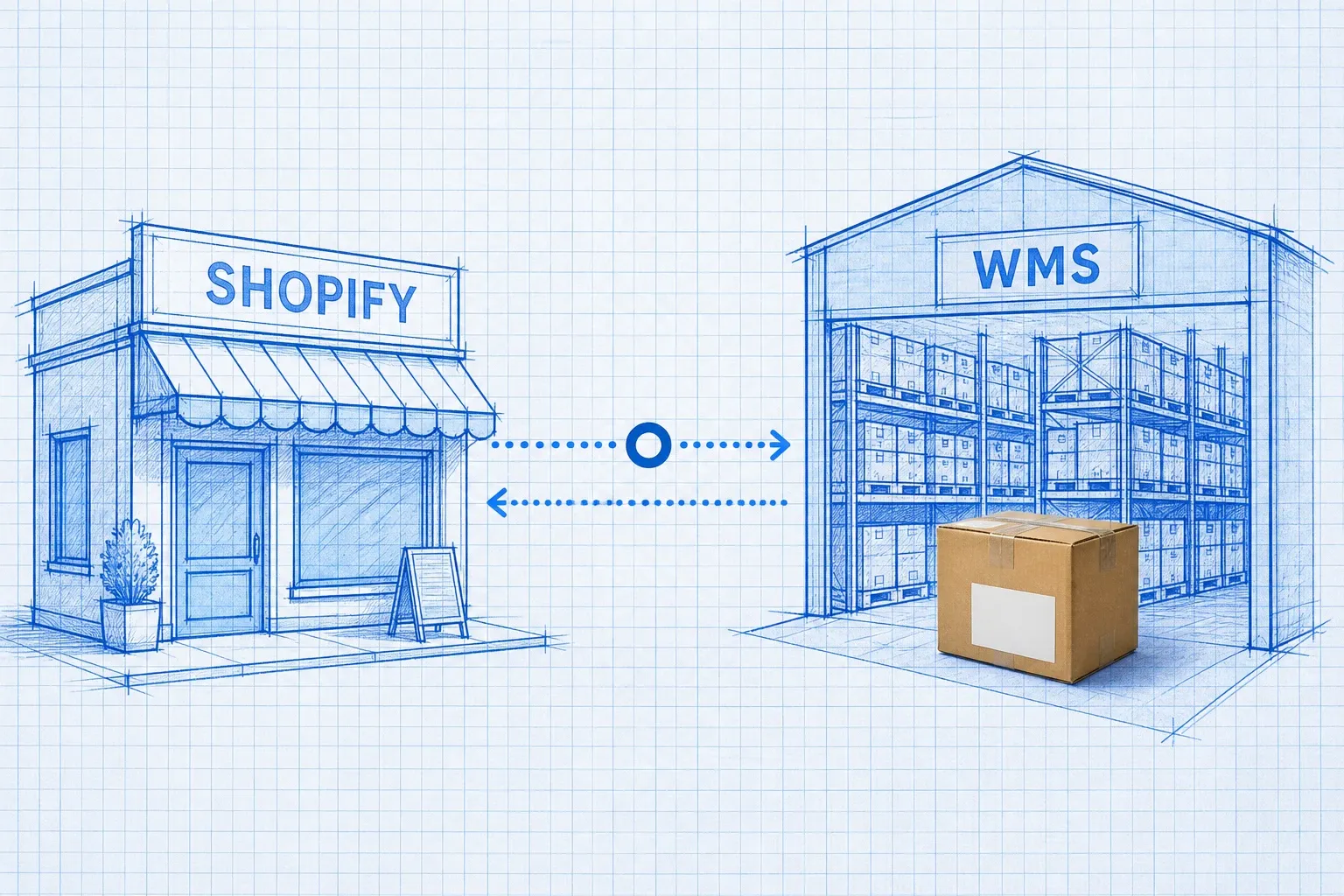
Shopify + WMS Integration: Setup and What to Expect
A Shopify WMS integration is a bidirectional connection that sends orders from Shopify into your warehouse system and pushes…
Read article
How Much Does a WMS Cost? A Realistic 2026 Breakdown
In 2026, a warehouse management system (WMS) typically costs $500 to $3,000 per month for small cloud setups, $75,000 to $250,000…
Read article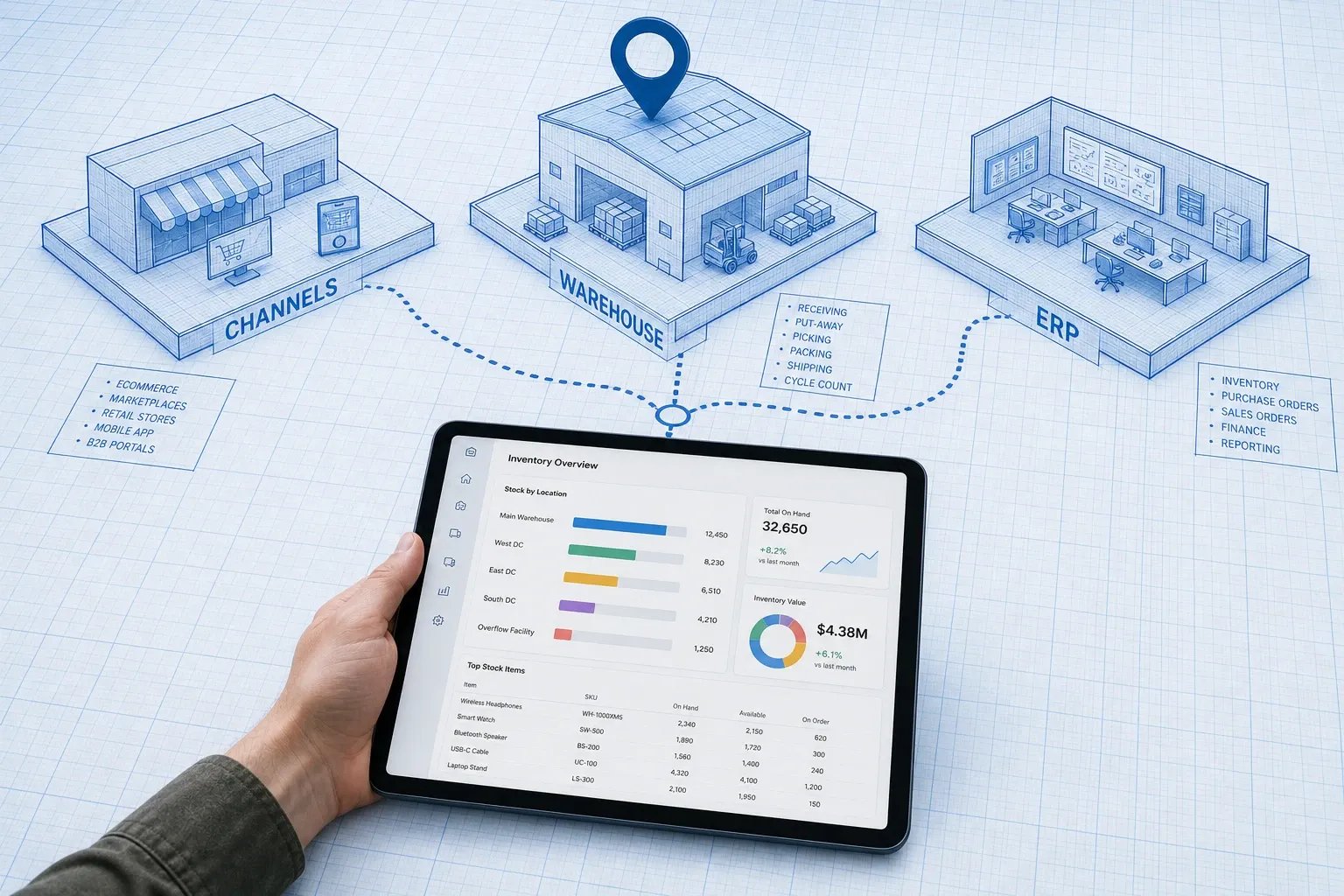
Best Inventory Management Software for Mid-Market Brands (2026)
The best inventory management software for mid-market brands in 2026 is the one that matches how you actually move stock:…
Read article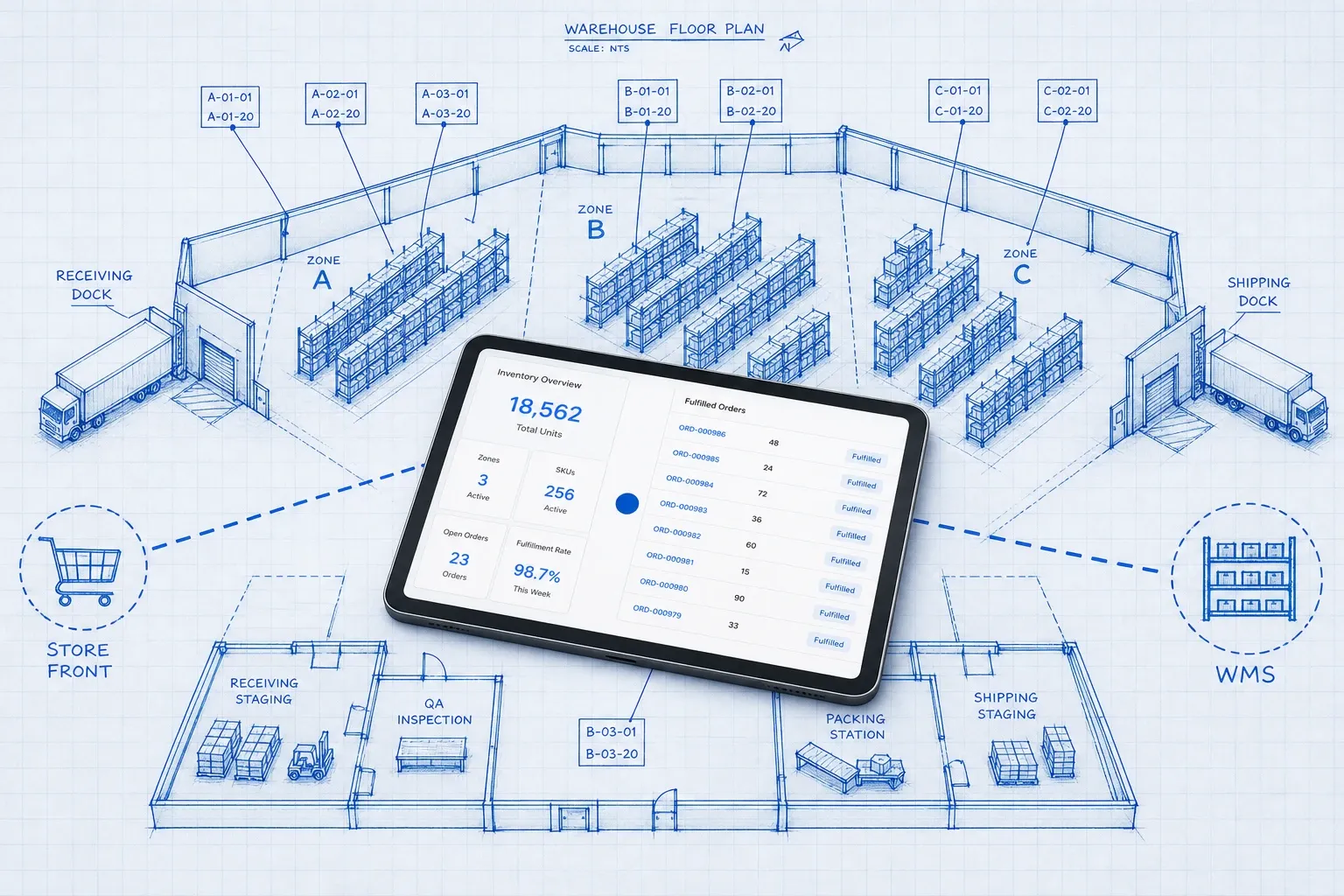
Best WMS for Shopify Brands in 2026
The best WMS for Shopify brands syncs inventory in real time, drives pick-pack workflows from barcodes, and scales without an…
Read article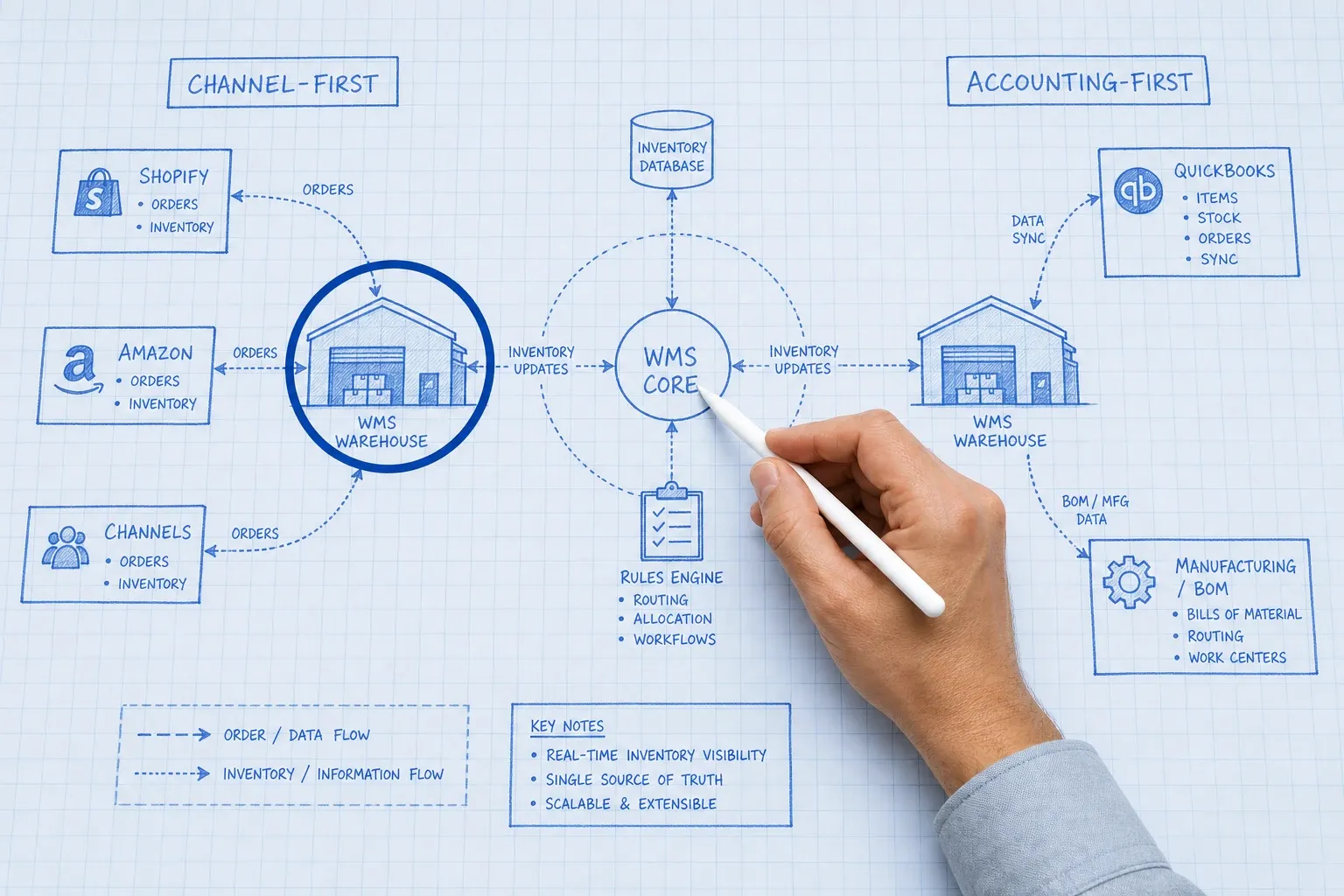
BinLogic vs Fishbowl: Comparing Warehouse-First Systems
BinLogic is built for ecommerce brands that need real-time multichannel inventory control; Shopify, Amazon, and other channels…
Read article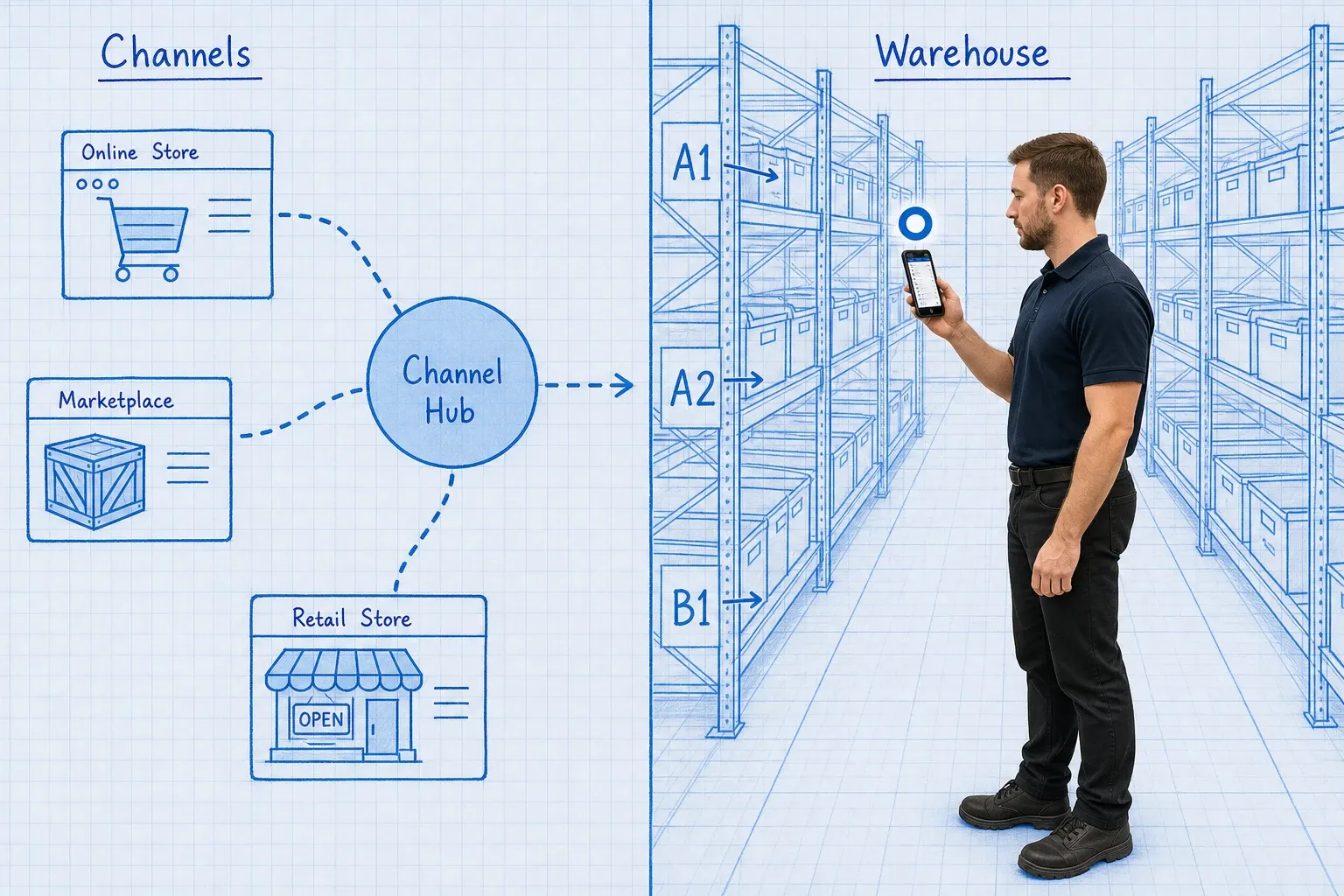
BinLogic vs Cin7: Which Is Right for Your Operation?
BinLogic and Cin7 serve fundamentally different roles. Cin7 is a multichannel inventory management platform with WMS features…
Read article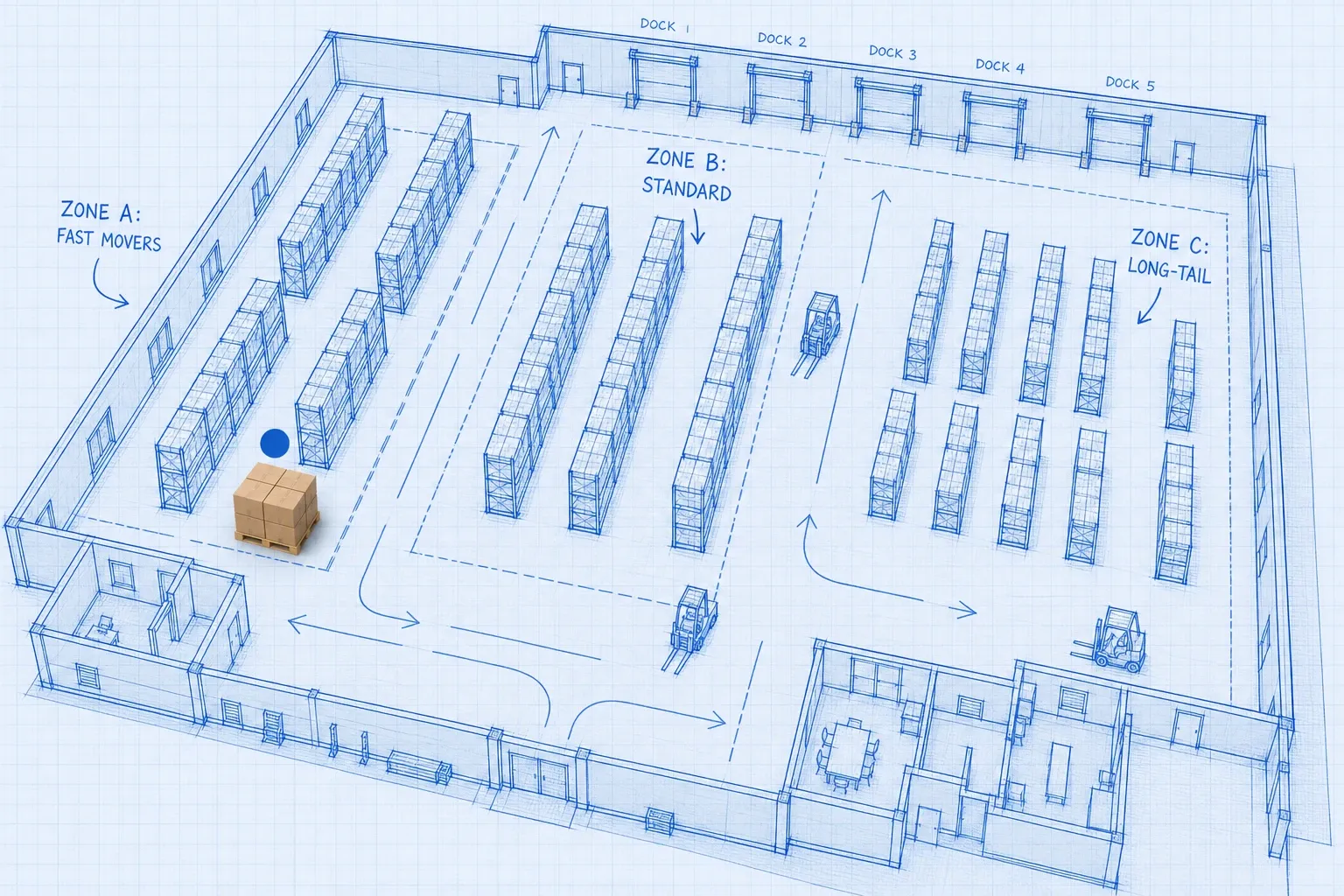
Black Friday Inventory Planning: How to Not Run Out
Black Friday inventory planning is the process of identifying your top-selling SKUs, building adequate safety stock, and…
Read article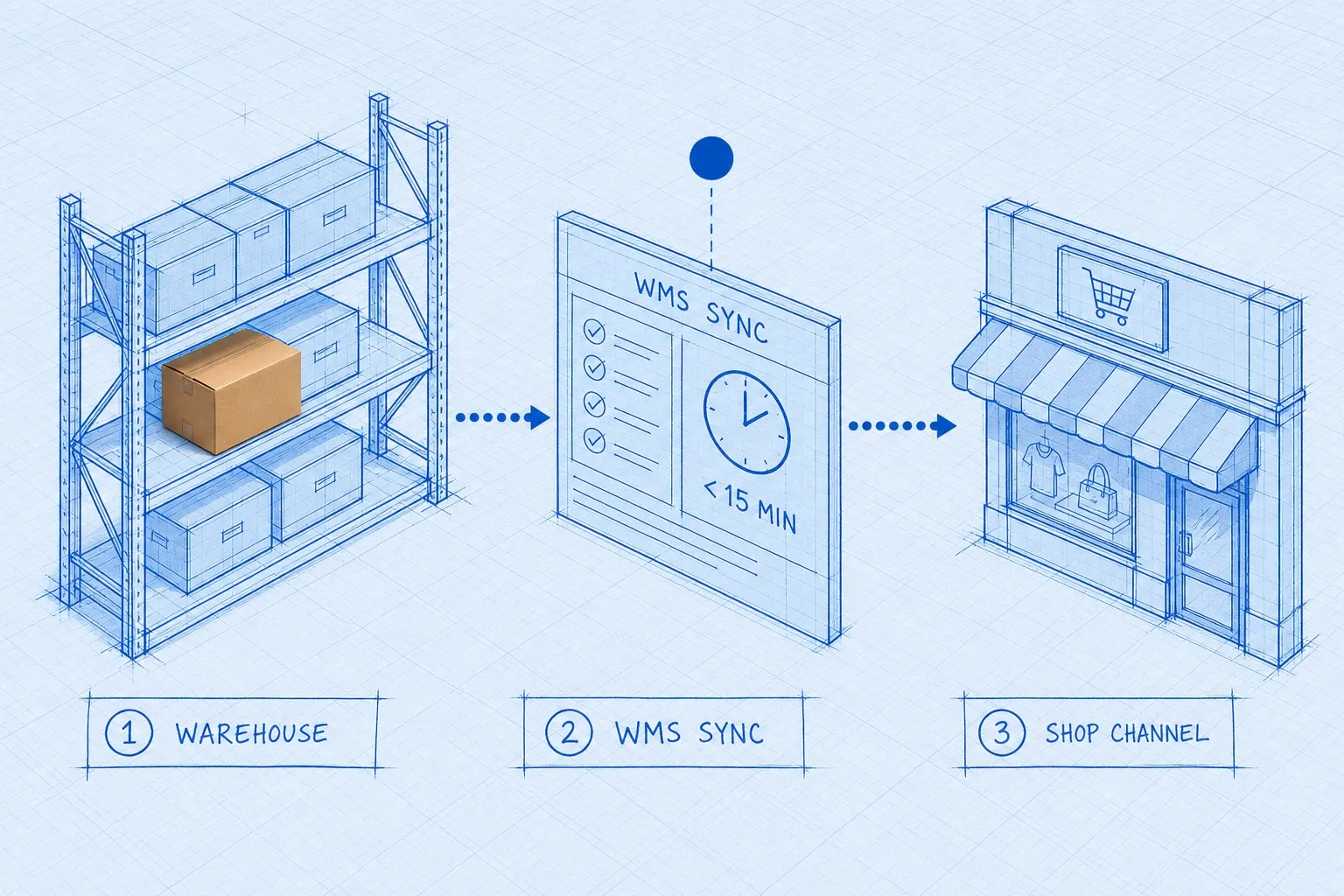
TikTok Shop Fulfillment: How to Keep Inventory in Sync
TikTok Shop inventory sync requires near-real-time updates (under 15 minutes) because viral demand spikes can multiply orders 10x…
Read article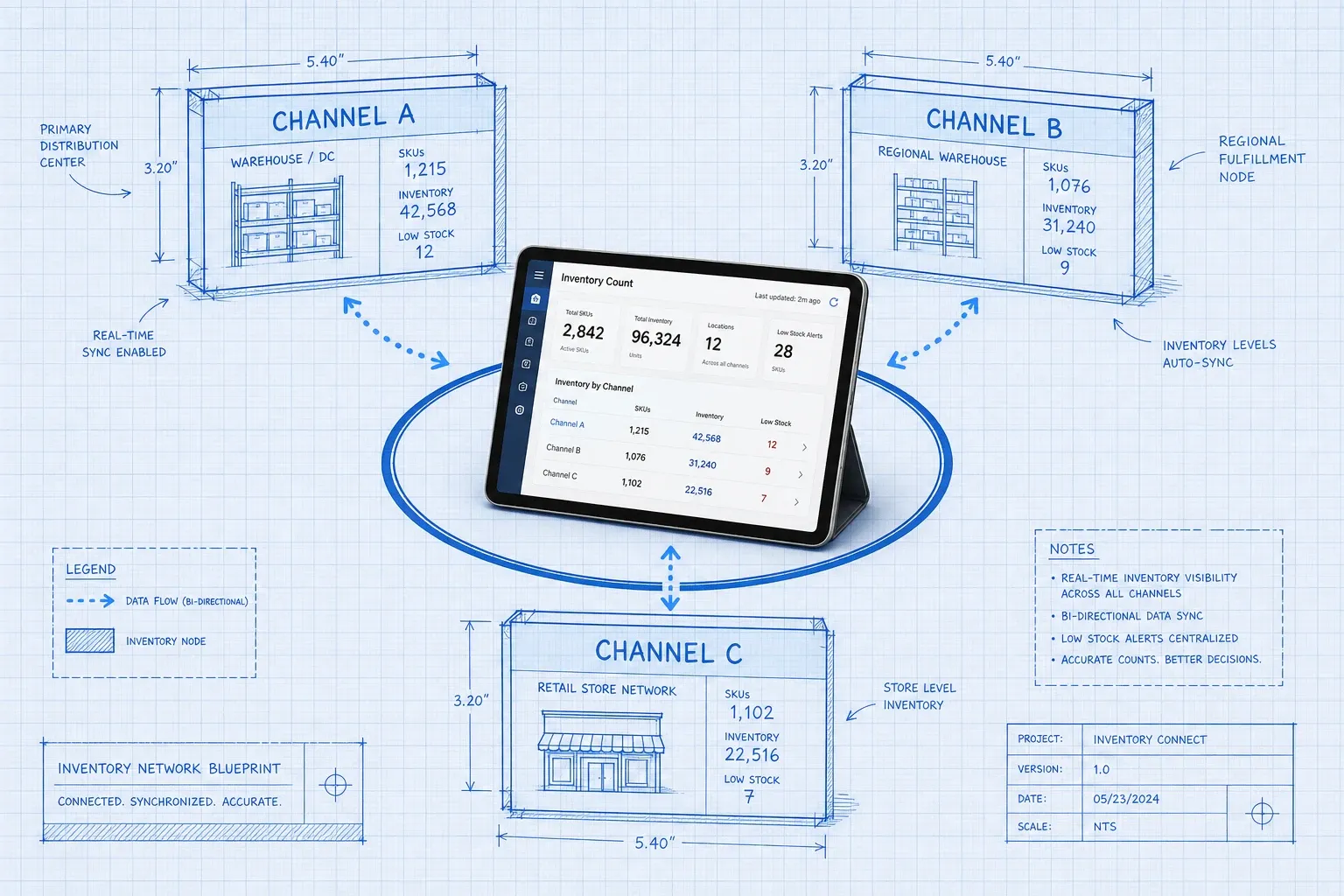
How to Sync Inventory Across Shopify, Amazon, and eBay
Syncing inventory across Shopify, Amazon, and eBay means connecting all three to a single authoritative stock count that updates…
Read article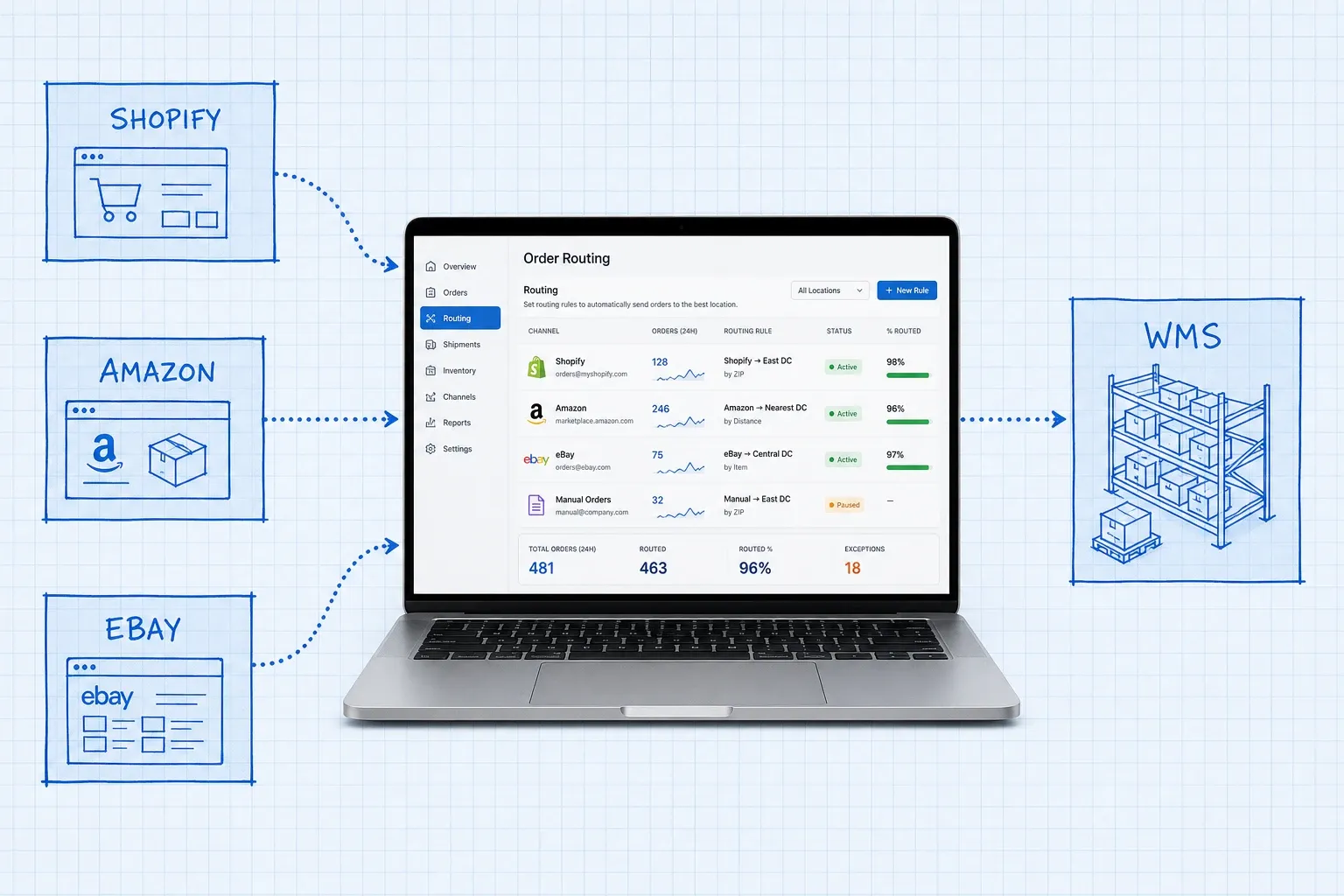
What Is an OMS? Do You Need One with Your WMS?
An OMS (Order Management System) manages the order lifecycle across all your sales channels: routing orders, syncing available…
Read article
How to Prevent Overselling Across Multiple Channels
Overselling happens when two channels draw from the same inventory pool without real-time synchronization. The fix is a central…
Read article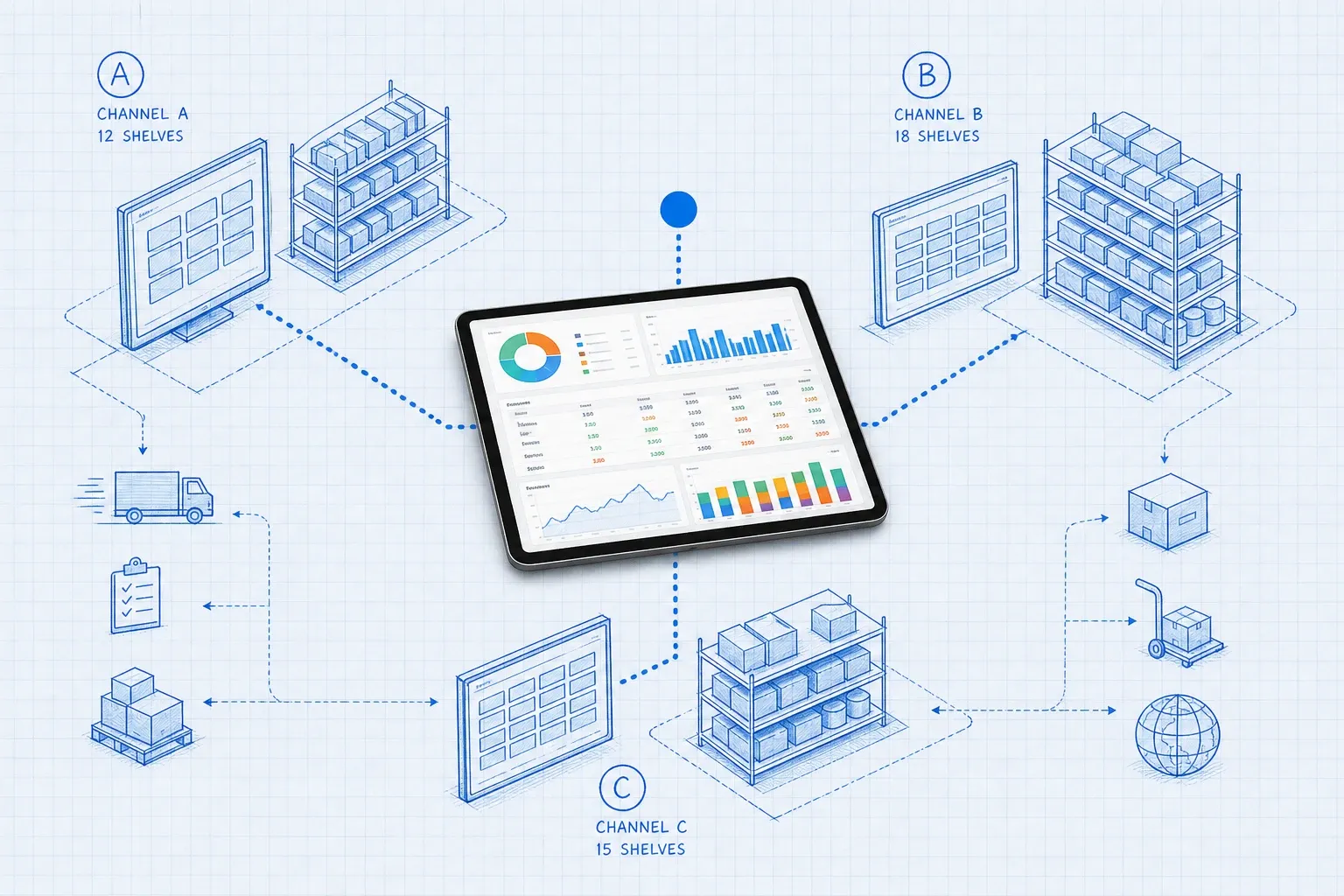
Multi-Channel Inventory Management: A Complete Guide
Multi-channel inventory management is the practice of tracking and syncing stock across all your sales platforms from one central…
Read article
Barcode Scanning in the Warehouse: A Complete Guide
Warehouse barcode scanning assigns a unique scannable code to every product, bin, and pallet, then uses handheld or fixed…
Read article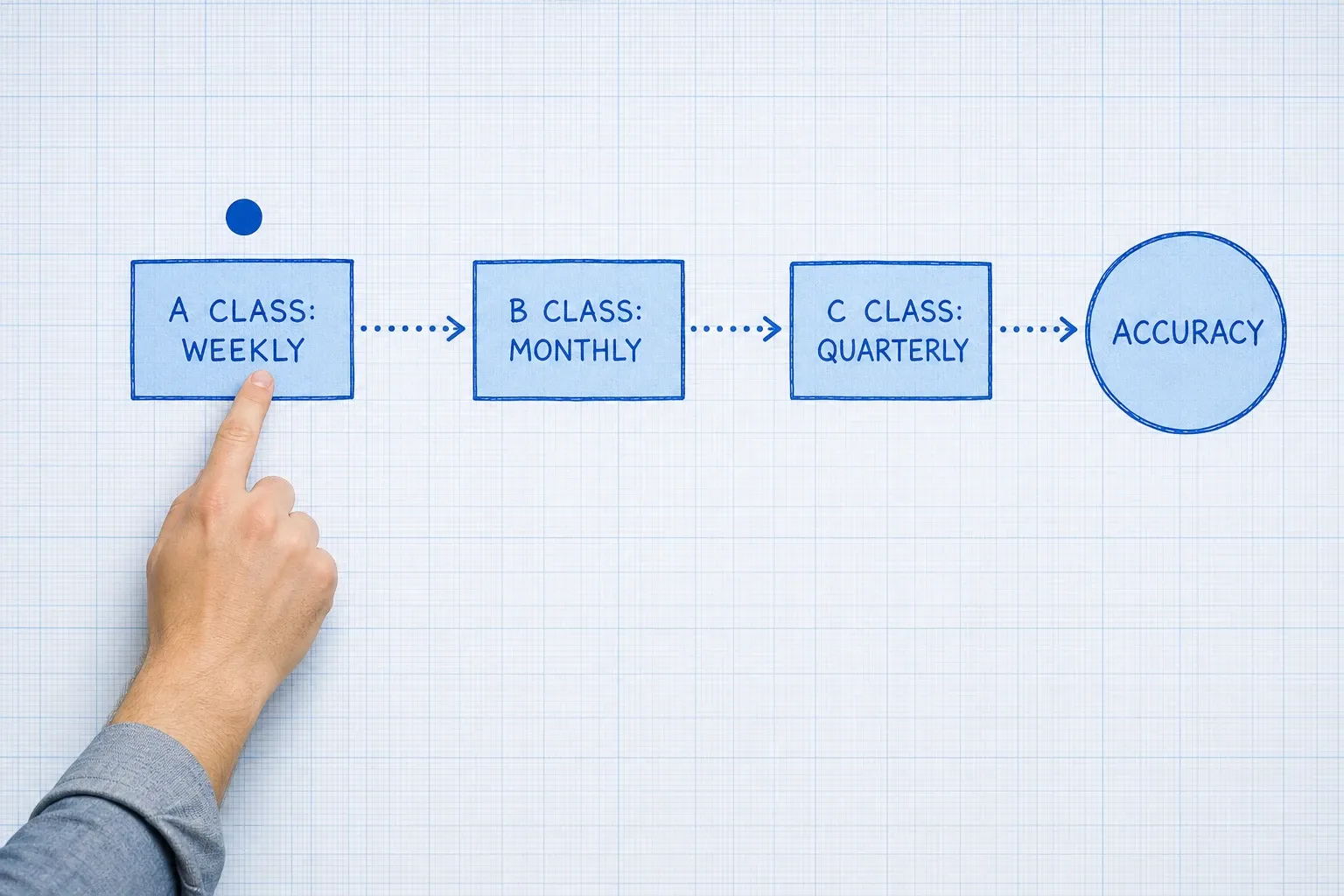
How Often Should You Count Your Warehouse Inventory?
How often you count warehouse inventory depends on each item's value and velocity. A-class items (top 20% by revenue) should be…
Read article
The Real Cost of Inventory Inaccuracy (With Numbers)
Inventory inaccuracy carries a hidden cost most warehouses underestimate: stockouts, mispicks, excess carrying costs, and lost…
Read article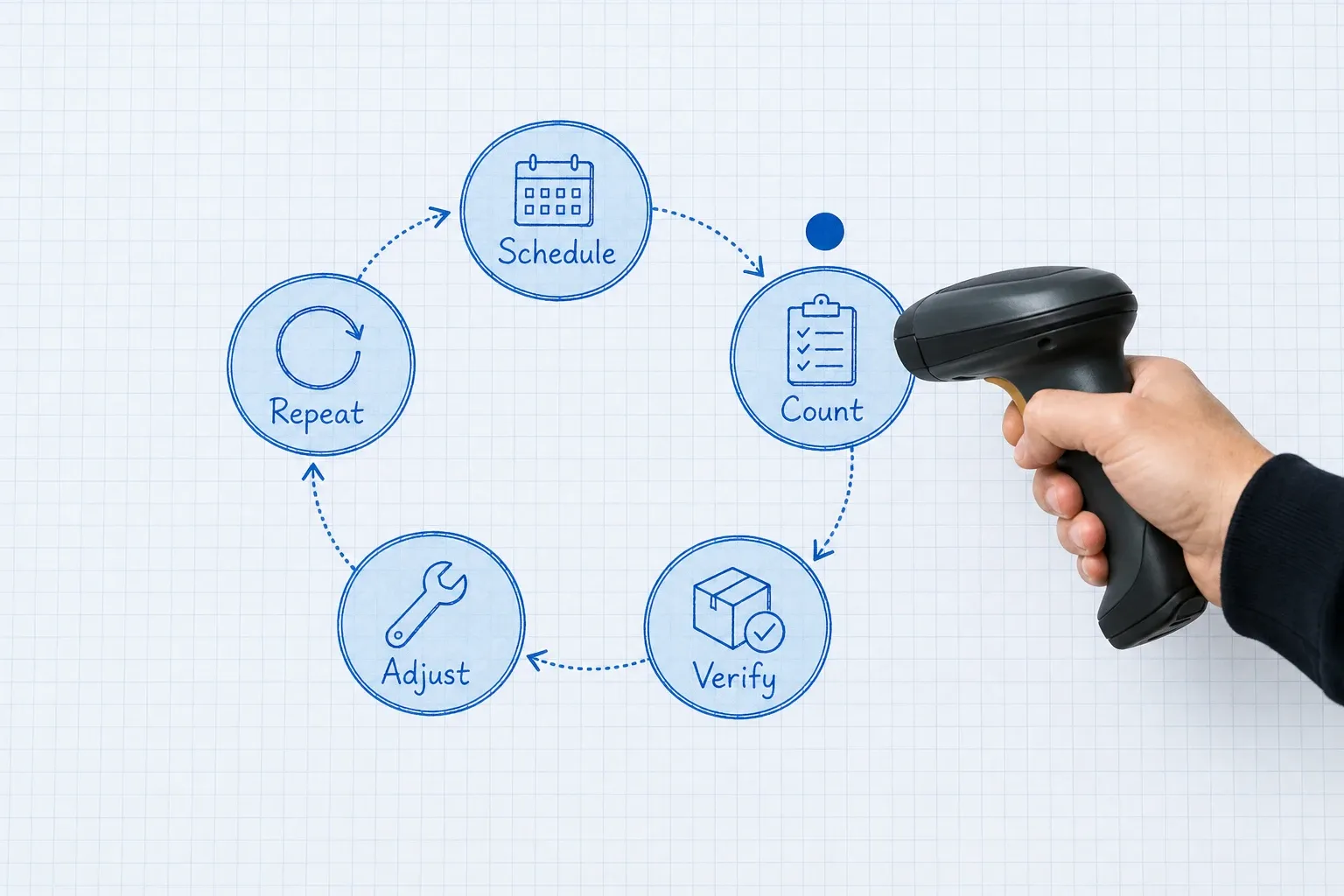
Cycle Counting: The Complete 2026 Guide
Cycle counting is an inventory auditing method where you count a rotating subset of your stock on a regular schedule instead of…
Read article
Cycle Count vs Physical Inventory: Which Is Better?
Cycle counting beats physical inventory for most warehouses because it maintains accuracy continuously without shutting down…
Read article
The Difference Between WMS, IMS, and ERP
A WMS (Warehouse Management System) controls physical warehouse operations including receiving, putaway, picking, packing, and…
Read article
What Does a WMS Actually Do? A Plain-English Guide
A warehouse management system (WMS) is software that runs the physical execution layer of your warehouse, directing receiving,…
Read articleNo posts in this category yet.