
















How Much Does a WMS Cost? A Realistic 2026 Breakdown
In 2026, a warehouse management system (WMS) typically costs $500 to $3,000 per month for small cloud setups, $75,000 to $250,000 in first-year total spend for mid-market brands, and $500,000+ for enterprise deployments. The subscription line is only part of the bill. Implementation, integrations, hardware, and training often push year-one cost to 2 to 3 times the software fee alone.
In 2026, a warehouse management system typically costs $500 to $3,000 per month for a small cloud setup, about $75,000 to $250,000 in first-year total spend for a mid-market brand, and $500,000 or more for complex multi-site deployments. The sticker price on a vendor slide is almost never the number that hits your budget.
WMS cost is the full price of owning warehouse management software for a period of time, including subscription or license fees, implementation, integrations, hardware, training, and ongoing support.
If you only compare monthly SaaS rates, you will underbuild the business case and oversell the savings story. This guide breaks WMS pricing into the pieces finance actually asks about, with realistic 2026 ranges for small, mid-market, and enterprise operations.
What does WMS pricing usually include?
Vendors love leading with a clean monthly number. Buyers need a stack. A complete WMS cost model usually has six buckets:
- Software : SaaS subscription or perpetual license
- Implementation : configuration, workflows, testing, go-live
- Integrations : ERP, ecommerce, carriers, accounting
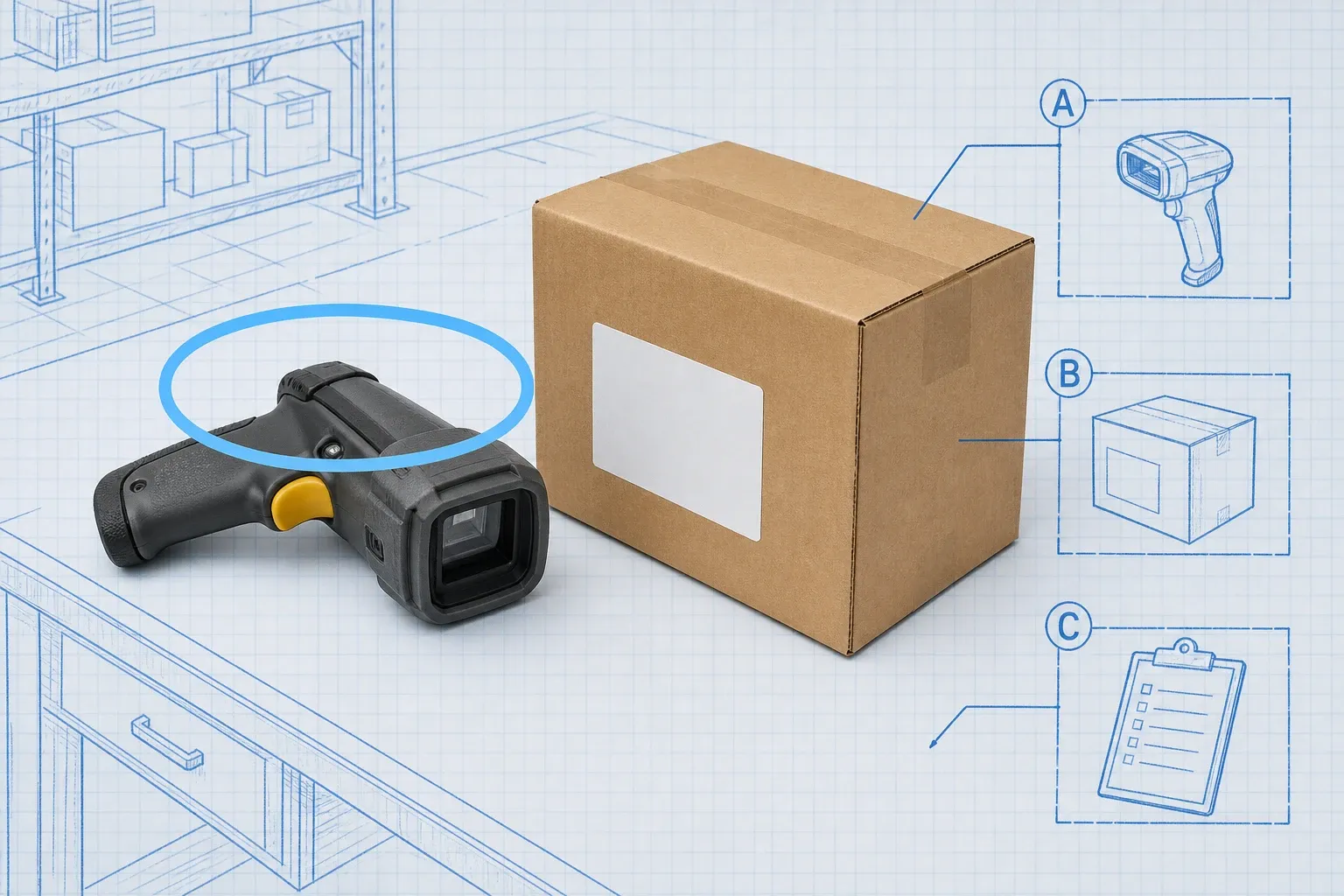
- Hardware : scanners, mobile devices, label printers, Wi-Fi upgrades
- Training and change management : floor training, SOPs, floor champion time
- Ongoing support : maintenance, success packages, premium SLAs
Ignore any one of those and your year-one number will be wrong. Industry pricing write-ups for 2026 still lean on a useful benchmark: averaged over five years, total ownership often lands near $10,000 per user, or roughly $167 per user per month, once licensing, maintenance, and standard support are included. Treat that as a sanity check, not a purchase order.
How much does a WMS cost by business size?
Ranges vary by SKU count, order volume, locations, and how many systems you need to connect. These 2026 bands are the ones most mid-market buyers actually see:
Operation size | Typical monthly software | Typical first-year total |
|---|---|---|
Small (1 to 10 users, single site) | $500 to $3,000 | $25,000 to $75,000 |
Mid-market (10 to 50 users) | $1,500 to $15,000 | $75,000 to $250,000 |
Enterprise (multi-site, high complexity) | $8,000 to $50,000+ | $250,000 to $1,000,000+ |
On-premise mid-market perpetual licenses still show up in RFPs at $100,000 to $500,000 before annual maintenance of 15 to 22 percent. Enterprise on-premise Tier-1 platforms can clear $500,000 to $2 million in license alone before consultants arrive.
If you are comparing options for a growing brand, also read our guide to the best inventory management software for mid-market brands in 2026. Feature fit matters as much as price.
Cloud WMS vs on-premise: which costs less?
Cloud / SaaS pricing
Cloud WMS is how most new mid-market projects start in 2026. You pay monthly or annually, the vendor hosts the app, and upgrades ship without a forklift IT project.
Common SaaS patterns:
- Per user: $100 to $500 per user per month
- Flat or tiered site fee: $500 to $3,000 per month at entry, rising with modules and volume
- Volume-based: fees tied to orders, shipments, or active SKUs
Entry plans can start near a few hundred dollars a month. Mid-market packages with multi-channel inventory, barcode workflows, and ERP connectors more often land in the low thousands per month before services.
On-premise pricing
On-premise means a larger upfront license, your own servers (or private cloud), and a maintenance contract. The license looks like a capital expense. The long tail does not. Maintenance, upgrades, and internal admin time keep the meter running for years.
Rule of thumb: cloud wins on cash flow and speed for most single-warehouse and multi-channel brands. On-premise only starts to look rational when you have heavy customization needs, strict data-residency rules, or a large existing IT org already staffing warehouse systems.
What hidden costs blow up the WMS budget?
This is where good proposals and bad proposals separate. Ask every vendor to itemize these before you sign.
Implementation and configuration
Implementation regularly equals 50 to 150 percent of first-year software spend. For a $2,000 per month SaaS product, that can mean $12,000 to $36,000 in services. Mid-market projects often budget $30,000 to $120,000. Enterprise programs can exceed $100,000 to $500,000.
You are paying for location setup, picking rules, receiving workflows, user roles, testing, and go-live support. Underfunding this line is the fastest way to a delayed launch.
Integrations
ERP and ecommerce connectors are rarely "free forever." Native connectors may be included. Custom API work is not. Mid-market ERP integrations commonly add $20,000 to $60,000. Carrier, marketplace, and accounting links stack on top. If you sell on Shopify, Amazon, and a wholesale portal, count every handshake.
Hardware and floor devices
Even a clean software deal still needs scanners, rugged tablets or phones, label printers, and solid Wi-Fi. Small sites often spend $7,500 to $20,000. Mid-market floors can land between $25,000 and $100,000. Skipping devices and hoping smartphones are enough is a common false economy.
Training and go-live drag
Training quotes look small ($2,000 to $20,000 for many mid-market deals). The real cost is overtime, temporary slowdowns, and the week your best pickers babysit the new process. Budget floor time, not just vendor webinars.
Price escalators and add-ons
Ask about annual increases, extra warehouse fees, connector surcharges, premium support, and charges for additional environments. A 10 percent yearly bump on a growing seat count compounds fast.

How do vendors actually price a WMS?
Most commercial models fall into one of four patterns:
- Per user / per named seat : simple to understand, painful when temps spike in Q4
- Per warehouse or site : cleaner for multi-location brands if the site fee is honest
- Per transaction or order volume : aligns with growth, but model peak months carefully
- Module bundles : core inventory plus add-ons for labor, yard, automation, or advanced analytics
Your negotiation leverage is usually stronger on implementation packages, training bundles, and first-year support than on the published list price. Vendors protect the license number because it anchors renewals. Services are where good buyers pull room.
Also clarify what "user" means. Is a shared scanner a full seat? Do supervisors count? Does a read-only finance login cost the same as a picker? Those definitions move the quote more than most feature checklists.
What ROI should you expect against WMS cost?
Price only matters relative to value. According to Nucleus Research, organizations deploying a WMS improve inventory accuracy by an average of 20 percent, and 46 percent of interviewed organizations report measurable accuracy gains within the first year. Higher accuracy cuts emergency purchases, missed picks, write-offs, and customer make-goods.
Those gains are why the sticker price is the wrong debate. If you are still arguing about a few hundred dollars a month while stockouts and recounts eat labor every week, the spreadsheet is looking at the wrong column. For the downside of staying inaccurate, see the real cost of inventory inaccuracy.
A practical ROI model for mid-market brands usually tracks:
- Labor hours removed from hunting and recounting
- Fewer mis-ships and returns
- Lower safety stock from better visibility
- Faster dock-to-stock and pick rates
- Avoided headcount as volume grows
Payback windows vary. Lightweight cloud projects can show value in months. Heavier ERP-tied programs often take longer because integration and data cleanup dominate the critical path. Build the case on your own miss rates and labor rates, not a vendor's best-case slide.
How should you budget for a WMS in 2026?
Use a three-year total cost model, not a one-month SaaS screenshot.
Step 1 : Size the software band. Map users, locations, daily orders, and must-have modules to the small / mid-market / enterprise ranges above.
Step 2 : Add services at 0.5x to 1.5x year-one software. If your data is messy or you need deep ERP work, lean high.
Step 3 : Add hardware and network. Scanners, printers, and Wi-Fi upgrades belong in year one even if a different cost center owns them.
Step 4 : Add a contingency of 15 to 25 percent. Cutover overtime, data cleanup, and "we forgot that connector" fees show up late.
Step 5 : Compare 36-month totals side by side. A cheap month-one quote with aggressive escalators and à-la-carte connectors can lose to a clearer mid-tier plan.
If you are still defining what the system should do day to day, start with what a WMS actually does before you lock a budget number.
What questions should you ask every WMS vendor?
Bring these to every demo and proposal review:
- What is included in the quoted subscription, and what is priced as an add-on?
- How do you charge for extra warehouses, channels, or API volume?
- What is the fixed-fee implementation scope, and what triggers change orders?
- Which integrations are native versus custom, and who owns ongoing connector maintenance?
- What is the expected go-live timeline for an operation of our size?
- What are typical annual price increases over a three-year term?
- Can we export our data cleanly if we leave?
Write the answers into one comparison sheet. The cheapest proposal is often the one with the most deferred line items.
How BinLogic fits the mid-market cost conversation
Mid-market brands usually do not need a Tier-1 enterprise platform with a six-figure services army. They need real-time inventory, barcode-driven receiving and picking, multi-channel sync, and an implementation that does not swallow a fiscal year.
Tools like BinLogic WMS are built for that band: warehouse execution without the enterprise tax, so you can price software and services against the mid-market ranges in this guide instead of an on-premise megaproject. If your operation has outgrown spreadsheets and bolted-on inventory modules, price the full year-one stack, then judge vendors on time to accurate stock and clean picks, not on who printed the lowest monthly teaser rate.
Related reading
Frequently asked questions
How much does a WMS cost for a small warehouse?
Most small, single-warehouse operations on cloud WMS pay $500 to $3,000 per month in software fees, with total first-year spend commonly landing between $25,000 and $75,000 once you include implementation, scanners, training, and basic integrations. Exact numbers depend on user count, order volume, and how clean your item and location data already is.
What is the average WMS cost per user?
Industry pricing guides for 2026 commonly cite a five-year average near $10,000 per user, or about $167 per user per month, when licensing, maintenance, and standard support are included. That is a sanity check, not a quote. Per-user SaaS seats often list between $100 and $500 per month before volume discounts.
Does WMS pricing include implementation?
Usually not. Implementation is billed separately and often runs 50 to 150 percent of first-year software cost. It covers configuration, workflow design, data migration, testing, and go-live support. Always ask vendors to separate subscription pricing from services so you can compare proposals fairly.
Is cloud WMS cheaper than on-premise?
Cloud WMS is usually cheaper to start and easier to budget because you avoid a large perpetual license and server build-out. On-premise can look competitive at very large scale, but annual maintenance of 15 to 22 percent of the license, plus internal IT, often closes that gap over three to five years. For most mid-market brands, SaaS wins on total cost and time to value.
What hidden fees should I watch for in a WMS quote?
Watch for per-connector API fees, extra charges for additional warehouses or channels, premium support tiers, annual price increases, custom report packs, and hardware that is assumed but not listed. Also budget for data cleanup and overtime during cutover. Those line items are where many "cheap" quotes grow after signature.
Run your warehouse without losing a single unit.
Binlogic is the warehouse management system for brands and retailers who run their own fulfillment. Receive, count, pick, pack and ship, with every move scanned. See it in a 30-minute demo.
Get a demo