
















Best Inventory Management Software for Mid-Market Brands (2026)
The best inventory management software for mid-market brands in 2026 is the one that matches how you actually move stock: multichannel sync, warehouse execution, or full ERP. Cin7 leads for channel breadth, Fishbowl for QuickBooks-centric ops, BinLogic for warehouse-first brands that need bin-level accuracy, and NetSuite when you are ready for a full ERP. Pick by workflow, not by feature list.
The best inventory management software for mid-market brands in 2026 is the system that matches how you sell and how you fulfill, not the one with the longest feature list. Cin7 is strongest for multichannel retail and wholesale, Fishbowl for QuickBooks-centric and manufacturing ops, BinLogic for warehouse-first brands that need bin-level accuracy, and NetSuite when you are ready for a full ERP suite.
Best inventory management software is the category of tools that track stock levels, sync sales channels, drive purchasing, and (in stronger systems) direct warehouse work so the numbers in your system match what is on the shelf.
Mid-market brands feel this gap first. You have outgrown spreadsheets and Shopify's native stock tools, but you are not ready for an 18-month enterprise rollout. According to Unleashed Software's 2024 inventory benchmarks, 58% of retail brands and D2C manufacturers still run below 80% inventory accuracy, and the average business holds about $142,000 in excess stock above what demand requires. The right software closes that gap. The wrong software just adds another login.
This guide compares the leading options for mid-market brands in 2026, explains how to choose, and shows where warehouse-first systems fit next to channel-first and ERP platforms.
What should mid-market brands look for in inventory software?
Start with your operating model, then score vendors against it.
Real-time multichannel sync
If you sell on Shopify, Amazon, TikTok Shop, or wholesale portals, stock must update across every channel within seconds of a sale. Batch polling every 15 or 30 minutes creates oversell windows during promotions. Ask vendors to show webhook-based sync under load, not a slide that says "real-time."
Warehouse execution, not just a stock ledger
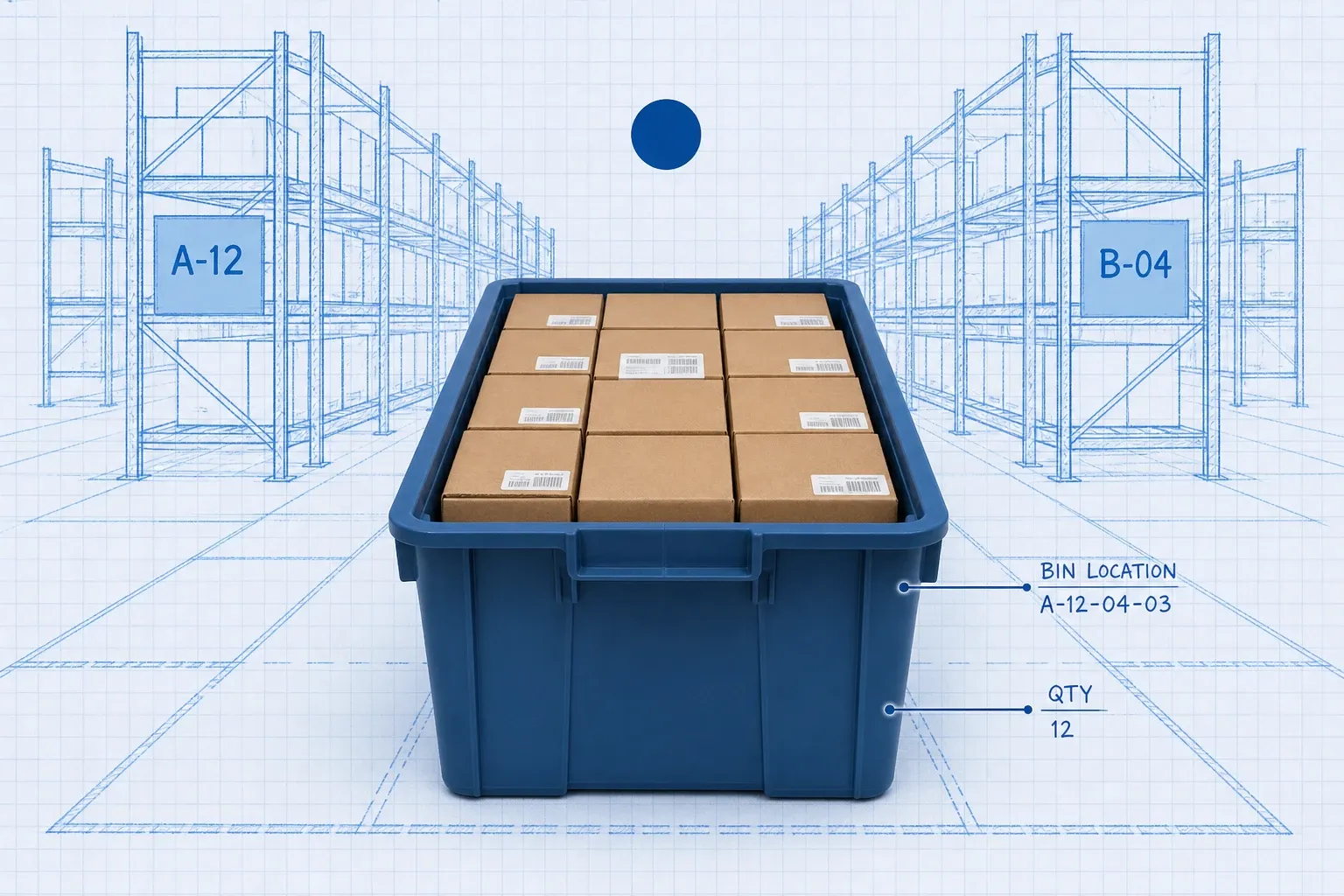
Many tools call themselves inventory software when they only keep a quantity ledger. Mid-market brands that pick and pack in-house need bin locations, barcode scanning, directed put-away, and cycle counts. If your floor team still works from printed pick lists and sticky notes, a ledger will not fix accuracy. For a deeper look at how inventory tools differ from warehouse systems, see the difference between WMS, IMS, and ERP.
Purchasing and receiving that match your suppliers
You need purchase orders, partial receipts, landed cost, and clear receiving workflows. Tools that force you to "adjust stock" after every inbound shipment hide the audit trail you need when a count goes wrong.
Reporting you will actually open
Ignore vanity dashboards. Ask for aging stock, days of supply, location-level variance, and channel-level sell-through. Nucleus Research found that organizations deploying a warehouse management system (WMS) improved inventory accuracy by about 20% on average within a year. That gain only sticks if you can see variance by location and SKU, then act on it.
Total cost of ownership, not sticker price
List monthly subscription, implementation fees, per-user or per-order overages, scanner hardware, and the hours your team will spend on training. A $200/month tool with a painful rollout can cost more than a $400/month tool that your team adopts in two weeks.
Which inventory management software is best for mid-market brands in 2026?
Here is a practical shortlist for brands roughly in the $2M to $50M revenue range, selling across channels and fulfilling from one or more warehouses.
BinLogic: Best warehouse-first option for mid-market brands
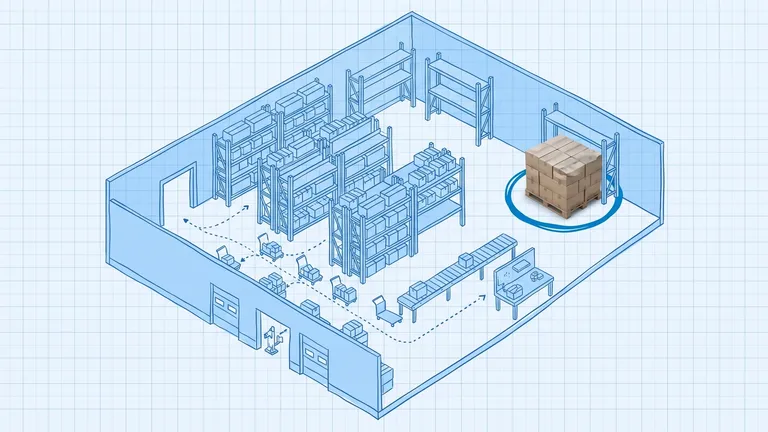
BinLogic is built for brands that run their own warehouse and need the floor and the system to agree. It centers on bin locations, barcode scanning, cycle counting, and pick-pack workflows rather than treating the warehouse as an afterthought to a channel dashboard.
Best for: DTC and multichannel brands that fulfill in-house, need high inventory accuracy, and want a WMS without enterprise complexity.
Strengths:
- Bin-level tracking and barcode-driven receiving, picking, and counting
- Clear workflows for teams graduating from spreadsheets or Shopify-only tools
- Multichannel inventory sync without forcing you into a heavy ERP
- Faster time to value than enterprise WMS platforms
Watch-outs:
- If you need deep manufacturing MRP or native EDI for big-box retail, evaluate those modules carefully
- Brands that outsource 100% of fulfillment to a 3PL may need less warehouse depth
Tools like BinLogic WMS automate bin-level counts and pick paths so you are not rebuilding accuracy in a spreadsheet every month.
Cin7: Best for multichannel retail and wholesale breadth
Cin7 (Core and Omni) is frequently shortlisted by mid-market brands that sell across many channels and need wholesale or EDI workflows. Core suits growing product businesses. Omni adds depth for larger ops that need native EDI, POS, and heavier 3PL connections.
Best for: Multichannel brands with wholesale accounts, several marketplaces, and complex order routing.
Strengths:
- Broad integration catalog across ecommerce and wholesale channels
- Strong B2B and wholesale workflows
- Demand planning options that help seasonal brands
Watch-outs:
- Pricing and onboarding can climb quickly once you add modules
- Warehouse depth varies by edition; confirm bin-level and scan workflows in the demo
- Compare carefully if your main pain is floor accuracy rather than channel count (see BinLogic vs Cin7 for a side-by-side)
Fishbowl: Best for QuickBooks-centric and manufacturing ops
Fishbowl has long been the default for teams that live inside QuickBooks and need inventory plus light manufacturing. It remains a strong fit when accounting integration and bill-of-materials tracking matter more than modern ecommerce UX.
Best for: Manufacturers and distributors deeply tied to QuickBooks who need lot, serial, and assembly tracking.
Strengths:
- Mature QuickBooks Desktop and Online connections
- Strong lot, serial, and compliance tracking
- Warehouse features that go beyond a basic stock ledger
Watch-outs:
- Cloud and UX experience can feel dated next to newer platforms
- Ecommerce channel sync may need more configuration than channel-native tools
- Ecommerce-heavy brands may prefer a warehouse-first alternative if QuickBooks depth is not the main constraint
Katana: Best for make-to-order and light manufacturing
Katana focuses on production planning, bills of materials, and shop-floor visibility. It is a strong pick when you manufacture or assemble finished goods and need inventory tied to work orders.
Best for: Small to mid-size manufacturers that sell DTC or wholesale and need live production schedules.
Strengths:
- Visual production planning
- BOM and shop-floor inventory linkage
- Approachable pricing for growing manufacturers
Watch-outs:
- Less emphasis on multi-warehouse ecommerce fulfillment complexity
- Brands that only buy and resell finished goods usually need a different tool
NetSuite: Best when you are ready for a full ERP
NetSuite is the mid-market ERP many brands graduate into once finance, CRM, and inventory need one system of record. Inventory is strong inside that suite, but you are buying an ERP, not a lightweight inventory app.
Best for: Brands past roughly $5M to $10M with multi-entity finance needs and a budget for professional services.
Strengths:
- Unified finance, inventory, and CRM
- Scales with complex, multi-subsidiary ops
- Broad partner and implementation ecosystem
Watch-outs:
- Base pricing often starts near $1,000 per month before modules
- Implementations take longer and cost more than point solutions
- Overkill if your only problem is warehouse accuracy or channel sync
inFlow and Zoho Inventory: Best lighter-weight mid-market starters
inFlow suits B2B and wholesale teams that want capable stock control without enterprise weight. Zoho Inventory is a strong value option for smaller catalogs and simpler channel mixes, especially if you already use Zoho apps.
Best for: Brands early in the mid-market range that need better stock control than spreadsheets, with a clear upgrade path later.
Strengths:
- Lower entry price
- Faster onboarding for smaller teams
- Enough depth for wholesale invoicing (inFlow) or simple multichannel (Zoho)
Watch-outs:
- Ceiling shows up as SKU count, warehouse complexity, or channel mix grows
- Warehouse execution depth is limited compared with a dedicated WMS
How do these tools compare side by side?
Tool | Best fit | Warehouse depth | Multichannel strength | Typical starting cost* |
|---|---|---|---|---|
BinLogic | Warehouse-first mid-market brands | High (bin, scan, count, pick) | Strong for Shopify-centric stacks | Mid-market SaaS |
Cin7 | Multichannel + wholesale | Medium to high (edition-dependent) | Excellent | From ~$349/mo (Core) |
Fishbowl | QuickBooks + manufacturing | High | Moderate | From ~$329/mo |
Katana | Light manufacturing | Medium | Moderate | From ~$99 to $179/mo |
NetSuite | Full ERP readiness | High (with modules) | Strong inside ERP stack | From ~$1,099/mo |
inFlow / Zoho | Lighter mid-market | Low to medium | Good for simpler stacks | From free / ~$100/mo |
\*Published starting prices change often. Confirm current quotes and implementation fees before you decide.
Use this table as a filter, not a final score. A brand with one warehouse and five marketplaces will weight Cin7 or BinLogic differently than a manufacturer living in QuickBooks.
How do you choose the right inventory management software?
Work through these five questions before you book demos.
1. Where does inventory break today?
If overselling and channel mismatches dominate, prioritize sync latency and order routing. If pick errors, lost locations, and painful counts dominate, prioritize warehouse execution. Many mid-market brands have both problems. Fix the one that costs the most cash first, then make sure the platform can grow into the other.
2. Do you fulfill in-house, through a 3PL, or both?
In-house fulfillment needs bin locations, scanners, and directed workflows. 3PL-heavy models need strong partner connectors and inventory visibility into someone else's building. Hybrid models need both. Do not buy a channel-only tool and hope the warehouse "figures it out."
3. How many channels and warehouses will you have in 24 months?
Buy for the next two years, not last year's catalog. If you plan to add TikTok Shop, a second warehouse, or wholesale EDI, put those on the requirements matrix now. Retrofitting later is where mid-market implementations stall.
4. What must integrate on day one?
List Shopify, Amazon, your accounting system, shipping carriers, and any 3PL as critical, important, or optional. Share that list before demos. A polished UI that cannot sync your actual stack is a non-starter.
5. What does success look like in 90 days?
Define targets such as inventory accuracy above 98%, sync under 60 seconds, or dock-to-stock under a set number of hours. Vendors that cannot map their product to those outcomes are selling features, not results. For channel-level tactics after you pick a system, see our multi-channel inventory management guide.
What mistakes do mid-market brands make when buying inventory software?
Buying an ERP too early. NetSuite and similar suites are powerful, but they are a company-wide change program. If your pain is floor accuracy and channel sync, a focused inventory or WMS platform usually delivers value faster.
Buying channel tools and ignoring the warehouse. Syncing five marketplaces from a wrong quantity still creates cancellations. Nearly 40% of retailers and D2C manufacturers cancel at least 10% of customer orders, per Unleashed's 2024 benchmarks. Bad stock data is a common root cause.
Skipping a sandbox test. Load real SKUs, kits, partial receipts, and a flash-sale scenario. Watch sync timing. If the vendor will not give you a trial or sandbox, treat that as a signal.
Ignoring change management. The best software fails if pickers keep paper lists. Budget for scanners, labeling, and two weeks of floor coaching. Accuracy is a process, not a checkbox.
Optimizing only for monthly price. Implementation, overages, and lost sales from poor sync dwarf a $50/month difference. Model three-year TCO with honest internal labor.
How should you evaluate inventory management software in a demo?
Bring your own data and your own exceptions.
- Import a real product slice. Include variants, kits, and at least one SKU that sells on two channels.
- Sell and watch the sync. Place a test order on channel A and confirm channel B updates before you leave the call.
- Receive a partial PO. Make sure the system handles incomplete shipments without inventing stock.
- Run a cycle count. Confirm variance posts cleanly and that counts can be blind if you need that control.
- Print or push a pick list. If your team works on mobile scanners, test that path end to end.
- Ask for total cost in writing. Subscription, implementation, training, hardware, and overage rules.
Score each vendor on the same sheet. The goal is a decision your ops and finance leads can defend, not a feature bake-off.
What is the bottom line for 2026?
There is no universal "best inventory management software" for every mid-market brand. There is a best fit for how you sell and how you fulfill.
- Choose Cin7 when channel and wholesale breadth is the bottleneck.
- Choose Fishbowl when QuickBooks and manufacturing depth come first.
- Choose BinLogic when warehouse accuracy, bin locations, and barcode-driven work are the constraint.
- Choose Katana when production planning drives inventory.
- Choose NetSuite when finance and inventory must live in one ERP.
- Choose inFlow or Zoho when you need a lighter start with a clear upgrade path.
If you are a mid-market brand running your own warehouse and tired of reconciling spreadsheets after every promotion, start with a warehouse-first system. BinLogic is built for that job: real locations, real scans, and inventory numbers your team can trust.
Ready to see whether a warehouse-first approach fits your stack? Book a walkthrough and bring your channel list, warehouse layout, and the three exceptions that break your current process. A good demo should map to those, not to a generic slide deck.
Frequently asked questions
What is the best inventory management software for mid-market brands in 2026?
There is no single winner. Cin7 fits multichannel retail and wholesale, Fishbowl fits QuickBooks-heavy and manufacturing ops, BinLogic fits brands that run their own warehouse and need bin-level control, and NetSuite fits teams ready for a full ERP. Match the tool to how you sell and fulfill, not to a generic "best of" list.
What features matter most when choosing inventory management software?
Prioritize real-time multichannel sync, barcode-driven warehouse workflows, clear purchase-order and receiving controls, and reporting you will actually use. Ask vendors to prove sync latency under load and show how stock updates flow to every sales channel within seconds, not on a 15-minute poll.
How much does inventory management software cost for a mid-market brand?
Expect roughly $100 to $400 per month for mid-market inventory tools, with Cin7 Core and Fishbowl often starting near the upper end of that range. Full ERPs like NetSuite typically start around $1,000 per month before modules and implementation. Always model three-year total cost of ownership, including onboarding and integrations.
Do mid-market brands need a WMS or just inventory software?
If you pick, pack, and receive in your own warehouse with bin locations, you need warehouse execution, not just a stock ledger. Inventory-only tools track quantities. A warehouse management system (WMS) directs the physical work that keeps those quantities accurate. Many mid-market brands outgrow channel-only tools once they hire a floor team.
How is BinLogic different from Cin7 or Fishbowl?
BinLogic is warehouse-first. It centers on bin locations, barcode scanning, cycle counts, and pick-pack workflows for brands that fulfill from their own floor. Cin7 emphasizes multichannel and wholesale breadth. Fishbowl emphasizes QuickBooks depth and manufacturing. If your pain is floor accuracy rather than channel count alone, start with a warehouse-first system.
Run your warehouse without losing a single unit.
Binlogic is the warehouse management system for brands and retailers who run their own fulfillment. Receive, count, pick, pack and ship, with every move scanned. See it in a 30-minute demo.
Get a demo