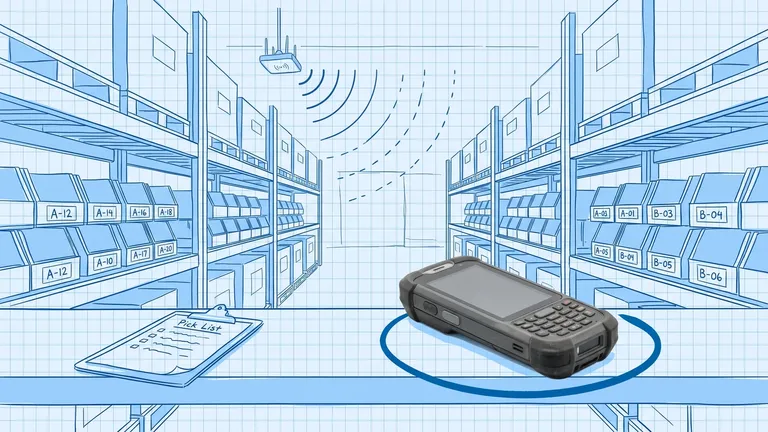

















BinLogic vs Fishbowl: Comparing Warehouse-First Systems
BinLogic is built for ecommerce brands that need real-time multichannel inventory control; Shopify, Amazon, and other channels sync natively. Fishbowl is built around QuickBooks and manufacturing workflows, making it the better fit for product companies that need WMS and production management in one place. The right choice depends on whether your core complexity lives in warehouse-to-storefront sync or in manufacturing and accounting.
If you're evaluating warehouse management software and Fishbowl came up on your shortlist alongside BinLogic, you're comparing two systems that solve different problems for different kinds of operations. The short answer: Fishbowl is built around QuickBooks and manufacturing. BinLogic is built around the warehouse and your sales channels. Which one fits depends on where your operational complexity actually lives.
BinLogic is a warehouse-first WMS for ecommerce and multichannel brands. Fishbowl is an inventory and manufacturing system that uses QuickBooks as its accounting backbone.
Both handle core warehouse tasks: receiving, picking, packing, shipping, barcode scanning, and multi-location inventory. But their architectures point in different directions, and that shapes which brands get the most out of each.
What Is Fishbowl?
Fishbowl is inventory and warehouse management software for small and mid-size manufacturers and distributors. It launched as an inventory layer on top of QuickBooks, and that heritage still defines it. Over 6,000 businesses use Fishbowl, most of them companies that make or distribute physical products and need their warehouse data to stay in sync with their QuickBooks accounting.
Its core strengths are:
- Bidirectional QuickBooks sync (Online and Desktop)
- Manufacturing features: bills of materials (BOMs), work orders, MRP planning
- Multi-location inventory tracking
- Barcode scanning for receiving and picking
- Lot and serial number tracking
- Cycle counting
Fishbowl Advanced (their upper tier) adds cloud-hosted or on-premise deployment, complex fulfillment workflows, EDI integrations, and full manufacturing depth. The cloud plans start at $229 per month for 2 users and scale to $729 per month for 10 users.
For a manufacturer running production and distribution from one system with QuickBooks at the center, Fishbowl does exactly what it promises.
What Is BinLogic?
BinLogic is a warehouse management system built for ecommerce and multichannel brands that need real-time inventory control across multiple sales channels. Where Fishbowl points toward the accounting system, BinLogic points toward your storefronts.
The core use case is a brand selling on Shopify, Amazon, and other channels that needs its warehouse operations and sales channel inventory to stay in sync without manual intervention or middleware workarounds.
Key capabilities include:
- Real-time multichannel inventory sync (Shopify, Amazon, and more)
- Scan-enforced pick, pack, and ship workflows
- Bin location management and warehouse slotting
- Receiving with scan verification
- Cycle counting and inventory accuracy tools
- FEFO tracking for lot-managed products
BinLogic is designed for operations where the warehouse is the center of the system, not a module attached to an accounting platform.
Where Fishbowl Falls Short for Ecommerce Brands
Fishbowl's QuickBooks-centric architecture creates specific friction points for brands running multichannel ecommerce without a manufacturing component.
The polling problem with Shopify and Amazon
Fishbowl connects to Shopify through a plugin or a third-party connector, not a native real-time integration. The connection works on a polling schedule: Fishbowl checks for updates on a defined interval rather than pushing changes the moment they happen.
Integration developers who work with Fishbowl regularly have documented what this means in practice. A standard polling interval of 5 minutes means there's a 300-second window where your Shopify inventory count and your actual Fishbowl stock can diverge silently. During a peak promotion or flash sale, that gap can translate to overselling real units.
The workaround is to reduce the polling interval, but Fishbowl's own architecture creates a tradeoff here. Cutting polling from 5 minutes to 30 seconds increases API call volume by roughly 10x, which can degrade Fishbowl's server performance for warehouse staff working in the system simultaneously.
This isn't a bug -- it's an architectural constraint that reflects Fishbowl's origins as a manufacturing and accounting tool, not a real-time multichannel inventory platform.
Multi-warehouse allocation needs explicit setup
Fishbowl supports multiple warehouse locations natively. But a standard Shopify integration isn't automatically configured to allocate orders to the correct location or to show Shopify the combined, real-time availability across every warehouse. Getting that right requires explicit configuration work, not a default assumption. For brands operating from a single warehouse, this doesn't matter. For brands with multiple fulfillment locations, it's a meaningful gap in the out-of-the-box experience.
Manufacturing features you may not need
Fishbowl's pricing and feature set are structured around manufacturing depth: BOMs, work orders, MRP, production runs. If your operation is pure warehouse and ecommerce fulfillment with no manufacturing, you're paying for and working around capabilities built for a different kind of business.
Where BinLogic Has Different Trade-Offs
BinLogic is purpose-built for ecommerce and multichannel operations. It doesn't have Fishbowl's manufacturing depth, and it doesn't have Fishbowl's QuickBooks integration history.
If your operation relies on QuickBooks as its accounting core and you also do manufacturing, Fishbowl's integrated approach is genuinely hard to replicate with a separate WMS. The bidirectional sync between Fishbowl's inventory layer and QuickBooks financials is its clearest competitive advantage.
For brands that don't manufacture and don't depend on QuickBooks as the operational hub, that advantage disappears and Fishbowl's polling-based integrations become a liability rather than a feature.

Feature Comparison: BinLogic vs Fishbowl
Feature | BinLogic | Fishbowl |
|---|---|---|
Real-time multichannel sync | Native | Polling-based via plugin |
Shopify integration | Native | Plugin or third-party connector |
Amazon integration | Native | Plugin or third-party connector |
Scan-enforced workflows | Yes | Available, not default |
Multi-warehouse support | Yes | Yes (requires explicit config for multichannel) |
Manufacturing (BOMs, MRP) | No | Yes |
QuickBooks integration | No | Core feature |
FEFO lot tracking | Yes | Limited |
Cycle counting | Yes | Yes |
Deployment | Cloud | Cloud and on-premise |
Pricing | Quote-based | From $229/month (cloud) |
Who Should Use Fishbowl?
Fishbowl is the better fit if:
- Your accounting runs on QuickBooks and you want inventory to stay in sync automatically without an ERP
- Your operation includes manufacturing: you build products, run work orders, or manage BOMs alongside warehousing
- You're a distributor or manufacturer selling primarily through wholesale or B2B channels where real-time ecommerce sync is less critical
- You're already on the Fishbowl platform and expanding, rather than switching from scratch
According to Grand View Research, the global WMS market was valued at USD 3.4 billion in 2025 and is expected to grow at a CAGR of 21.9% through 2033. Much of that growth is happening in cloud-native, ecommerce-oriented platforms as brands move away from accounting-centric systems -- but for operations where manufacturing and QuickBooks are central, Fishbowl still holds a real position.
Who Should Use BinLogic?
BinLogic is the better fit if:
- Your operation is warehouse and fulfillment, not manufacturing
- You're selling on Shopify, Amazon, or multiple channels and need inventory to stay in sync in real time
- You want scan enforcement built into your pick-pack-ship workflow, not optional
- You're growing into multi-location fulfillment and need allocation logic that works from day one
- You want a WMS that treats your sales channels as the primary input, not an accounting system
For the brands that BinLogic is designed for -- growing ecommerce operations running multichannel fulfillment -- the polling latency and QuickBooks-first architecture of Fishbowl creates friction that compounds as order volume grows.
GS1 standards research has found that warehouses without scan enforcement at picking see order error rates of 1-3%. At 1,000 orders a month, that's 10 to 30 mispicks -- each one a return, a customer service ticket, and a reshipment cost. The difference between a system that enforces scanning by default and one that makes it optional shows up in your accuracy numbers.
The Decision Framework
The choice between BinLogic and Fishbowl usually comes down to one question: where does your operational complexity live?
If the answer is in manufacturing, production planning, and QuickBooks accounting, Fishbowl's integrated approach makes sense. The tight QuickBooks sync is a genuine advantage that reduces manual reconciliation and keeps your financial records aligned with warehouse movements.
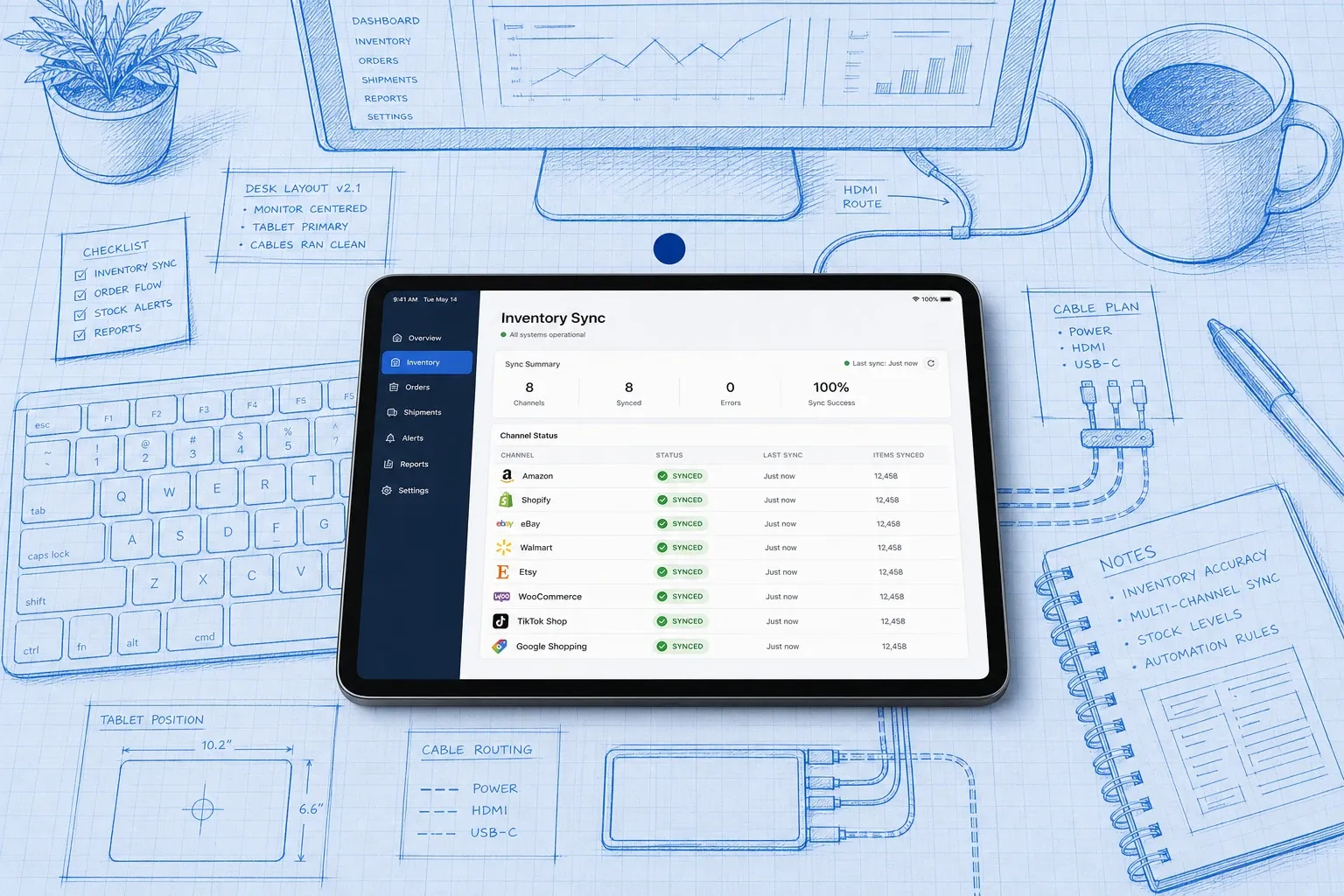
If the answer is in warehouse fulfillment and multichannel sales channel management, a warehouse-first WMS like BinLogic gives you native integrations and real-time sync without the architectural overhead of a manufacturing system you don't need.
Tools like BinLogic WMS are built specifically for brands where the warehouse is the operational center -- the system that needs to talk to your storefronts, manage your bin locations, and enforce accurate picking before a box leaves the dock. If that describes your operation, a WMS designed for that use case will be faster to implement and easier to scale than one adapted from a different starting point.
If you're still evaluating your options, take a look at how the difference between WMS, IMS, and ERP systems breaks down, and what to expect when choosing between a WMS and a full ERP.
Related reading: -- The Difference Between WMS, IMS, and ERP -- BinLogic vs Cin7: Which Is Right for Your Operation? -- WMS vs ERP: What's the Difference?
Frequently asked questions
What is the main difference between BinLogic and Fishbowl?
BinLogic is a warehouse-first WMS designed for ecommerce brands selling on multiple channels like Shopify and Amazon, with native real-time sync built in. Fishbowl is built around QuickBooks integration and manufacturing workflows, making it the better fit if your business needs production management (BOMs, work orders, MRP) alongside inventory control. If you're a pure-play ecommerce brand without manufacturing, BinLogic is the more direct fit.
Does Fishbowl work well with Shopify?
Fishbowl connects to Shopify through a plugin or a third-party connector, not a native real-time integration. The connection works on a polling schedule, which means there's a lag window of often 5 minutes or more between inventory changes in Fishbowl and what Shopify displays. For low-volume stores this is manageable. For brands running peak promotions or selling across several channels simultaneously, that lag can cause overselling.
How does Fishbowl pricing compare to BinLogic?
Fishbowl's cloud plans start at $229 per month (billed annually) for 2 users, rising to $429 for 5 users and $729 for 10 users. Additional modules and implementation fees are added on top. BinLogic pricing is based on your warehouse volume and channels; contact BinLogic directly for a quote tailored to your operation.
Is Fishbowl good for growing ecommerce brands?
Fishbowl works well for ecommerce brands that also do manufacturing or run primarily on QuickBooks. For brands focused on multichannel selling without a manufacturing component, the QuickBooks-centric architecture and polling-based integrations add complexity you don't need. A warehouse-first WMS designed for ecommerce will typically be easier to deploy and faster to sync.
Which WMS is easier to implement: BinLogic or Fishbowl?
Fishbowl states implementation takes 2 to 6 weeks. The actual timeline depends on how complex your QuickBooks configuration is and whether you need manufacturing modules. BinLogic is purpose-built for warehouse and multichannel operations, so teams without manufacturing complexity tend to get to live faster. Both systems offer guided onboarding, but the right fit depends on which workflows are central to your business.
Plan the route. We deliver the rest.
See how Binlogic powers last-mile logistics — routing, tracking, and the platform that turns the plan into the package on the doorstep.
Book a callback