
















What Is Inventory Accuracy — And How Do You Calculate It?
Inventory accuracy measures how closely your system records match physical stock, usually counted at the location level. The formula is matched records divided by total records counted. The industry average sits around 83%; well-run warehouses run 97% or higher.
Ask a warehouse manager how accurate their inventory is and most will say 95% or higher. Then measure it properly and the real number often lands closer to 83%. That gap between what we believe and what's actually on the shelf is the whole story of inventory accuracy, and it costs more than almost any team realizes.
Inventory accuracy is simple to define and surprisingly easy to get wrong. Here's what it means, how to calculate it without fooling yourself, and what actually moves the number.
What inventory accuracy means
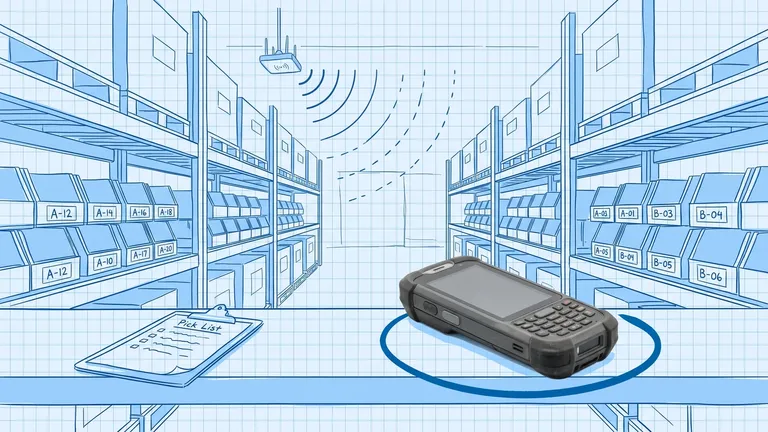
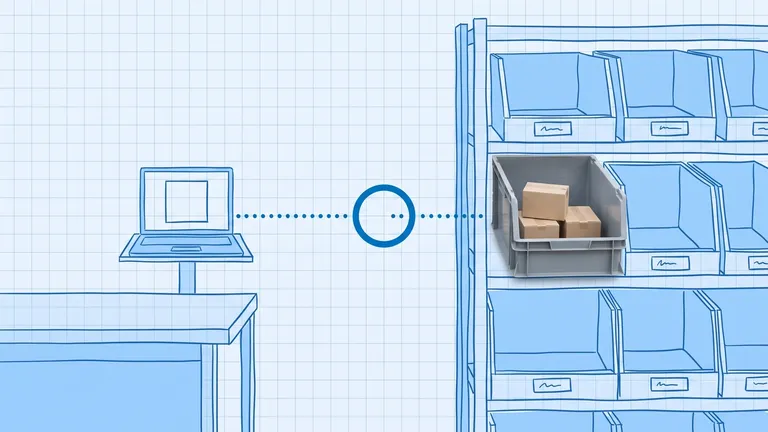
Inventory accuracy is how closely your system records match the physical stock in your building. Your system says 50 units of SKU 8842 in bin C-04. You count C-04 and find 50. That location matches. Do that across the warehouse and the percentage that match is your accuracy rate.
The key phrase is at the location level. There's a tempting shortcut where you count total units across the whole facility, compare it to the system total, and call it accuracy. That number lies. If one bin is over by 12 and another is short by 12, the facility total matches perfectly while two locations are both wrong. Your pickers feel that error every day even though the spreadsheet looks clean.
Count by location. It's stricter, and it's the only version that reflects what your team experiences on the floor.
The inventory accuracy formula
The standard formula is straightforward:
Element | What it means |
|---|---|
Inventory accuracy | (matching records ÷ total records counted) × 100 |
Matching record | A location where counted quantity equals system quantity |
Total records | Every location you counted in the audit |
So if you count 500 locations and 470 match the system exactly, your accuracy is 470 ÷ 500 = 94%.
A stricter variant counts a location as a match only if the unit quantity is exact, not just "something is there." Use that one. "There are units in the bin" is not the same as "there are the right number of units in the bin," and only the second keeps you from overselling.
What good looks like
Some benchmarks worth holding yourself to:
- 95% is the minimum most operations should accept. Below it, pick errors and stockouts start to pile up.
- 97% or higher is where well-run warehouses live.
- ~83% is the figure repeatedly cited as the industry average. It's low. It's also probably closer to your real number than you'd like, until you've measured.
The uncomfortable part is that most managers genuinely believe they're at 95%+ without ever having run a clean location-level count. Belief is not a measurement.
Why accuracy decays
Here's the thing nobody tells you when you finally hit a great accuracy number: it doesn't last. Accuracy reflects the exact moment you counted. The second you finish, the decay starts.
Every transaction after the count is a chance for records and reality to drift:
- A receipt logged before the stock was actually shelved
- A return dropped back on the shelf without a scan
- A transfer recorded at the origin but never at the destination
- A mispick that pulled the wrong SKU and nobody noticed
In a high-velocity warehouse, real-time accuracy can sit several points below your last snapshot within days. This is why one big annual count doesn't protect you. The number it produces is stale almost immediately.
How to improve inventory accuracy
The fixes aren't exotic. They're discipline applied at the right points.
Scan everything, every time. The single biggest source of error is manual data entry and skipped scans. A scan at receiving, at putaway, at pick, and at return closes most of the gaps before they open.
Move from annual counts to cycle counting. Instead of one shutdown a year, count a rotating slice of locations continuously. You catch errors close to when they happen, while the trail is still warm. Fast movers get counted often; slow movers rarely.
Log a reason code on every variance. When a count finds a discrepancy, record the probable cause: receiving error, mispick, damage, unrecorded transfer. Over a few months that log tells you exactly where your process leaks, instead of leaving you to guess.
Block negative inventory in your system. If a transaction would drive a location below zero, stop it and flag it. Negative on-hand is always a sign that something upstream was never recorded.
Investigate before you adjust. When the count doesn't match, the instinct is to just change the number to match the floor. Resist it. An adjustment without a root cause means the same error happens again next month, and you've trained yourself to paper over it.
Inventory accuracy isn't a project you finish. It's a level you hold. Measure it honestly at the location level, count continuously instead of once a year, and treat every variance as a clue rather than a chore. Do that and the gap between what you believe and what's on the shelf gets small enough to trust.
Frequently asked questions
What is the inventory accuracy formula?
Inventory accuracy = (number of counted locations that match the system / total locations counted) × 100. Counting at the location or bin level is stricter and more useful than counting total units across the whole facility, which can hide offsetting errors.
What is a good inventory accuracy rate?
95% is the minimum most operations should accept. World-class warehouses run 97% or higher. The frequently cited industry average is about 83%, which is far below what most managers assume their own warehouse is running.
Why does inventory accuracy decay over time?
Accuracy reflects the moment you counted. Every receipt, return, pick, and transfer after that count is a chance for the record and reality to drift apart. In a busy warehouse, real accuracy can be several points below your last snapshot within days.
Plan the route. We deliver the rest.
See how Binlogic powers last-mile logistics — routing, tracking, and the platform that turns the plan into the package on the doorstep.
Book a callback