













TikTok Shop Fulfillment: How to Keep Inventory in Sync
TikTok Shop inventory sync requires near-real-time updates (under 15 minutes) because viral demand spikes can multiply orders 10x to 50x within hours. To stay in sync, set your WMS as the single source of truth, push to TikTok via API, hold 20-30% safety stock above expected sales, and configure inventory thresholds to pause listings before a stockout triggers a seller-fault cancellation.
TikTok Shop inventory sync is not the same problem as Shopify or Amazon sync. On TikTok, a single video can multiply your order volume by 10x to 50x within 24 hours, while FBT replenishment takes 3 to 10 days to restock. Standard hourly inventory updates cannot keep pace with that. To stay in sync, you need near-real-time updates from your warehouse, a bigger safety stock buffer than other channels, and inventory thresholds that automatically pause your listings before a stockout forces a seller-fault cancellation.
TikTok Shop generated $15 billion in US gross merchandise value in 2025 (Novadata), and the platform's strict 2026 performance standards now make fulfillment accuracy a direct driver of your algorithmic reach. Getting inventory sync right is not optional.
Why TikTok Shop Breaks Standard Inventory Sync Rules
Most ecommerce channels have relatively predictable demand curves. TikTok does not. When a creator posts a video featuring your product, orders can arrive faster than any scheduled sync job can clear them.
The numbers from Dashboardly illustrate the gap: FBT sellers who stock out routinely lose $5,000 to $50,000 in potential GMV per stockout event, on top of the seller performance score damage from cancellations. That damage compounds. TikTok's 2026 Seller Performance Score system requires a Seller Fault Cancellation Rate (SFCR) below 5% over a rolling 30 days. Miss that number and your listings get suppressed, which reduces the organic reach that makes TikTok valuable in the first place.
The other constraint is replenishment lag. If you use Fulfilled by TikTok (FBT), you cannot send a replenishment shipment and have it available the same day. FBT inbound processing adds 3 to 7 days to your effective lead time. For a product going viral, that is a long time to be out of stock.
The combination of unpredictable demand spikes and slow replenishment means the inventory buffer you would hold for Amazon FBA is not sufficient for TikTok.
How TikTok Shop Inventory Sync Actually Works
TikTok Shop gives you three ways to keep inventory updated:
Seller Center bulk restock. You download a spreadsheet of up to 5,000 SKUs, update quantities, and re-upload. Seller Center refreshes the data every 15 minutes. This works for small operations doing fewer than 100 orders per day, but manual updates have no place in a fast-moving TikTok environment.
TikTok Shop Open API with webhooks. The Open API lets you push inventory updates programmatically, and the Webhooks API sends real-time alerts for order and inventory events. This is the recommended path for any seller running meaningful volume. Webhook-driven sync can achieve sub-15-minute updates and, for high-velocity SKUs, sub-5-minute intervals.
Third-party inventory management platform. Tools with native TikTok Shop integrations pull your warehouse stock from a central source of truth and push updates to TikTok automatically. Well-known options include Linnworks, Cin7, Finale Inventory, and Pipe17 for larger operations. Platforms like these typically sync orders every 5 minutes.
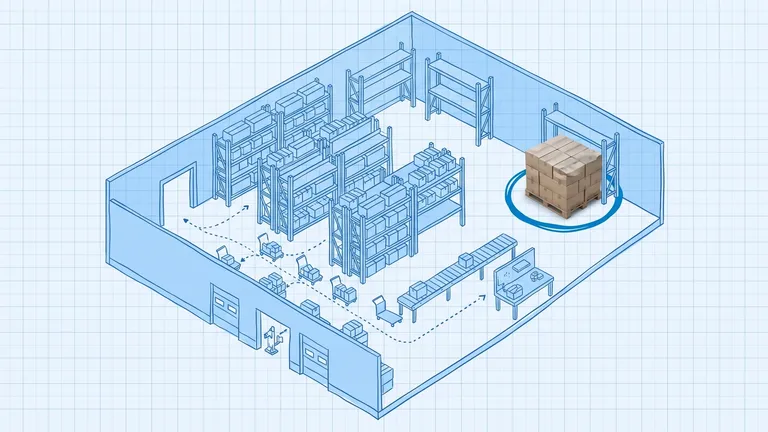
For multichannel brands already using a WMS like BinLogic, the right approach is to use the WMS as the single source of truth and push from there to TikTok via the API. This way, a sale on Amazon decrements the same pool that TikTok is watching, and you avoid overselling the same unit on two channels at once.
Choosing Your Fulfillment Model: FBT vs Self-Fulfillment vs 3PL
Before you can plan your sync setup, you need to decide how you are fulfilling TikTok orders. There are three paths:
Fulfilled by TikTok (FBT)
FBT is TikTok's own fulfillment service. You send inventory to one of TikTok's US warehouses and TikTok handles pick, pack, and ship. According to Dashboardly, FBT adoption grew from 18% of orders in 2024 to 34% in 2025, with FBT sellers seeing 28% faster deliveries and a 15% lift in Shop Score.
FBT averages 3.2-day delivery and a 94% on-time delivery rate, compared to 4.8 days and 78% for self-fulfilled orders. Per-unit fulfillment costs run $2.86 to $5.50, typically 17 to 24% cheaper than equivalent self-ship operations at comparable volumes.
The constraints are real, though. FBT has only about 15 US warehouses, leaving meaningful regional coverage gaps (Mountain West, for example, averages 4.8-day delivery). Replenishment takes 3 to 7 days after your shipment arrives. And FBT inventory cannot serve other channels, so it does not reduce your overall stock holding.
FBT makes sense for trending SKUs with predictable velocity and limited geographic requirements. For a diverse catalog across multiple channels, it works best as a supplement rather than your primary fulfillment layer.
Self-Fulfillment with Your Own Warehouse
If you already have warehouse operations, self-fulfillment gives you complete inventory visibility and flexibility. TikTok's 2026 standards require all self-fulfilled orders to ship within 48 hours of purchase, which is tighter than Amazon FBM's 2-day standard. You will also need to hit an On-Time Dispatch Rate (OTDR) of 80% or higher and a Valid Tracking Rate (VTR) of 95% or above.
The advantage is that your full inventory pool serves all channels, and your WMS handles the sync. The risk is that a viral spike can overwhelm your picking team before you can pause the listing.
3PL
A third-party logistics provider combines some of the operational simplicity of FBT with the flexibility of self-fulfillment. Your 3PL maintains your inventory and ships TikTok orders alongside other channel orders, with inventory counts flowing back to your WMS for sync. The key requirement is that your 3PL's system integrates with your inventory management platform so stock levels update automatically.
Many brands run a hybrid: FBT for a curated set of their top TikTok SKUs, self-fulfillment or 3PL for everything else.

How to Calculate Your TikTok Safety Stock Buffer
Standard safety stock formulas use historical demand variability and supplier lead time. For TikTok, you need a larger buffer because both sides of that equation can spike without warning.
The baseline formula is:
Safety stock = (maximum daily demand x maximum lead time) - (average daily demand x average lead time)
For TikTok, use a 1.5x to 2x multiplier on your average daily demand when estimating the maximum, because viral demand events are real and forecastable by category. For beauty, fashion, and lifestyle products especially, plan for at least one 5x to 10x demand event per quarter.
Practical targets from current seller guidance:
- Hold 20 to 30% more safety stock above your expected sales baseline at all times
- Increase to 1.5x your normal stock level before launching a creator campaign or entering a promotional period
- Maintain 3 to 4 weeks of projected sales inside FBT warehouses if you use FBT; replenish when you reach 2 weeks of supply remaining
- Calculate reorder points weekly for trending SKUs, not monthly
Your reorder point on TikTok is: (average daily demand x lead time in days) + safety stock. Rebuild this number weekly for any SKU with rising velocity.
TikTok's 2026 Performance Thresholds
Starting March 31, 2026, TikTok Shop enforces strict performance metrics for all sellers. Missing any of these triggers listing suppression, penalty fees, or account suspension:
- Seller Fault Cancellation Rate (SFCR): under 5% over a rolling 30 days
- On-Time Dispatch Rate (OTDR): 80% or higher
- Average Handling Rate (AHR): 150 or higher
- Valid Tracking Rate (VTR): 95% or higher
- Self-fulfilled dispatch: all orders must ship within 48 hours of purchase
Stockouts are the fastest way to blow past the SFCR threshold. When an out-of-stock triggers a cancellation, TikTok counts that against you regardless of whether the cause was a sync delay or a fulfillment error. This is why inventory thresholds are not a nice-to-have, they are essential.
Connecting TikTok Shop to Your WMS
The right setup treats your WMS as the single source of truth and pushes outward to every sales channel, including TikTok Shop. Here is how that looks in practice:
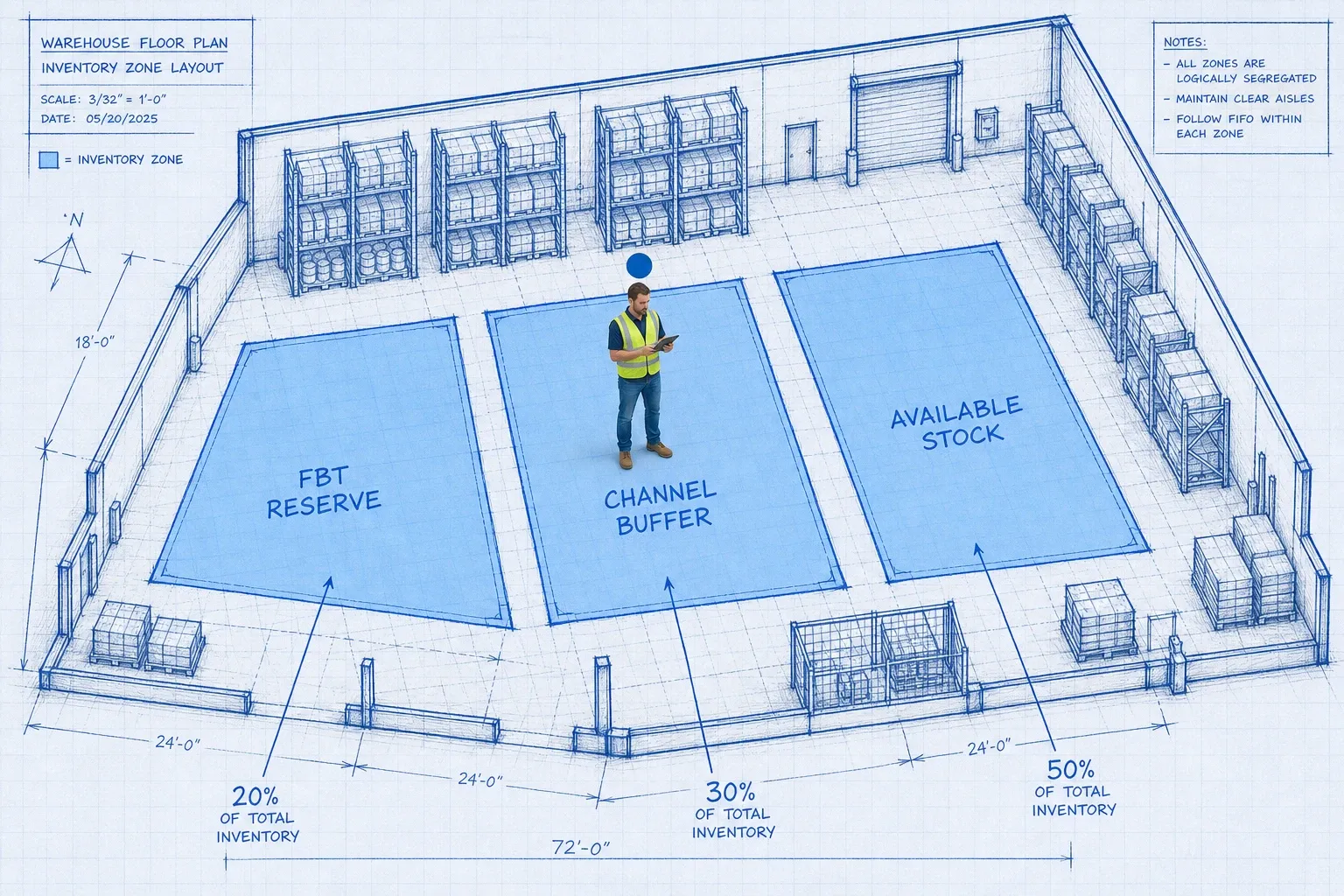
1. Dedicate a channel allocation. Rather than giving TikTok access to your full available inventory, push a capped allocation. If you have 1,000 units on hand, push 800 to TikTok and hold 200 as a buffer for damaged goods, influencer seeding, or cross-channel allocation adjustments. This prevents a viral spike from committing inventory you need for wholesale or retail.
2. Set sync frequency to 15 minutes or faster. Hourly updates are too slow. Configure your WMS or integration middleware to push TikTok inventory updates every 5 to 15 minutes. Use webhooks from TikTok to trigger updates on your side when orders come in, rather than waiting for the next polling cycle.
3. Configure inventory thresholds. TikTok Seller Center lets you set a minimum inventory threshold that automatically pauses your listing when stock falls below a defined number. Set this above zero so you have a warning window. If you manage a high-velocity SKU, set the threshold at 2 to 3 days of expected sales.
4. Watch for ghost stock. If a customer returns an item and Shopify credits the inventory back, that update needs to propagate to TikTok. Not all integration middleware handles return-driven restocks automatically. Audit your sync logs weekly to catch discrepancies before they cause overselling.
A WMS like BinLogic keeps all channel allocations and adjustments in one place, so a sale, return, or manual adjustment on any channel flows through to TikTok without a manual step.
Managing Multi-Channel Sync When TikTok Is One of Several Channels
TikTok rarely operates alone. Most brands adding TikTok Shop are already selling on Shopify, Amazon, or both. Keeping all three channels in sync from one inventory pool is one of the trickier operational challenges in multichannel ecommerce.
The core risk is selling the same unit on two channels simultaneously. Without a real-time central source of truth, a sale on Amazon FBM and a TikTok Shop sale can both decrement from what both systems believed was the same available quantity, resulting in overselling.
For more on how to manage this across platforms, see Multi-Channel Inventory Management: A Complete Guide and How to Prevent Overselling Across Multiple Channels.
The TikTok-specific wrinkle is that its demand curve is spikier than any other channel, so your real-time sync has to be robust enough to handle 200 orders in a 10-minute window, not just a steady drip.
When you bring TikTok into a multi-channel stack, the sequence that minimizes risk is:
- Your WMS holds the master inventory count
- Your WMS pushes to each channel every 5 to 15 minutes (or on every order event via webhook)
- Each channel's listing reflects only its allocated pool, not the full available count
- Returns and adjustments update the WMS first, then propagate to channels
If you want to see how this fits into a broader Shopify and Amazon sync setup, How to Sync Inventory Across Shopify, Amazon, and eBay covers the mechanics in detail.
What to Do When a Video Goes Viral and You Are Running Low
Even with good safety stock and fast sync, you will eventually face a surge that outruns your supply. Here is the response playbook:
Trigger your threshold. If TikTok Seller Center has an inventory threshold configured, let it pause the listing automatically. This prevents new orders from coming in while you assess.
Do not manually stop all listings immediately. Suppressing a listing that is gaining algorithmic traction can cost you momentum you will not recover. Pause only when you are within 1 to 2 days of zero inventory.
Contact your supplier now, not when you run out. Lead times of 7 to 14 days mean the order you place today determines whether you can restock before losing the trend window.
Assess FBT replenishment timing. If you use FBT, start the replenishment shipment as soon as your stock hits the 2-week threshold, not when it hits zero. FBT's 3 to 7 day processing adds to your lead time.
Review your safety stock formula afterward. If you ran out, your safety stock multiple was too conservative for this SKU's demand profile. Adjust before the next campaign.
TikTok Shop rewards speed. The brands that keep inventory in sync with sub-15-minute updates, realistic safety buffers, and automatic thresholds rarely lose sales to stockouts. The ones relying on manual updates or hourly sync jobs find out quickly that TikTok's demand curve is not forgiving.
If you are setting up TikTok Shop as part of a broader multichannel operation, getting your WMS connected as the central source of truth is the first step. Once inventory flows from one place, adding channels becomes a sync configuration rather than an operational rebuild.
Frequently asked questions
How often should TikTok Shop inventory sync with my warehouse?
For TikTok Shop, sync should happen every 15 minutes or faster. Hourly updates are too slow for a platform where a single video can generate hundreds of orders within minutes. For high-velocity SKUs, aim for 5-minute intervals or use webhook-driven sync for near-real-time updates. TikTok's own Seller Center updates stock data on a 15-minute cadence, so matching that at minimum keeps your listings accurate.
What is Fulfilled by TikTok (FBT) and should I use it?
Fulfilled by TikTok (FBT) is TikTok's own fulfillment service, similar to Amazon FBA. You send inventory to one of TikTok's US warehouses and TikTok handles pick, pack, and ship. FBT averages 3.2-day delivery and a 94% on-time delivery rate, compared to 4.8 days and 78% for self-fulfilled orders. The trade-off is that FBT covers only around 15 US warehouses, replenishment takes 3-7 days, and you cannot use FBT inventory for other channels. It works well for testing TikTok with a focused SKU set, but multi-channel brands usually run FBT for trending SKUs and self-fulfillment or 3PL for the broader catalog.
How much safety stock should I hold for TikTok Shop?
Hold 20-30% more safety stock above your expected sales baseline, and increase that to roughly 1.5x normal levels ahead of campaigns or creator partnerships. The reason is that TikTok demand is non-linear: a single video can spike orders 10x to 50x within 24 hours, and FBT replenishment takes 3-10 days. A standard Amazon safety stock calculation will leave you short. Calculate your reorder point weekly for trending SKUs: (average daily demand x lead time in days) + safety stock.
What happens if I go out of stock on TikTok Shop?
A stockout on TikTok Shop triggers a seller-fault cancellation, which directly damages your Seller Performance Score. TikTok's 2026 standards require a Seller Fault Cancellation Rate (SFCR) below 5%. If you miss that threshold, your listings get suppressed and payouts shift from the 1-8 day fast track to roughly 15-day settlements. Repeated failures can lead to account suspension. Setting inventory thresholds in Seller Center to pause listings before you hit zero prevents the worst outcomes.
Can I manage TikTok Shop inventory alongside Shopify and Amazon from one system?
Yes, and it is strongly recommended. A WMS or centralized inventory management platform acts as the single source of truth, pushing stock levels to TikTok Shop, Shopify, Amazon, and any other channel in near real-time. Without a central system, you risk overselling the same unit on multiple channels simultaneously. The key requirement is choosing a platform with direct TikTok Shop API integration that can push updates within 15 minutes or faster.
Run your warehouse without losing a single unit.
Binlogic is the warehouse management system for brands and retailers who run their own fulfillment. Receive, count, pick, pack and ship, with every move scanned. See it in a 30-minute demo.
Get a demo