
















Black Friday Inventory Planning: How to Not Run Out
Black Friday inventory planning is the process of identifying your top-selling SKUs, building adequate safety stock, and positioning inventory in your warehouse before peak demand arrives. Start 90 to 120 days before the event, use historical velocity data to forecast demand, apply a 1.3x buffer on hero SKUs, and make sure your WMS syncs stock across every sales channel in real time. Preparation is what separates brands that sell out cleanly from those that run out mid-event.
Black Friday inventory planning is the process of identifying your hero SKUs, building adequate safety stock, and positioning inventory in your warehouse before peak demand arrives. Done right, it lets your team fulfill orders at 3x to 5x normal velocity without stockouts or overselling. Done wrong, your best products go out of stock while orders keep coming in, and you spend the following week issuing refunds and losing customers you paid to acquire.
Black Friday inventory planning means forecasting which SKUs will spike, ordering and receiving stock early enough to confirm accuracy, organizing your warehouse for speed, and making sure every sales channel reflects real-time inventory counts.
The key insight is simple: the decisions that determine your Black Friday/Cyber Monday (BFCM) result are made months before the event, not on the day itself. By the time orders flood in, all you can do is execute the plan you built earlier.
When should you start Black Friday inventory planning?
Earlier than most brands think. Black Friday 2026 falls on November 27. Work backward from that date using your supplier lead times:
July to August: Finalize purchase orders for hero SKUs. Ocean freight from Asia takes 6 to 10 weeks, so orders placed in August land in October. Miss this window and you're either paying for air freight or selling through backorders.
September: All hero SKU inventory should be physically received, counted, and confirmed accurate in your system. Not on the water, not at customs -- in the bin, scanned, and allocated.
October: Reslot the warehouse for peak velocity, pre-kit any bundles, and run a full cycle count on your top movers. This is your last clean window before holiday prep crowds out operations time.
First week of November: Systems check. Stress-test your WMS, verify channel syncs are running at the right frequency, confirm carrier capacity with your shipping partners.
Major retailers typically begin supply chain planning 3 to 6 months in advance (Deloitte), covering everything from inventory forecasts to staffing contracts. Smaller brands that start in October are already behind.
How do you forecast Black Friday demand accurately?
Your own historical data is the most reliable input. If you have at least one full BFCM cycle in your records, pull the daily sales velocity for each SKU from the Black Friday to Cyber Monday window, then compare it to your trailing 90-day baseline. The ratio between the two is your BFCM lift factor for each SKU.
For brands with limited history, use the trailing 90-day velocity and apply an industry benchmark. The average Shopify merchant sees 2 to 3 times their daily revenue during the Friday-to-Monday window, with some categories exceeding 5x. U.S. online sales hit a record $11.8 billion on Black Friday 2025, up 9.1% year-over-year (Adobe Analytics). If you're a growing brand, calibrate your forecasts upward to match the market's structural expansion.
Two principles that separate accurate forecasts from guesses:
- Concentrate on your top 10 to 20 percent of SKUs. This tier typically drives 70 to 80 percent of BFCM revenue. Forecast these with precision and apply a 1.3x to 1.5x buffer. Keep your long-tail inventory lean.
- Use velocity-adjusted sell-through, not raw year-over-year. If your business has changed significantly in the past 12 months through new channels, new categories, or a viral product, last year's absolute numbers are a poor model. Trailing 90-day velocity adjusted for your promotional calendar is more accurate.

How much safety stock do you need for hero SKUs?
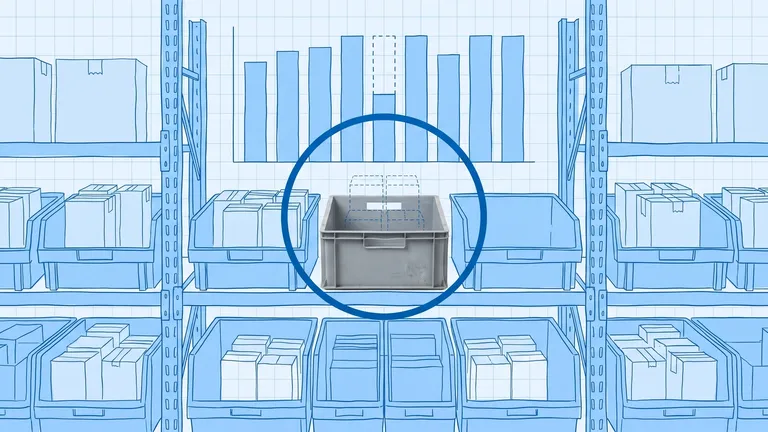
Apply a 1.3x to 1.5x multiplier on your forecasted BFCM demand for your top movers. If your model says you'll sell 800 units of a best-seller over the four-day window, stock 1,040 to 1,200 units.
The math behind the buffer is straightforward. Research consistently puts the average ecommerce out-of-stock rate at 8 percent of SKUs at any given moment. During peak events like Black Friday, that rate can climb to 10 percent. Retailers running at an 8 percent out-of-stock rate lose approximately 4 percent of annual revenue in direct missed sales -- and that figure does not include customer churn from the experience.
A stockout during your highest-revenue window costs far more than carrying a few extra weeks of inventory. Buffer stock on hero SKUs is operational insurance, not waste.
Once your stock is received, use your cycle counting routine to verify hero SKU counts before peak. A 2 percent variance is manageable in a normal week. At 5x volume, that same variance becomes a real fulfillment problem.
For your long-tail SKUs, tighten safety stock. Carrying costs on slow movers compound fast when you're paying for storage, insurance, and financing. Concentrate your capital on the products that drive your BFCM revenue.
How should you organize your warehouse before BFCM?
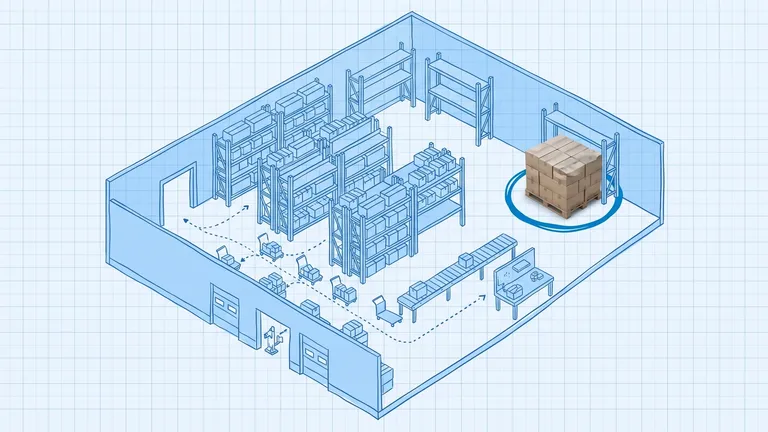
Reslot by velocity before peak. Move fast movers to golden zones: locations closest to your packing stations with the shortest travel distance per pick. This is the single change with the highest impact on pick throughput during a high-volume event.
Practical steps to get organized:
- Rank every SKU by forecasted BFCM velocity
- Move Tier A SKUs (top 20 percent by volume) to prime pick locations
- Place heavy items low, fragile items protected, and complementary SKUs adjacent to each other for bundle efficiency
- Create a temporary staging zone for BFCM-specific stock, separate from your standard inventory, to prevent mixing and mis-picks
- Pre-kit your top bundles and gift sets two to three weeks before the event. Assembling a gift set under time pressure on Black Friday itself kills pick rates faster than anything else.
If you're using a WMS, confirm that pick-path routing reflects your updated slotting. A system pointing pickers to old bin locations after a reslot creates more errors than the reslot saves. Tools like BinLogic WMS let you update bin assignments and re-optimize pick paths so your team always routes the shortest path, regardless of how the floor changes before peak.
How do you prevent overselling across channels during Black Friday?
This is where multi-channel brands get hurt most. You sell on Shopify, Amazon, and possibly two or three other channels. If each channel holds its own inventory count and syncs on a nightly batch, you will oversell. At 5x volume, a nightly sync is hours too slow.
The only safe setup for BFCM is a WMS or inventory management system that acts as the single source of truth and pushes real-time stock counts to every channel every few minutes. As each order is placed and allocated, the available quantity updates across all storefronts automatically.
Set a buffer quantity on each channel. If you have 200 units available, list 180 on each storefront. This reserve prevents a split-second double-sell while the sync propagates across platforms.
For detailed setup, read the full guides on preventing overselling across multiple channels and how to sync inventory across Shopify, Amazon, and eBay.

What should you monitor during Black Friday weekend?
Once the event starts, shift from planning mode to monitoring mode. Track three metrics hourly, not daily:
On-time shipping rate: Keep this above 95 percent. If it drops, identify the bottleneck immediately. Is it pick volume, packing capacity, or a carrier pickup delay?
Available-to-promise inventory on your top 20 SKUs: Watch for any approaching zero and flag them for your operations team with enough lead time to react.
Channel sync status: Confirm your inventory platform is successfully pushing updates to all storefronts. A failed API connection that goes unnoticed for two hours at peak volume is a significant oversell event.
Have a response plan documented before the event. If a carrier is saturated, which backup carrier do you switch traffic to? If a hero SKU goes critically low, do you pause promotions on that item or activate a backup supplier? These decisions should be made in advance, not invented under pressure.
How do you handle the returns wave after Black Friday?
Plan for a returns surge in the three to four weeks following BFCM. For fashion and apparel brands, return rates of 25 to 35 percent of BFCM orders are typical. Even for non-apparel categories, expect returns well above your normal baseline.
Set up the returns workflow before the event:
- Define whether returned items are restocked immediately, inspected, or quarantined before being made available again
- Assign a dedicated returns processing zone in your warehouse to prevent mixing with outbound inventory
- Configure your WMS to handle returned inventory accurately so it does not generate phantom stock
- Determine resale eligibility criteria in advance so your team can process without escalating every return decision
Brands that handle post-BFCM returns cleanly recover working capital faster and reduce customer service volume. Plan for it before the event, not after.
Your Black Friday inventory planning checklist
July to August
- Hero SKU forecast completed using trailing 90-day velocity plus BFCM lift factor
- Purchase orders placed for all Tier A inventory
- 3PL or warehouse peak capacity confirmed in writing
- Backup suppliers identified for your top 5 SKUs
September
- All hero SKU inventory received, counted, and verified accurate
- Safety stock buffers set at 1.3x to 1.5x forecasted BFCM demand on Tier A SKUs
- Warehouse reslotted by velocity; golden zones assigned to fast movers
October
- Bundles pre-kitted and staged near packing stations
- Full cycle count completed on top 50 SKUs
- Returns processing zone established
- Channel sync frequency verified (real-time or near-real-time, not nightly batch)
First week of November
- WMS stress-tested for peak transaction volumes
- Carrier capacity and pickup schedules confirmed in writing
- Monitoring dashboard configured with hourly alerts on shipping rate, inventory levels, and sync status
- Response playbook documented for stockout and carrier failure scenarios
If you're managing stock across multiple channels and warehouse locations, BinLogic WMS gives you real-time inventory visibility, velocity-based slotting guidance, and channel sync built to handle peak-season volume. The brands that run Black Friday smoothly are not the ones with the most stock -- they're the ones with the most accurate, most organized, and most connected inventory operations. See how BinLogic handles multi-channel peak-season inventory.
Related reading:
Frequently asked questions
When should I start Black Friday inventory planning?
Start at least 90 to 120 days before Black Friday, which falls on November 27, 2026. For ocean freight orders, that means placing purchase orders in July or early August. All hero SKU inventory should be physically received in your warehouse by early October so you have time to count, slot, and stage it before the rush.
How much safety stock should I carry for Black Friday hero SKUs?
Apply a 1.3x to 1.5x multiplier on top of your forecasted demand for your top 10 to 20 percent of SKUs. If you expect to sell 1,000 units of a best-seller over the BFCM weekend, stock 1,300 to 1,500. A stockout during your highest-revenue window costs far more than carrying a few extra weeks of inventory.
How do I forecast Black Friday demand if I am a newer brand?
Use the past 90 days of sales velocity, then apply a 3x to 5x lift factor for your top SKUs during the BFCM window. Cross-check against industry benchmarks: the average Shopify store sees 2 to 3 times its daily revenue over the Friday-to-Monday window. Supplement with trend data from Google Trends and your marketing team's promotional calendar.
What should I do if I run out of stock during Black Friday?
Immediately pause or back-order the affected listing on all channels to avoid phantom orders. If a supplier can express-ship replenishment stock, trigger that order immediately, even at a premium freight cost. Then document the failure and run a root cause analysis after the event. Was it a forecasting miss, a late inbound shipment, or a supplier failure? Fix the process before next year.
How do I prevent overselling across multiple channels during Black Friday?
Use a WMS or inventory management system that acts as a single source of truth and syncs stock counts to every channel every few minutes. Set a conservative buffer quantity on each channel so your system reserves stock before it hits zero. Do not rely on nightly batch syncs during BFCM weekend. Real-time or near-real-time sync is the only safe approach at peak volume.
Run your warehouse without losing a single unit.
Binlogic is the warehouse management system for brands and retailers who run their own fulfillment. Receive, count, pick, pack and ship, with every move scanned. See it in a 30-minute demo.
Get a demo