
















Best WMS for Shopify Brands in 2026
The best WMS for Shopify brands syncs inventory in real time, drives pick-pack workflows from barcodes, and scales without an enterprise budget. Top options in 2026 include BinLogic, ShipHero, Extensiv, and Cin7, each suited to different order volumes and warehouse complexity.
If your Shopify store is growing faster than your warehouse can handle, the fix is a WMS that speaks Shopify natively. The best options in 2026 are BinLogic, ShipHero, Extensiv, and Cin7, but the right one depends on your warehouse setup, order volume, and whether you run your own fulfillment or hand it off to a 3PL.
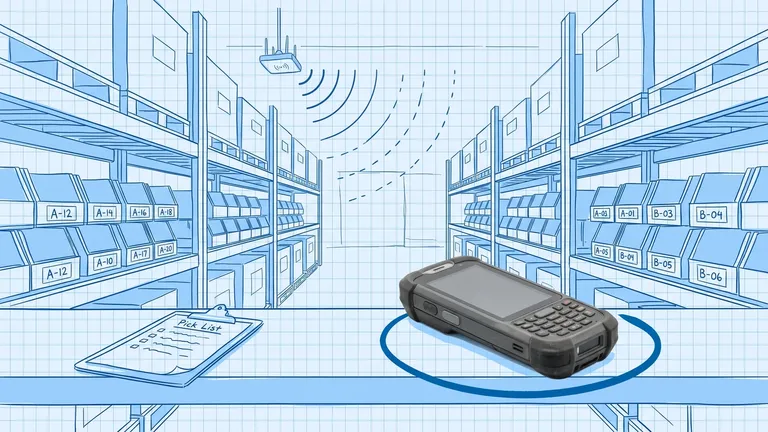
A warehouse management system (WMS) for Shopify is software that connects your store's order flow to your physical warehouse, driving picking, packing, inventory counting, and receiving from barcodes instead of spreadsheets.
According to Shopify's 2026 supply chain buyer's guide, warehouse management is the top operational priority for 58% of software buyers. That tracks. As Shopify brands scale past a few hundred orders a day, the gap between what the storefront promises and what the warehouse can actually deliver becomes the main constraint on growth.
What Makes a WMS "Shopify-Ready"?
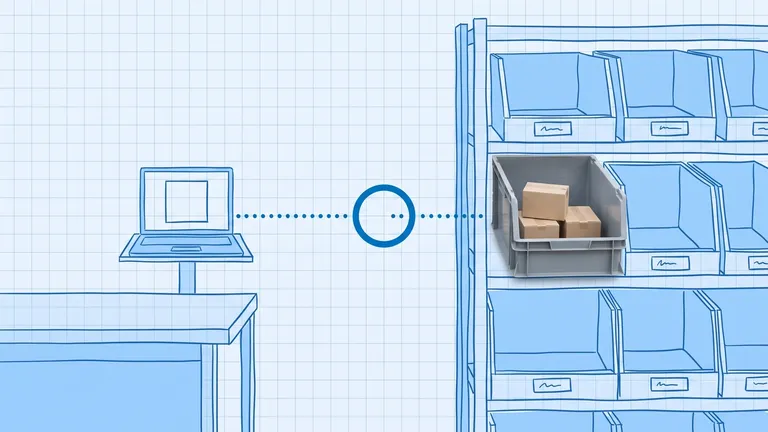
Not every WMS that claims a "Shopify integration" deserves the label. Some use scheduled batch syncs that update inventory every 15 minutes. Others push changes in real time via webhooks. That difference matters when you are selling on multiple channels simultaneously and every stockout costs you a sale.
A Shopify-ready WMS should do all of the following:
- Two-way real-time sync. Inventory adjustments in the WMS update Shopify immediately, and orders placed in Shopify trigger warehouse workflows without delay.
- Multi-location support. If you run more than one warehouse or store location, the WMS tracks stock per location and maps correctly to Shopify's locations model.
- Barcode-driven workflows. Receiving, picking, packing, and cycle counting are all driven by scans, not manual entry.
- Native order routing. Orders from Shopify flow into the WMS automatically, trigger pick lists, and close out with tracking synced back to the order.
- Returns handling. When a customer returns an item, the WMS captures the condition, restocks or quarantines it, and adjusts inventory without anyone touching a spreadsheet.
If a vendor checks all five, you are looking at a real WMS integration. If they are missing one or two, factor that gap into your evaluation -- it will show up as fulfillment errors at scale.
The Top WMS Options for Shopify Brands in 2026
Here is a straightforward look at the options worth considering. This is not a ranking. It is a map of which tool fits which situation.
BinLogic
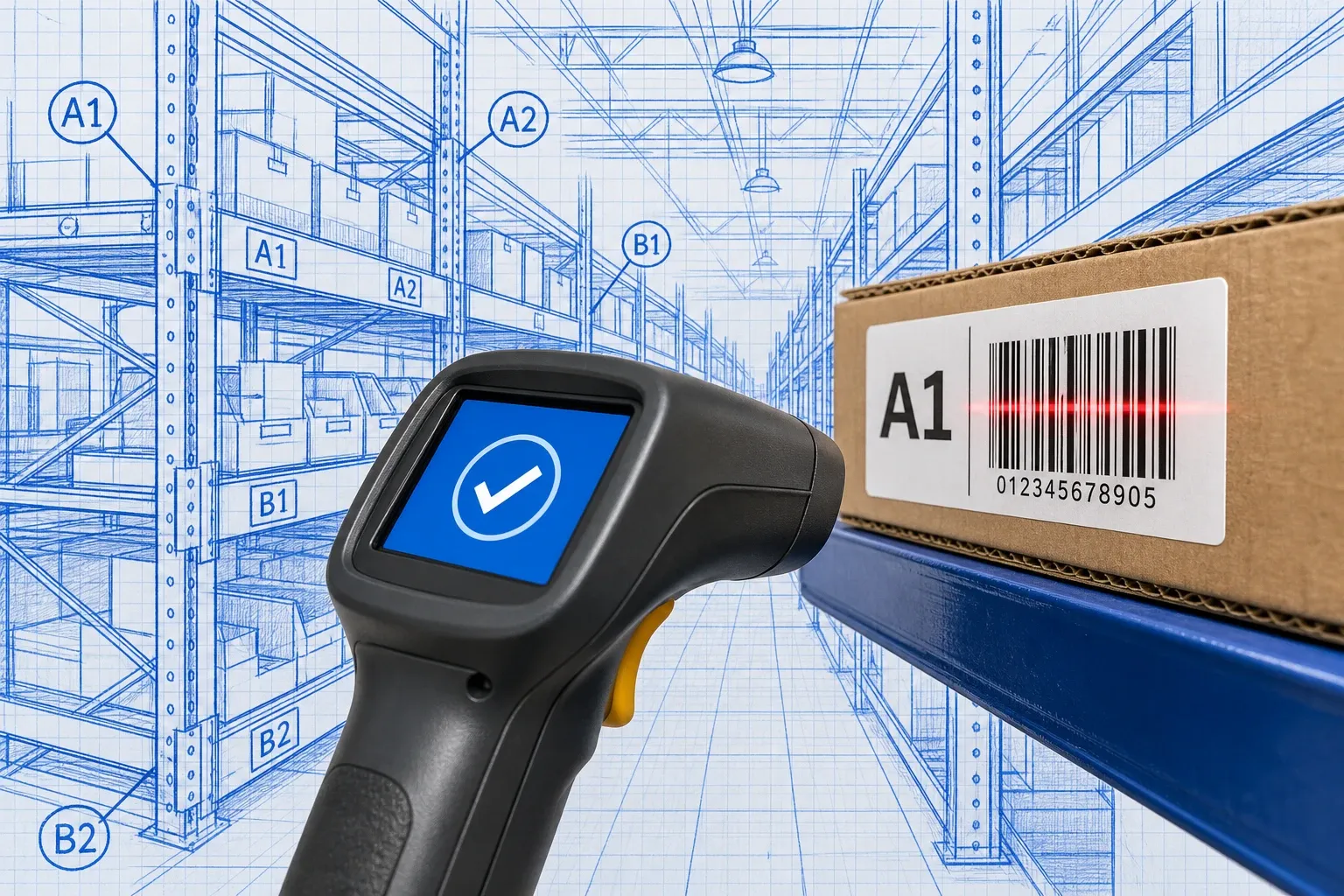
BinLogic is a warehouse-first WMS built for brands and multi-location operators. It connects to Shopify natively and syncs orders, inventory, and fulfillment status in real time. The standout feature is bin-level accuracy: every unit has a known location in the warehouse, down to the specific shelf position, and every pick is barcode-confirmed. That matters when you are running hundreds of SKUs and picking errors eat directly into your margin.
On the multichannel side, BinLogic connects to Shopify, Amazon, MercadoLibre, and other sales channels through OmniOrders, so inventory counts stay consistent across your entire stack, not just Shopify. Overselling on Amazon because your WMS only synced with Shopify is an expensive mistake. BinLogic closes that gap.
BinLogic fits mid-market brands running their own warehouse with 50 to several thousand SKUs and 100 to 10,000 orders per month. It is not a lightweight inventory tool, and it is not an enterprise system with a six-month implementation. It sits in the mid-market gap where you need real operational control without the enterprise tax.
For a detailed side-by-side, see BinLogic vs Cin7 and BinLogic vs Fishbowl.
ShipHero
ShipHero is one of the most widely deployed WMS platforms among high-volume Shopify brands. It earned the #1 Leader position in the G2 Winter 2026 Report with 93% user satisfaction, driven by its pick-path optimization, batch picking workflows, and labor management dashboards. If you are processing thousands of orders per day, ShipHero's efficiency features show real ROI.
The tradeoff is cost. ShipHero is priced for high-volume operations, and at lower order volumes the pricing may not work compared to mid-market alternatives. It is also primarily focused on the US market, so if you need strong international carrier support, check that coverage carefully.
Extensiv
Extensiv (formerly Skubana) is the go-to recommendation for brands that outsource to a 3PL or operate a multi-client warehouse network. Its strength is on the 3PL coordination side: managing inventory across multiple fulfillment partners, routing orders to the right node, and maintaining visibility across a distributed operation.
If you run your own warehouse, Extensiv is probably overbuilt. If you split inventory across multiple fulfillment partners or manage a network of 3PLs, it is worth a serious look.
Cin7
Cin7 combines inventory management, order management, and some WMS functionality in a single platform. Its appeal is breadth: more than 700 integrations, including a native Shopify connector, and pricing that fits mid-market brands. It handles inventory tracking and order routing well.
Where Cin7 falls short compared to a warehouse-first WMS is execution depth. If you need serious barcode-driven picking workflows, multi-step receiving, or true bin-level accuracy, you will find its warehouse features thinner than a dedicated WMS. It is better suited to brands where inventory control is the primary need and warehouse execution is secondary.
Logiwa
Logiwa is a cloud-native WMS designed for high-volume ecommerce and omnichannel fulfillment. It includes warehouse automation, digital twin simulation, and strong multi-location inventory management. Like Extensiv, it is best suited to operations with significant volume and complexity. For a brand processing a few hundred orders per day from a single warehouse, it is likely more than you need right now.
How to Choose the Right WMS for Your Operation
The right WMS comes down to three things: your current order volume, whether you run your own warehouse, and whether you sell on one channel or many.
You run your own warehouse and sell on Shopify plus one or two other channels: BinLogic or ShipHero are your strongest starting points. BinLogic fits mid-market brands that want bin-level control and multichannel sync without enterprise complexity. ShipHero fits high-volume operations where pick-path efficiency and labor tracking are the primary bottleneck.
You outsource to a 3PL or manage multiple fulfillment partners: Extensiv or Linnworks are better fits. They are designed for the multi-node, multi-client model that a warehouse-first WMS does not handle as cleanly.
You need inventory management more than warehouse execution: Cin7 or a lighter tool like Sumtracker may be sufficient. They are thinner on the warehouse side but solid on multi-channel inventory visibility.
You are just starting to outgrow spreadsheets: Start by assessing whether you actually need a full WMS yet. A WMS implementation has real overhead -- setup, staff training, process redesign. If you are under 50 orders a day from a single location, a simpler inventory tool may serve you better until you grow into the complexity.
For more on managing inventory across multiple sales channels, see Multi-Channel Inventory Management: A Complete Guide.
What to Look for in the Shopify-WMS Integration
Most WMS vendors will tell you they integrate with Shopify. Ask how the integration actually works before you sign anything.
Questions to ask every vendor:
- Is inventory synced in real time or on a schedule? Scheduled syncs introduce lag and overselling risk at peak volume.
- How does the integration handle Shopify locations? If you have multiple fulfillment locations, the WMS needs to map to each one correctly.
- What happens when an order is cancelled or modified after it has been routed to the warehouse? Cancellations mid-pick are common. Know exactly how the system handles them.
- How are returns processed? Can the WMS receive a returned item, capture the condition, and restock it automatically?
- What is the underlying sync mechanism: native API, webhooks, or a middleware layer? Native API connections with webhook triggers are faster and more reliable than middleware-dependent setups that add a third-party failure point.
The answers tell you whether the "Shopify integration" is a real two-way sync or a thin connector that will start causing problems the moment your order volume spikes.
Making the Switch: What to Expect
According to Forrester research, 71% of Shopify merchants using a third-party WMS report scaling peak-season order volumes two to three times without adding headcount. The operational leverage is real. But getting there takes work upfront.
A typical WMS implementation with a Shopify-native vendor involves four phases:
- Data cleaning. SKUs, barcodes, and bin locations need to be accurate before go-live. If your product data is messy, clean it first. Garbage in, garbage out applies here more than almost anywhere.
- Shopify mapping. Confirm that every Shopify product variant maps to the correct WMS SKU and that barcodes in your catalog match the physical labels in your warehouse.
- Process redesign. Your receiving, picking, and packing workflows will change. Walk your team through the new process before go-live, not the morning of.
- Parallel run. Run the WMS alongside your existing process for a short period to catch issues before you fully cut over.
Cloud-based WMS platforms with native Shopify connectors typically go live in two to six weeks. On-premise or heavily customized deployments take three to six months.
If you are evaluating how the full tech stack fits together once a WMS is in place, What Is an OMS? Do You Need One with Your WMS? covers where order management fits alongside warehouse execution.
The Bottom Line
The best WMS for your Shopify brand is the one that syncs accurately, drives your warehouse workflows from barcodes, and scales with your volume without a six-figure implementation project. For most mid-market brands running their own warehouse, BinLogic and ShipHero are the two strongest options. For outsourced fulfillment and 3PL management, Extensiv has the edge.
Integration quality matters more than the feature list. A WMS with a weak Shopify connector will cost you more in oversells and manual corrections than a slightly lighter-featured product with a rock-solid two-way sync.
BinLogic offers a native Shopify integration with real-time inventory sync, bin-level accuracy, and multichannel support across Amazon, MercadoLibre, and more. If you want to see how it fits your operation, the team is available at binlogic.io.
Related reading:
Frequently asked questions
What is the best WMS for Shopify brands in 2026?
The best WMS for Shopify depends on your order volume and warehouse complexity. For mid-market brands that own their warehouse, BinLogic and ShipHero are strong options. For 3PL-managed fulfillment, Extensiv is the market leader. Cin7 suits brands that need inventory management and order routing in one platform.
Does Shopify have a built-in WMS?
Shopify includes basic inventory tracking and fulfillment tools, but it is not a true WMS. It does not handle bin-level stock locations, barcode-driven picking workflows, or multi-step receiving. Brands processing more than a few hundred orders per day, or running a physical warehouse, typically need a dedicated WMS connected to Shopify.
How does a WMS connect to Shopify?
Most modern WMS platforms connect to Shopify via a native API integration. Orders flow from Shopify into the WMS for picking and packing. When a shipment is completed, the WMS pushes tracking numbers back to Shopify and adjusts inventory across all locations in real time.
How long does it take to implement a WMS with Shopify?
Implementation timelines vary by vendor and complexity. Cloud-based WMS platforms with native Shopify connectors typically take two to six weeks from contract signing to go-live, assuming clean product data. On-premise or heavily customized systems can take three to six months.
What should I look for in a WMS-Shopify integration?
Look for two-way real-time sync, native support for Shopify locations and variants, webhook-based order triggering rather than polling, and the ability to handle returns with automatic inventory restocking. Middleware-heavy integrations that rely on scheduled syncs introduce lag and increase the risk of overselling.
Plan the route. We deliver the rest.
See how Binlogic powers last-mile logistics — routing, tracking, and the platform that turns the plan into the package on the doorstep.
Book a callback