
















Warehouse KPIs: The 12 Metrics Every Operations Manager Should Track
Track warehouse performance across five stages: receiving (dock-to-stock time), inventory (accuracy rate), picking (order accuracy and pick rate), shipping (on-time dispatch), and returns (rate and reason). Pick a handful per stage rather than drowning in metrics nobody reads.
Walk into most warehouses and ask the manager how things are going. You'll hear "busy" or "behind" or "fine." Ask for the order accuracy rate and you'll often get a pause. Not because the manager is bad at the job. Because nobody set up the handful of numbers that turn a gut feeling into a decision.
You don't need a wall of dashboards. You need a few metrics per stage, measured the same way every week, so you can see a trend before it becomes a problem. Here are twelve worth tracking, grouped by where they happen in the building.
Receiving KPIs
Receiving sets the tone. Stock that arrives but isn't put away correctly poisons everything downstream.
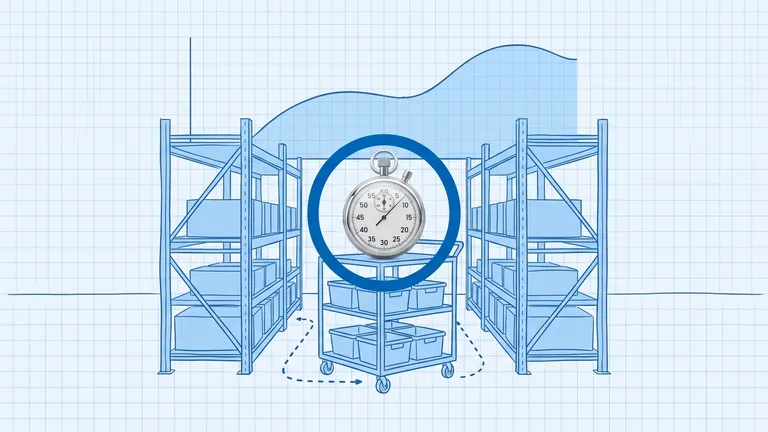
1. Dock-to-stock time. The clock from a shipment hitting your dock to that inventory being available to pick and sell. Long dock-to-stock means you are sitting on stock you can't sell yet. During a busy week, that's missed sales on product that's ten feet from the pick face.
2. Receiving accuracy. Did what you logged match what actually showed up? A supplier short-ship that nobody catches at the dock becomes a phantom variance weeks later, and by then it looks like shrinkage.
3. Putaway cycle time. How long from received to shelved. Slow putaway is where stock goes to hide.
Inventory KPIs
This is the trust layer. If these numbers are soft, every other number is suspect.
4. Inventory accuracy. Counted records that match the system, divided by records counted, at the location level. The widely cited industry average sits around 83%. Most managers assume they're well above that. Measure it before you assume.
5. Inventory turnover. How many times you sell through and replace stock in a period. Too low means cash sitting on shelves. Too high can mean you're flirting with stockouts.
6. Carrying cost of inventory. What it costs to hold stock — storage, capital, insurance, shrink. Easy to ignore because it doesn't show up as a line item. It's real money.
Picking and packing KPIs
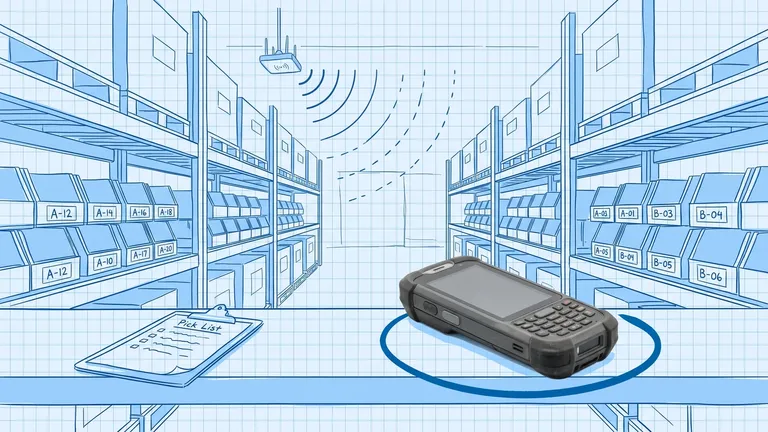
This is where most of your labor goes, and most of your customer-facing errors start.
7. Order accuracy rate. The percentage of orders picked and packed with no errors. Best-in-class operations push toward 99%. Below about 98%, pick errors generate enough returns and support tickets to show up in your costs. Every mispick that reaches a customer costs far more than the pick itself: a return, a replacement, a service interaction, sometimes a bad review.
8. Pick rate. Lines or units picked per hour. Useful for staffing and for spotting when your layout is fighting your pickers.
9. Cost per order. Total fulfillment labor and materials divided by orders shipped. The number that tells you whether "we got busier" actually meant "we got more efficient."
Shipping KPIs
10. On-time dispatch rate. Orders that left the building by their cutoff. This is the promise you made the customer, measured at the one moment you fully control.
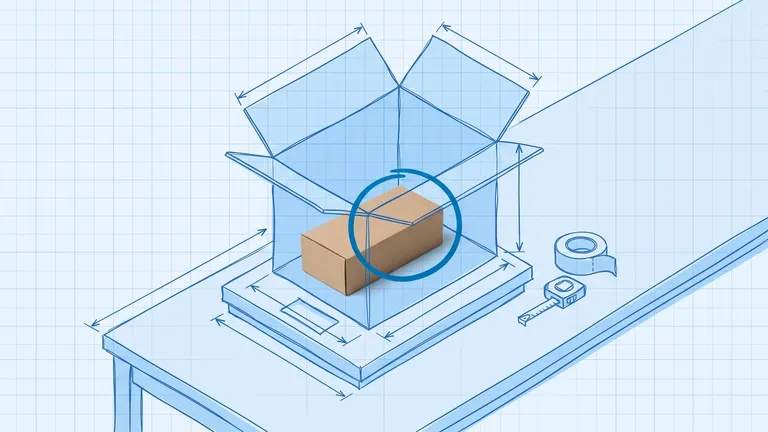
11. Shipping cost per order. Trends here surface carrier issues, packaging waste, and dimensional-weight problems you can't see order by order.
Returns KPIs
12. Return rate and reason. Not just how many come back, but why. Returns tagged "wrong item" point straight back to picking and slotting. Returns tagged "damaged" point at packing or carrier handling. The reason code is where the fix lives.
How to actually use these
A few rules that keep a KPI program alive instead of abandoned after a month.
- Start with one or two per stage. Six numbers you read every morning beat forty you read never. Dock-to-stock, inventory accuracy, order accuracy, on-time dispatch, and return rate is a complete starter set.
- Measure the same way every time. A metric that changes definition is worse than no metric, because it lies with confidence.
- Trend over snapshot. A single accuracy reading tells you almost nothing. The same reading every week for two months tells you whether you're winning.
- Tie each one to an owner. A number nobody owns is a number nobody moves.
Here's the quick reference.
KPI | Stage | What it tells you |
|---|---|---|
Dock-to-stock time | Receiving | How fast new stock becomes sellable |
Receiving accuracy | Receiving | Whether inbound matches what you logged |
Putaway cycle time | Receiving | Where stock hides before shelving |
Inventory accuracy | Inventory | Whether your records can be trusted |
Inventory turnover | Inventory | How efficiently cash moves through stock |
Carrying cost | Inventory | The hidden cost of holding inventory |
Order accuracy | Picking | How often customers get the right thing |
Pick rate | Picking | Labor efficiency and layout friction |
Cost per order | Picking | Whether busier meant more efficient |
On-time dispatch | Shipping | Whether you kept the delivery promise |
Shipping cost per order | Shipping | Carrier and packaging trends |
Return rate and reason | Returns | Which upstream process is failing |
Pick your starter six. Measure them for a month. The first time a number moves the wrong way before a customer ever notices, the whole program pays for itself.
Frequently asked questions
How many warehouse KPIs should I track?
Fewer than you think. One or two per stage is plenty to start: dock-to-stock time, inventory accuracy, order accuracy, on-time dispatch, and return rate. A dashboard with 40 metrics gets ignored; a dashboard with six gets read every morning.
What is a good order accuracy rate?
Best-in-class fulfillment operations push toward 99% order accuracy. Below about 98%, pick errors start generating enough returns and customer-service load to show up in your costs. Measure it before you target it.
What is dock-to-stock time?
The time between a shipment arriving at your dock and that inventory being available to pick and sell. Long dock-to-stock times mean you're sitting on stock you can't sell yet, which causes missed sales and oversells during busy periods.
Plan the route. We deliver the rest.
See how Binlogic powers last-mile logistics — routing, tracking, and the platform that turns the plan into the package on the doorstep.
Book a callback