















Dock-to-Stock Time: What It Is and How to Cut It
Dock-to-stock time is the hours between a delivery being received and that stock being put away and recorded in your system. Waits between hand-offs often take more of those hours than handling, so time each segment, post the receipt at the dock and let it trigger put-away. If your clock starts at the receipt scan, also measure from the truck's arrival, or a good number can hide trucks waiting in the yard.
A trailer of product you are short on is unloaded at 7 a.m. Eight hours and counting later, the pick location still shows zero, and the pallets are sitting in a staging lane twenty feet from the door. That gap is dock-to-stock time.
The short answer: dock-to-stock time is the hours from a delivery being received to the stock being put away and recorded in your system. To cut it, timestamp every hand-off, find the longest waits, post the receipt at the dock, and let the receipt trigger put-away. If your clock starts at the receipt scan, measure from the truck's arrival as well, or a good number can hide trucks waiting outside.
What is dock-to-stock time?
It is the elapsed time between inbound freight being received and that freight being put away and recorded in a storage or pick location. APQC, a benchmarking and best-practices organization, defines "dock-to-stock cycle time in hours for supplier deliveries" as beginning "when the business entity receives delivery from the suppliers" and continuing "until the time goods are put away in the inventory" and recorded in the inventory management system. WERC, the warehousing trade association, also tracks dock-to-stock cycle time in hours, listing it among the five most popular metrics in its 2026 DC Measures report; its definition and values are in the paid report.
This post uses two names. Dock-to-stock means receipt to put-away recorded, as APQC defines it. Receipt to available also includes any inspection or quality hold, because held stock cannot be picked.
Our warehouse KPIs guide explains why it matters; this post covers the measurement.
Where should the dock-to-stock clock start and stop?
Record several timestamps and choose which pair to report. For a pallet delivery:
- Truck arrives: gate or yard check-in.
- Unload starts: the trailer is on a door and the first pallet comes off.
- Count complete: the receiver has finished checking and counting.
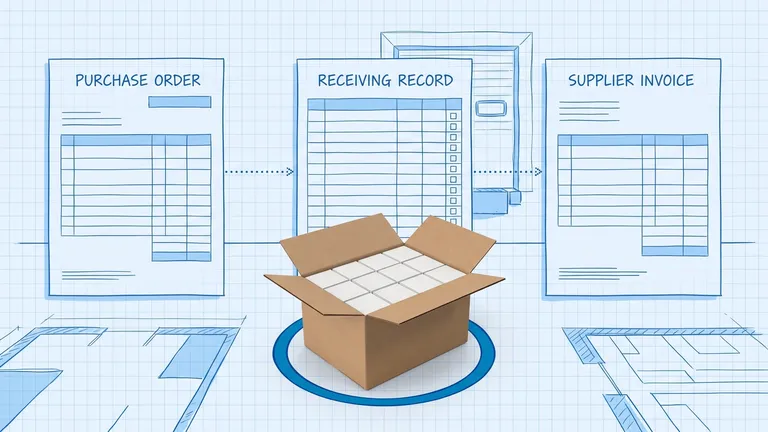
- Receipt posted: the count is entered against the purchase order or ship notice.
- Released for put-away: the pallet is cleared to move to storage.
- Put-away confirmed: the pallet or case is scanned into its location.
- Available: any inspection hold is released and the stock can be allocated. A hold can fall before put-away or after it, with stock stored but blocked.
"Receives delivery" can be read as the truck arriving or the freight coming off it, so APQC's definition runs from step 1 or step 2 to step 6. A measure built from system data usually starts at step 4, the receipt scan, because that is the first time the system sees the freight. Receipt to available ends at step 7. None of these is wrong, but a number reported without saying which pair it uses cannot be compared with anything.
Two choices can change the number as much as any floor improvement: where the clock starts, and whether held stock counts as in stock. Write both down before the first report, and if either changes, restart the trend line.
Is there a benchmark for dock-to-stock time?
APQC's open benchmarking page is the only freely viewable figure from a benchmarking body we found, and it needs careful reading. It shows a median of 15.0 hours across all companies in its database, with a sample size of 3,560; the 25th and 75th percentiles are reserved for members. That is a cross-industry figure for supplier deliveries, on APQC's own start and stop points, and a median across very different operations.
Treat 15 hours as context, not a target. The useful benchmark is your own, defined the same way, by supplier and freight type, month over month.
Where do the hours go between the dock and the shelf?
Often into queues. In many buildings a pallet spends minutes being handled and longer waiting for the next person or system step, but that is a pattern to test, not a rule: time your own segments.
- Waiting for a door. The truck is on site but not on a door.
- Unload and count. Handling, counting, damage checks.
- Waiting to be posted. The count is done but sits on paper or in someone's queue.
- Inspection or quality hold. Sampling, supplier paperwork, a temperature check.
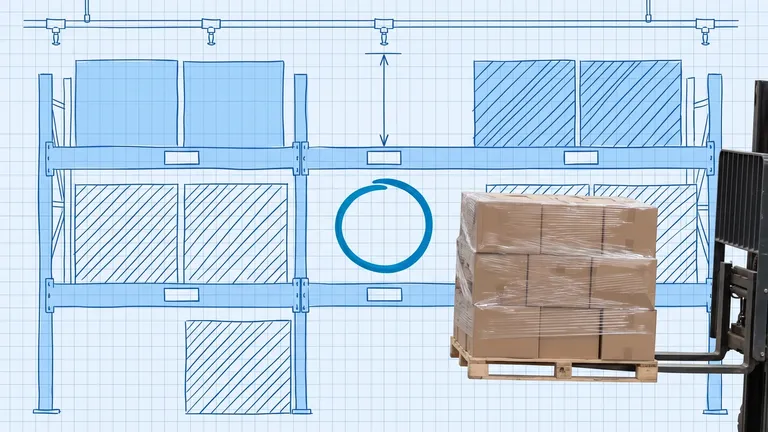
- Waiting in staging. Released for put-away, but no forklift operator has picked it up.
- Put-away travel and scan. Usually minutes per pallet once an operator is assigned.
- Exceptions. No purchase order, an overage, a damaged pallet, an item with no location. One problem pallet can hold up a whole delivery if the receipt is not posted until it is resolved.
That list is our breakdown, not a published standard. "Receiving is slow" does not tell you which wait to attack; segment times do.
How do you measure dock-to-stock time without perfect timestamps?
If the receipt and the put-away scan are both timestamped in your system, you already have the core segment. Report it per receipt line, not as one daily average, and look at the median and the slowest tenth separately. An average hides the few pallets that sit for two days, and those cause stock-outs.
If you have no reliable timestamps, Little's Law gives an estimate from counts. John D. C. Little's result, revisited in Operations Research on its 50th anniversary in 2011, states that the average number of items in a system equals the average arrival rate multiplied by the average time each item spends in it (L = λW), and that it holds over a finite observation period when all three cover the same window. On a dock, W is the time from unload to put-away. Count the pallets between unload and put-away at fixed times across the whole day, nights included, and divide the average count by the pallets received per hour over that same day. For example, if an average of 30 pallets are on the floor and 10 arrive an hour, the average pallet spends about 3 hours between unload and put-away. Spot counts give an estimate and an average only, not the spread, but they cost nothing.
For the yard, record gate time and door time on a sign-in sheet. Internal measures often leave that segment out.
Why can a good dock-to-stock number hide a slow dock?
If your clock starts at the receipt scan or when freight comes off the truck, time waiting in the yard falls outside it. A building that holds trucks outside until a crew is free can post faster dock-to-stock times without getting any faster.
In 2011, the US Government Accountability Office (GAO) reported that, while there is no standard definition, the industry commonly treats detention as "any time drivers have to wait beyond 2 hours" to load or unload. About 59 percent of the drivers GAO interviewed reported detention in the previous two weeks; GAO notes the interviews were not a generalizable sample. Among drivers who had experienced detention, about 43 percent cited facility limitations such as inadequate staffing, equipment or bays, which GAO links to overscheduled appointments. Those causes cover shipper and receiver facilities together. GAO concluded that the costs of detention fall largely on truckers. Some carriers "charged detention time fees to the shippers for any time over 2 hours," but "not all carriers collect detention fees, even if provided for in the contract."
Our reading: where the clock starts at the receipt scan, the metric rewards moving the wait into the yard, where drivers absorb it or a carrier bills it as detention to you or your supplier. Measuring gate-to-stock as well closes that gap. Report both side by side.
How do you cut dock-to-stock time?
Take the longest wait first. Most of these cost setup hours rather than new equipment, though posting at the dock needs handhelds and receipt-triggered put-away tasks need a warehouse system that supports them.
Schedule appointments to the crew, not to the doors. If appointments are booked to door count while the crew is sized for half of them, trucks queue. Book inbound slots to the crew's capacity in labor hours by load type, floor-loaded versus palletized for example, and stagger the heavy suppliers.
Get the ship notice before the truck. GS1 Australia's guidance on the SSCC, the serial number on a pallet label, describes sending pallet contents in advance by despatch advice or advanced shipping notice; "upon receipt the SSCC will be scanned, providing the required information to speed up the receipt of goods." Suppliers whose notices and labels have proved accurate over time can be received by pallet scan, with periodic audit counts and a return to full counts when errors appear. Suppliers who send no notice need a full count, so route them to a different door or time.
Post the receipt at the dock. A count written on paper and keyed in later adds a queue. A handheld scan at the door, covered in our barcode scanning guide, closes the "waiting to be posted" segment.
Let the receipt create the put-away task. When posting a receipt queues a put-away task, the staging wait becomes visible and assignable instead of depending on a forklift operator noticing the pallets.
Give staging lanes a clock. Mark lanes by arrival hour and set a rule for how long a pallet may wait before someone is pulled to move it.
Separate exceptions from the delivery. Post the clean lines and move the problem pallet to an exceptions area with its own owner.
Design the dock for flow. Staging space, door count and the route to reserve storage set a floor under how fast stock can move; the warehouse layout guide covers the receiving area.
What should you not do to hit a dock-to-stock target?
Do not stage in the aisles. OSHA's materials-handling standard, 29 CFR 1910.176(a), says that where mechanical handling equipment is used, "sufficient safe clearances shall be allowed for aisles, at loading docks, through doorways and wherever turns or passage must be made," and that "aisles and passageways shall be kept clear and in good repair, with no obstruction across or in aisles that could create a hazard." A target that pushes pallets into travel paths has moved the problem onto a safety rule.
Do not let chilled food wait in the general queue. FDA's rule for food warehousing, 21 CFR 117.93, requires storage under conditions that protect against deterioration of the food and its container. For a facility solely storing unexposed packaged food that needs refrigeration for safety, 21 CFR 117.206 requires it to "establish and implement temperature controls," monitor them and keep records. Our recommendation: give chilled and frozen receipts their own priority and their own measurement.
Do not skip the count. Reduce it for suppliers who have earned it, as above, but never drop it: skipping the check moves time from receiving into inventory investigation later.
The short version
Write down where the clock starts and stops. Timestamp each hand-off, or count staged pallets across the day and use Little's Law. Report the median and the slowest tenth by supplier. Remove the longest wait first. And if your clock starts at the receipt scan, measure from the truck's arrival too.
Frequently asked questions
What is a good dock-to-stock time?
There is no reliable universal number, because operations start and stop the clock in different places. APQC's open benchmarking page shows a median of 15.0 hours for supplier deliveries across the companies in its database, measured from receipt of the delivery to put-away recorded in the inventory system. Use that only as context. A better target is your own baseline by supplier and freight type; work down the slowest tenth of receipts first.
What is the difference between dock-to-stock time and put-away time?
Put-away time is one segment of dock-to-stock time: from a received pallet being released for put-away to it being scanned into its location. Dock-to-stock also covers unloading, counting, posting the receipt and waiting in staging, and some teams add the wait for a door. Slow docks often have quick put-away and long waits before it, so time each segment separately.
Should dock-to-stock time include quality inspection holds?
Report two numbers. Dock-to-stock, as APQC defines it, stops when put-away is recorded. Receipt to available also includes any inspection hold, because held stock cannot be picked. A hold is often set by policy, such as sampling or supplier paperwork, not by dock labor. Give held stock its own status and its own clock, so a slow test does not hide a slow put-away or the other way round.
Run your warehouse without losing a single unit.
Binlogic is the warehouse management system for brands and retailers who run their own fulfillment. Receive, count, pick, pack and ship, with every move scanned. See it in a 30-minute demo.
Get a demo