















Mercado Libre Inventory for US Brands: What Changes on Your Floor
A US brand can ship each Mercado Libre order from its own warehouse or send stock in bulk to Mercado Libre's Full warehouses. Full changes the floor most: units need Mercado Libre identification and packaging that meets its rules, you may only send the units you declared, and the stock then sits in a location you cannot count yourself, so your records need separate places for it.
At Mercado Libre's Full warehouses, the quantity you declare is a commitment. Send one unit more than you declared and Mercado Libre treats it as non-compliance. Open a supplier's case to check its count and it stops being a case. Those two rules decide more about how a US warehouse prepares Mercado Libre stock than any listing setting does.
The short answer: a US brand can ship each order from its own building or send stock in bulk to Mercado Libre's Full warehouses. Full changes the most. Units need Mercado Libre identification and packaging that meets its rules, the shipment has to match what you declared, and once the stock arrives it sits in a location you cannot count yourself. This post covers both routes, using Mercado Libre's own Global Selling help pages and developer documentation.
What are the main ways to ship Mercado Libre orders from the US?
Mercado Libre's Global Selling learning center describes two main routes for sellers "in the U.S., China, or Hong Kong."
- Mercado Envíos Direct. You keep the stock and ship each order, "delivering your items to the designated carrier within three business days." Mercado Libre lists it as "currently available for Argentina, Mexico, Brazil, Chile, and Colombia."
- Full. You "store your stock in bulk in our warehouses (currently available for Mexico and Chile)", and Mercado Libre picks and packs each order: "We print your labels and pack your products."
Direct changes less on the floor: one more order source, one more carrier handoff, a three-business-day clock and international returns. Full turns part of your operation into a supplier shipping inbound freight to a marketplace warehouse, which is where pick, pack and receiving rules change. Most of this post is about Full.
What does Full require of each unit you send?
From Mercado Libre's Global Selling help pages:
- Identification. "All the products must have at least one of these identifications visible in their primary packing", and the label must not cover the product's own details: "Don't cover the product information or barcode." The same page says Mercado Libre will ask you to print and attach its own label on each product. Products inside a sealed master box are the exception: "it is not necessary to label them, simply attach the Mercado Libre volume label."
- Shipment labels. When you create the inbound shipment, "it's mandatory to use our labels", because "they have the IDs that will be used by your logistic supplier to request an appointment."
- Protective packaging. "Each unit must have a resistant plastic packaging that covers it entirely and allows viewing the information. If they do not have it from the manufacturer, please add one." Liquids go in an airtight bag or plastic film, and fragile items in bubble wrap. Mercado Libre's volumes page also allows large products to travel in their original packaging, so check which rule applies to your bulkiest items.
- Size. "Each product must weigh below 20 kg in their primary packaging, and their width cannot be over 120 cm."
- Consumer information. Products must carry the information that "the country's legislation" requires for consumer goods, and it "must be in Spanish, be legible and not handwritten." That is the destination country's labelling law, so settle it before the stock is packed, not at the pack bench.
- Dates. For dated goods, "the date must be printed on the primary packaging of each product, be legible and after the required date", and in a master box "the date must be both on the box as on each unit."
- Kits. "Pack the products of the kit together in the same package as shown in the listing."
Products that fail are not received: "you will have to pick them up from Full."
For a US warehouse this usually means a prep step that does not exist for domestic orders, with its own count: bagging, labelling and checking the consumer information. For dated goods, send stock with enough remaining life to clear Mercado Libre's required date after transit and time on the shelf at Full, and keep shorter-dated lots for domestic channels. Our post on FEFO stock rotation covers picking by expiry date.
How should cases and pallets be built for Full?
Mercado Libre calls each box or bag a volume, and "we will only receive at Full those volumes that arrive correctly prepared and identified with our labels." Its packing rules for volumes:
- "You can mix different products in the same bag or box."
- "Check that the bags or boxes do not contain any text or codes that could be confused when scanning." Reused supplier cartons with old barcodes are a problem.
- "The volumes must be in good condition (no damage or presence of pests, grease or water)."
- Master boxes: "Send the boxes exactly as they arrive from your supplier", because "if you open them, they will no longer be master boxes." The box needs "the DUN-14 identification code, the weight of the product and the number of units it contains."
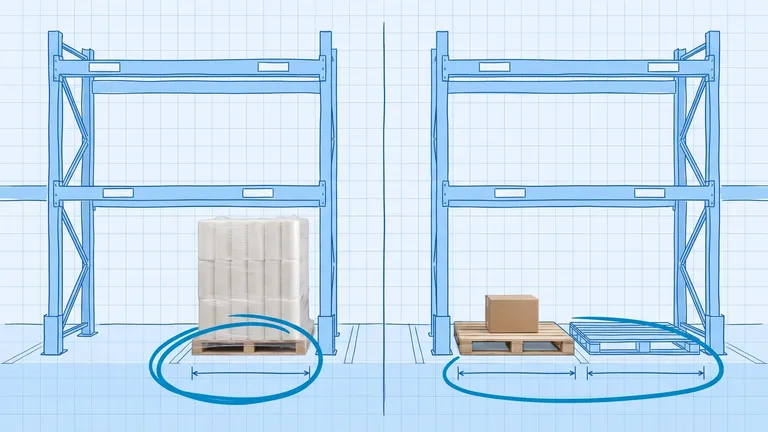
- Pallets: "Make sure that the volumes are up to 1.60 m including the pallet." Mercado Libre asks you to "wrap the packages with plastic wrap and check if they are stable on the pallet", and says "although the pallet does not require labeling, make sure that all the volumes contained on it are properly identified."
The master box rule changes how you receive. A sealed case from your supplier can go to Full as a case. Open it to check the count, and it becomes loose units that each need preparation and a label. Decide at receiving which cases are destined for Full, and verify those by weight or another check that leaves the seal intact.
Who books the delivery, and what if quantities don't match?
You create the inbound shipment in your Global Selling account, under Listings and the Stock Management Full tab: "Specify how many units you'll send per product", enter UPCs "if applicable", then "Click on Print labels." Mercado Libre says it needs that information "in order to validate the space in our warehouses".
Your dock does not book the appointment. Mercado Libre's scheduling page says the international logistics supplier in the destination country schedules the delivery date, and "your logistic company is the one responsible for filling in the necessary information." Its first-shipment guide says that without an appointment "we will not be able to receive your products."
Two rules belong on the floor:
- "You have 60 days once you created an inbound shipment to finish filling the tracking information before it expires."
- "Only send the declared products and units to avoid penalties." The first-shipment guide adds "you may be charged for non-compliance."
Because the labels come from the inbound shipment, the sequence is: fix the quantity, create the inbound shipment, print the labels, prepare and label exactly that quantity, then seal. Treat the declaration like a purchase order you are fulfilling.
How do you count stock you can't see?
Once received, the stock is in Mercado Libre's building. Your team cannot cycle count it, so your records have to mirror what Mercado Libre reports. Its Fulfillment stock data for Global Selling separates "available_quantity: quantity of products available for sale" from "not_available_quantity", with a reason for each unavailable unit, including units that "Arrived damaged by seller", units "damaged within the warehouse or by the carrier", and units that exceed "the permitted storage dimensions of the Fulfillment center". Units can also be reserved for a stock withdrawal or "for a multi-warehouse transfer or pick up."
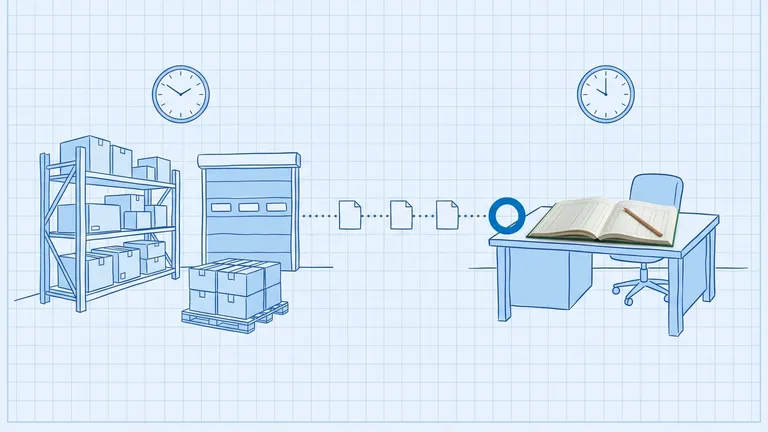
In practice that means several places for one SKU in your system: your own pick locations, in transit to Full, available at Full, not sellable at Full, and reserved at Full. Units in transit belong to neither building's sellable count. When Mercado Libre's data and your record disagree, investigate before posting anything. A shortfall at receipt may be a mis-pick still sitting on your floor, and units damaged inside the warehouse or by the carrier are a question for Mercado Libre, not a write-off by default. See our guide to inventory accuracy for how accuracy is measured.
One structural detail is worth checking before you plan allocation. In Mercado Libre's User Products model for cross-border selling, "Stock/inventory is only associated with the UP Siteless", the parent product that is not tied to one marketplace, and "All items in the tree will have the same inventory_id." Check how your listings in different countries share stock before planning a per-country allocation. Our multi-channel inventory guide covers allocation versus a shared pool.
Aging costs money too. At Mexico Full, "units that have been stored for over 4 months (120 calendar days) since they were received" generate a monthly long-term storage fee, under rules Mercado Libre updated effective March 11, 2025; the rates are on its fee page. Retrieval and discard are charged "based on the total volume of products instead of per unit", though "retrieving and discarding your units that are not suitable for sale is free of charge." Track received dates at Full, not just quantities.
Where do Mercado Libre returns end up?
Not necessarily back in your warehouse. For Full, "products with no local return address" are "returned to the fulfillment warehouse", where "you can schedule a stock pickup if needed." Where Mercado Libre reviews the return, a product that is "unopened, has the security seal, and is in excellent condition" is "automatically restocked", and an opened unit that is not suitable for sale is set aside for you to pick up.
For direct-to-consumer shipments, Mercado Libre asks you to "set up a local return address for each marketplace and logistic method", and says US sellers can provide an international shipping label to have the product sent back.
So a return can become sellable stock at Full, an unsellable unit waiting at Full, or a parcel heading back to the US. Book it from Mercado Libre's return result, not on the assumption that it comes home.
What US export filing applies?
The Census Bureau's guide to the Foreign Trade Regulations says Electronic Export Information "shall be filed when the value of the goods is over $2,500 per Schedule B number", and that shipments to Canada are exempt. A pallet bound for Mexico can pass that line on a single SKU. Your logistics supplier may file it, so agree in writing who does.
A floor checklist for Full
- Decide at receiving which cases are destined for Full, and leave them sealed.
- Fix the quantity, create the inbound shipment, then print labels.
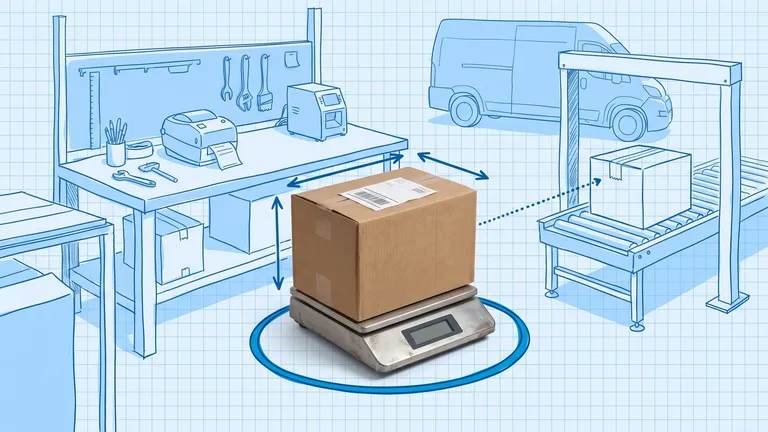
- Prepare and label exactly the declared quantity at a prep station with its own count, then seal.
- Give your logistics supplier the inbound shipment IDs, and finish the tracking information within 60 days.
- Track in transit, available, not sellable and reserved at Full as separate buckets.
- Reconcile against Mercado Libre's stock data on a schedule, and investigate before posting differences.
- Watch received dates at Full against the 120-day storage threshold in Mexico.
Frequently asked questions
Can a US brand sell on Mercado Libre without sending stock to a Mercado Libre warehouse?
Yes. Mercado Libre's Global Selling program describes Mercado Envíos Direct, where you hold the stock and hand each order to the designated carrier within three business days. It lists Direct for Argentina, Mexico, Brazil, Chile and Colombia. Full, where your stock sits in Mercado Libre's warehouses, is described as available for Mexico and Chile. Check the current country list in your Global Selling account before planning stock.
Do I need Mercado Libre labels if my products already have UPC barcodes?
For loose units sent to Full, generally yes. Mercado Libre's identification page says it will ask you to print and attach its labels on each product, even though a universal code is one accepted identification. Sealed master boxes need only the Mercado Libre volume label. The labels downloaded with the inbound shipment are mandatory and carry the IDs your logistics supplier uses to book the delivery appointment.
How should my WMS track stock sitting in a Mercado Libre warehouse?
As locations your team cannot count or pick. Keep separate buckets for stock in transit to Full, available at Full, not sellable at Full, and reserved at Full for a withdrawal or transfer. Mercado Libre's Full stock data separates these and gives a reason for unsellable units. Reconcile against it on a schedule, and investigate a difference before posting it, because a short receipt may be your own mis-pick.
Run your warehouse without losing a single unit.
Binlogic is the warehouse management system for brands and retailers who run their own fulfillment. Receive, count, pick, pack and ship, with every move scanned. See it in a 30-minute demo.
Get a demo